Link Prediction with Graph Neural Networks Using DGL and PyG
Master link prediction in graph neural networks using DGL and PyG frameworks, implementing node connectivity prediction through practical code examples and negative sampling techniques.

Deep Learning: Introduction to Reinforcement Learning and Policy Iteration - Lecture 12
Dive into reinforcement learning fundamentals, exploring policy iteration, value iteration, Markov decision processes, and Monte Carlo estimation techniques for advanced AI applications.
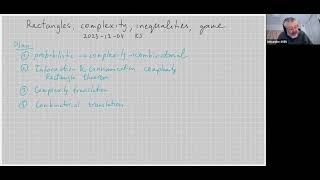
Rectangles, Complexity and Games in Communication Theory - December 4, 2023
Delve into communication complexity theory through rectangles, exploring inequality principles, combinatorial strategies, and their applications in computational game theory.
Introduction to Probably Approximately Correct (PAC) Learning
Dive into computational complexity and PAC-learning concepts through an in-depth seminar discussion at the prestigious Kolmogorov seminar series on complexity theory.
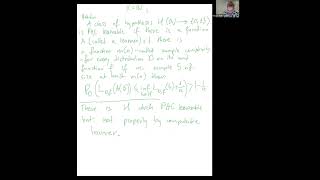
Computable PAC Learning - Part 2
Dive into advanced concepts of computable PAC learning through an in-depth exploration of theoretical frameworks and computational complexity in machine learning theory.
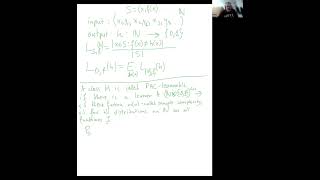
Computable PAC Learning - Part 1
Dive into computational complexity and PAC learning theory through an in-depth exploration of foundational concepts, statistical learning frameworks, and algorithmic approaches.

Vapnik-Chervonenkis Theorem and Statistical Learning Theory
Dive into the fundamental Vapnik-Chervonenkis theorem, exploring how VC-dimension relates to machine learning generalization and error rates in hypothesis spaces.

Combinatorial Rectangles, Kolmogorov Complexity and Experts' Aggregation - March 4, 2024
Delve into communication protocols, exploring their relationship with Kolmogorov complexity, combinatorial rectangles, and the fascinating world of experts' opinion aggregation.
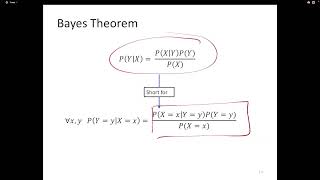
Bayesian Learning and Maximum Likelihood Methods - Lecture 23
Explore probabilistic learning criteria through maximum a posteriori and maximum likelihood approaches, with practical examples of Bayesian learning applications.
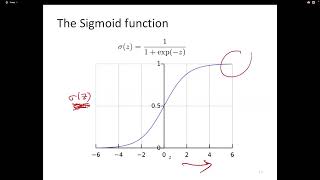
Logistic Regression - Machine Learning Lecture 24
Master logistic regression classification through maximum likelihood and maximum a posteriori criteria, building practical skills for effective machine learning model development.
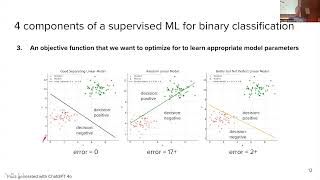
Machine Learning Foundations - Logistic Regression
Master logistic regression fundamentals through hands-on practice, exploring core concepts, implementation techniques, and practical applications in machine learning and data analysis.
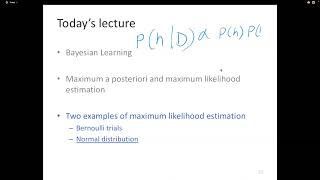
Maximum Likelihood Estimation for Regression in Machine Learning - Lecture 24
Dive into maximum likelihood estimation for regression through practical examples and explore its connection to loss minimization in Bayesian learning frameworks.
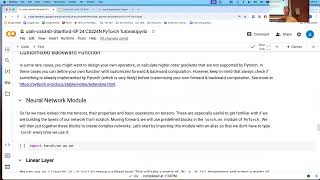
Language Modeling - Fundamentals and Applications
Master the fundamentals of language modeling, exploring statistical and neural approaches, probability distributions, and practical applications in natural language processing.
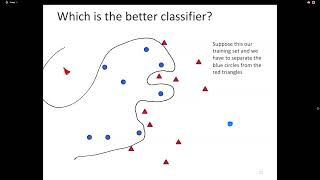
Linear Models and Their Geometry in Machine Learning - Lecture 6
Explore the geometry and fundamental concepts of linear classifiers, examining their role as essential tools in machine learning classification problems.
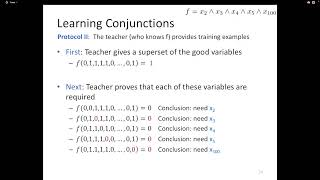
How Good is a Learning Algorithm? Quantifying the Learning Process - Lecture 7B
Explore the quantitative aspects of machine learning by examining how many examples are needed to effectively discover and validate hypotheses.
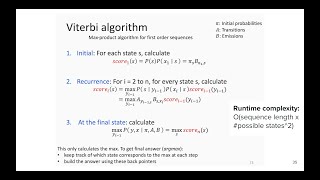
Hidden Markov Models - Parameter Estimation and Efficient Inference
Master parameter estimation and efficient inference techniques for Hidden Markov Models, exploring key algorithms and mathematical foundations for probabilistic sequence modeling and pattern recognition.
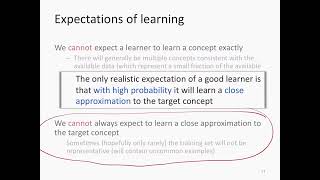
PAC Learning in Machine Learning Theory - Lecture 13
Explore the fundamental concepts of PAC (Probably Approximately Correct) learning theory and its applications in theoretical machine learning frameworks.

Perceptron Mistake Bound Theorem in Machine Learning - Lecture 10
Dive into the mathematical foundations of Perceptron algorithms, exploring the theorem and proof behind mistake bounds in machine learning classification.
Meta Flow Matching - Integrating Vector Fields on the Wasserstein Manifold
Explore advanced flow-based modeling techniques for predicting biological system dynamics, focusing on population-level evolution and personalized medicine applications using Graph Neural Networks.
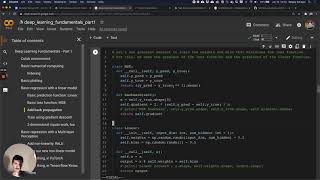
Coding a Neural Network - Full Stack Deep Learning - Spring 2021
Code a neural network from scratch using Google Colab, NumPy, PyTorch, and Keras. Learn linear regression and multi-layer perception models through hands-on implementation and visualization.

Real-Time Security: Using eBPF for Preventing Attacks
Explore eBPF's potential for preventative security in cloud-native environments, covering NetworkPolicy enforcement, system call limitations, and advanced attachment points like BPF LSM.