
Biomechanics and Orthopedics - Material Properties of Elasticity and Viscosity
Explore material properties, elasticity, and viscosity in biomedical engineering. Learn experimental setups, stress-strain relationships, and modeling techniques for biomaterials using springs and dashpots.
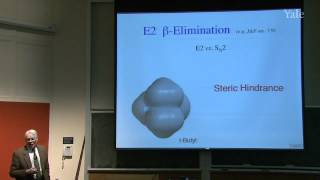
Pentavalent Carbon and Competing Reaction Mechanisms - E2, SN1, E1
Explore organic chemistry mechanisms: E2, SN1, E1 reactions. Analyze stereochemistry, kinetic isotope effects, and carbocation intermediates. Learn strategies for substitution in organic synthesis.

Tissue Engineering Applications in Biomedical Engineering - Lecture 23
Explores tissue engineering applications in healing, regeneration, organ replacement, and drug delivery, featuring Yale research on hydrogel scaffolds, spinal cord repair, and blood vessel growth control.
Finite Element Modeling of Welding Processes
Comprehensive exploration of finite element modeling for various welding processes, covering theory, techniques, and applications in fusion, solid-state, and advanced welding methods.
Phase Diagrams in Materials Science and Engineering
Comprehensive exploration of phase diagrams in materials science, covering binary and ternary systems, equilibria, transformations, and applications in metals, ceramics, and alloys.
Engineering Fracture Mechanics
Comprehensive exploration of fracture mechanics principles, covering elastic-plastic theories, stress intensity factors, crack growth models, and practical applications in engineering failure analysis.
Advanced Metallurgical Thermodynamics
In this course, you will learn, First, second and third laws of thermodynamics, Maxwell's relations, Clausius-Clapeyron equation, Equilibrium Concepts, Thermodynamics of Phase Transformations etc.
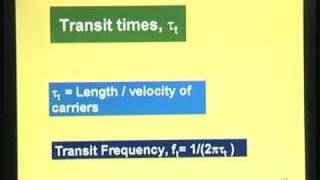
High Speed Devices and Circuit
Comprehensive exploration of high-speed semiconductor devices, focusing on compound materials, fabrication techniques, and advanced transistor designs like MESFET, HEMT, and HBT.
Using Computation to Drive the Self-Assembly of Complex Structures
Explore computational approaches for driving self-assembly of complex structures, unlocking new possibilities in materials science and nanotechnology.
Reverse Engineering Complexity - Dynamics, Architecture, and Robustness in Complex Systems
Explore robustness, tradeoffs, and feedback in complex systems through computational models. Discover applications in earthquakes, wildfires, biomaterials, infectious diseases, and more, emphasizing dynamics, architecture, and adaptation.
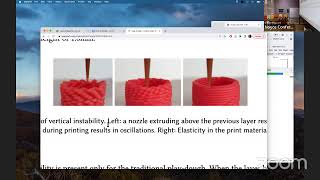
Fabricating Clay - Machines, Materials, and Code
Explore innovative techniques for clay fabrication using advanced machinery and coding, blending traditional craftsmanship with modern technology for unique artistic creations.
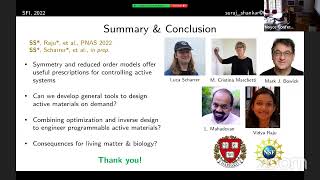
Designing Active Matter in Space-time
Explore the cutting-edge field of active matter design across space and time, delving into innovative concepts and their potential applications in various scientific domains.
Thermodynamics - Classical to Statistical
Comprehensive exploration of thermodynamics, from classical concepts to statistical mechanics, covering fundamental principles, applications, and advanced problem-solving techniques.
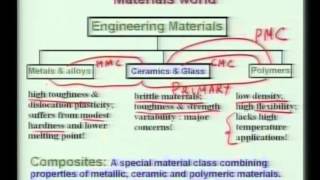
Introduction to Biomaterials
Comprehensive exploration of biomaterials: properties, applications, and innovations in medical technology. Gain expertise in this cutting-edge field through 39 in-depth lectures.
Waves and Resonance
Explore waves and resonance through musical instruments, vacuum cleaners, and invisibility cloaks. Discover the fascinating mathematics behind sound and light manipulation.
Introduction to Crystal Elasticity and Crystal Plasticity
Explore crystal elasticity and plasticity, covering fundamental concepts, theories, and applications in materials science and engineering over 21 hours of comprehensive lectures.
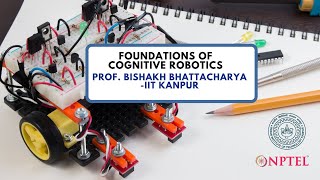
Foundations of Cognitive Robotics
Explore cognitive robotics, smart materials, brain architecture, and intelligence theories. Gain insights into synchronization models, EEG, and child-robot interaction.

Plaster Mixing Tutorial - Making Challenge
Hands-on demonstration of plaster mixing techniques, offering practical insights for DIY enthusiasts and construction professionals to achieve optimal consistency and application results.

Molding and Casting Tutorial - Making Challenge
Hands-on demonstration of molding and casting techniques, offering practical insights into materials, processes, and applications for creating precise replicas and custom objects.
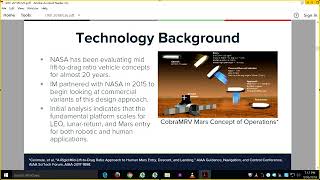
Design of an Automated Re-entry Vehicle for Priority Sample Returns
Innovative design for low-cost cargo return from ISS using modified NASA heat-shield, modern subsystems, and automotive-grade parts. Explores applications beyond ISS payload return.
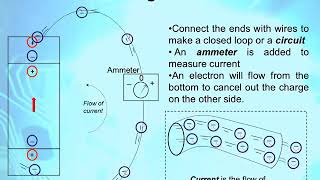
Pyroelectric Materials
Explore pyroelectric materials with NASA thermal engineer Dr. Laurie Carrillo, covering properties, applications, and research highlights in this comprehensive overview.