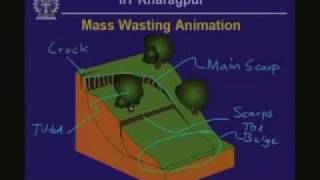
Engineering Geology
Comprehensive exploration of engineering geology, covering minerals, rocks, soils, exploration techniques, and geologic hazards. Equips learners with essential knowledge for geological engineering applications.
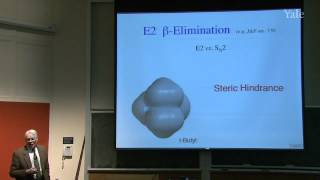
Pentavalent Carbon and Competing Reaction Mechanisms - E2, SN1, E1
Explore organic chemistry mechanisms: E2, SN1, E1 reactions. Analyze stereochemistry, kinetic isotope effects, and carbocation intermediates. Learn strategies for substitution in organic synthesis.
The Future of Data-Driven Discovery in Mineralogy and Crystallography
Explore data-driven approaches in mineralogy, including mineral evolution, ecology, network analysis, and clustering techniques for advancing research and discovery in Earth and planetary sciences.
Biotic, Abiotic, Pre-Biotic, Post-Biotic Controls on Carbonate and Phosphate Formation
Explore crystallographic textures in marine minerals using Electron Backscatter Diffraction to uncover their formation processes and biological origins in deep time.

Symmetry Operations, Types of Twinning, and Miller Indices of Crystal Planes - Mineralogy
Explore symmetry operations, twinning types, and Miller indices in mineralogy. Learn about crystal structures, cleavage planes, and their significance in X-ray diffraction and optical mineralogy.
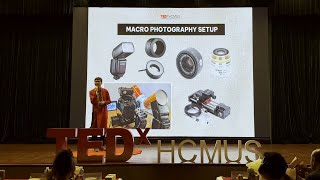
The Beauty and Science of Crystal Collecting
Exploración fascinante de cristales: su belleza, estructura y fotografía. Descubre la conexión entre cristales y ADN, y cómo la pasión por la ciencia puede llevar a soluciones creativas en la captura de imágenes microscópicas.
L'aventure des Quasicristaux - La Découverte et l'Évolution d'une Nouvelle Structure Cristalline
Plongez dans l'univers fascinant des quasicristaux, explorant leur découverte, leurs propriétés uniques et leur impact révolutionnaire sur la cristallographie et la physique de la matière.
Louis Michel: L'Action des Groupes et la Géométrie des Réseaux
Explorez l'action des groupes et la géométrie des réseaux à travers les travaux de Louis Michel, présentés par Boris Zhilinskii de l'ULCO.
Fourier Summation Formulas and Quasicrystals - Part 1
Explore Fourier summation formulas and quasicrystals in this advanced mathematics seminar. Gain insights into complex mathematical concepts and their applications.
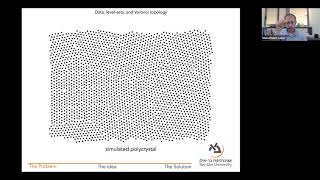
High-Dimensional Data, Level-Set Geometry, and Voronoi Analysis of Point Sets
Explore spatial point sets, high-dimensional data analysis, and Voronoi cell topology to understand complex physical systems and classify data structures in innovative ways.
Negatively Curved Crystals - Exploring Infinite Patterns
Explore the fascinating world of negatively curved crystals and their infinite patterns with Fields Medal winner Curtis McMullen in this engaging TEDx talk.

A Gift for Louis: The New Aperiodic Monotile
Explore the groundbreaking discovery of a new aperiodic monotile, unraveling its mathematical significance and implications for tiling theory.
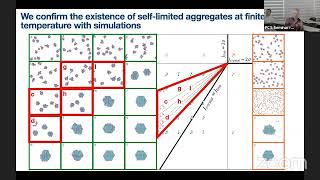
Principles of Self-Assembly for Particles with Simple Geometries and Complex Interactions
Explore self-assembly principles for particles with simple geometries and complex interactions. Discover stereotypical aggregates, predict outcomes using machine learning, and understand robust functional protein structures.

The Wondrous World of Perovskites - With Mike Glazer
Explore the fascinating world of perovskites, crystalline materials comprising 38% of Earth's volume, and their diverse applications in electronics, ultrasonics, and thermal sensing devices.
The Story of Deciphering the Ribosome - With Venki Ramakrishnan
Nobel Laureate Venki Ramakrishnan recounts his journey in deciphering the ribosome's structure, from early experiments to Nobel Prize-winning discoveries, highlighting the competitive nature of scientific research.
How Materials Science Can Help Create a Greener Future - with Saiful Islam
Explore how materials science advances can drive green technology innovation, from better batteries to efficient solar power, through atomic-scale modeling and structural chemistry insights.
The Physics of Life - How Water Folds Proteins
Explore water's crucial role in protein folding and life, from its universal solvent properties to its impact on biological components, with insights from cutting-edge research and experiments.
Implementation and Assessment of Computation in Modern Physics Teaching
Explore innovative computational methods for teaching modern physics, focusing on dynamic visualizations and hands-on investigations to enhance student understanding of complex quantum concepts.
Diamonds: Precious Time Capsules from the Deep Earth
Explore diamond formation, from extraterrestrial impacts to Earth's crust and lithosphere. Learn about isotope dating, complex growth patterns, and the mysteries geologists aim to unravel about these precious gemstones.
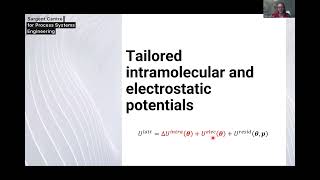
A Hierarchical Approach to Crystal Structure Prediction
Explore a hierarchical approach to crystal structure prediction for organic molecules, focusing on methodology requirements, algorithms, and applications in pharmaceutical and agrochemical industries.
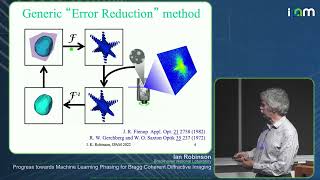
Progress Towards Machine Learning Phasing for Bragg Coherent Diffractive Imaging
Explores machine learning approaches for solving the phase problem in Bragg Coherent Diffractive Imaging, discussing current methods, challenges, and potential ML solutions for 2D and 3D data inversion.