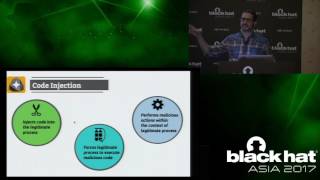
What Malware Authors Don't Want You to Know - Evasive Hollow Process Injection
Explore undocumented hollow process injection techniques used by malware authors to evade detection and blend with legitimate system processes.
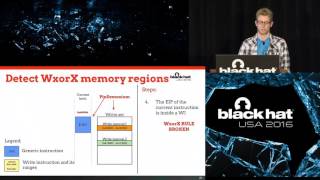
Pindemonium - A DBI-Based Generic Unpacker for Windows Executable
Explore a generic unpacking algorithm for Windows executables using Dynamic Binary Instrumentation. Learn to detect and defeat popular packing techniques, reconstruct working PEs, and handle IAT obfuscation.
Watching Commodity Malware Get Sold to a Targeted Actor
Explore how commodity malware breaches are reclassified and upgraded for targeted attacks, and learn detection techniques to prevent threat escalation in organizational networks.

An AI Approach to Malware Similarity Analysis - Mapping the Malware Genome With a Deep Neural Network
Explore AI-driven malware similarity analysis using deep neural networks for improved accuracy and adaptability in threat detection and classification.
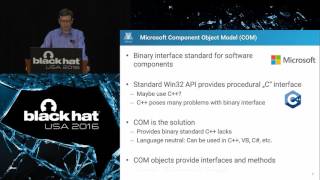
The Beast Within - Evading Dynamic Malware Analysis Using Microsoft COM
Explore COM's role in malware evasion and dynamic analysis challenges. Learn practical approaches for monitoring COM calls and overcoming obstacles in automated malware detection.
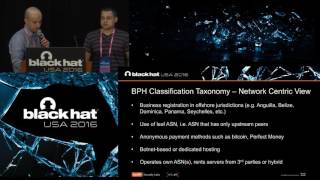
Towards a Holistic Approach in Building Intelligence to Fight Crimeware
Holistic approach to combat cybercrime by analyzing network attack surfaces and actor behaviors. Explores bulletproof hosting, fast flux networks, and underground forums to proactively identify and block malicious infrastructure.
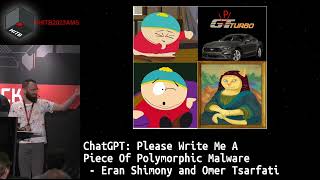
ChatGPT Please Write Me A Piece of Polymorphic Malware
Explore how ChatGPT can be used to create advanced polymorphic malware, discussing the challenges, implementation techniques, and potential threats posed by AI-generated malicious software.
Go Reverse-Engineering Workshop
Develop specialized skills for reverse-engineering Go binaries, focusing on offensive security tooling. Learn methodologies and disassembler plugins to tackle this challenging language.
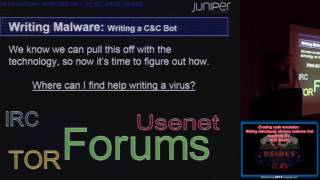
Evading Code Emulation - Writing Ridiculously Obvious Malware That Bypasses AV
Explore techniques for creating malware that evades antivirus detection through code emulation bypassing, presented by Kyle Adams at BSidesLV 2014.
The Untold Story About ATM Malware
Explore the hidden world of ATM malware, uncovering its evolution, techniques, and impact on financial security. Gain insights into cybercriminal strategies and protective measures.

All Your Code Belongs to Us - Dismantling Android Secrets With CodeInspect
Dismantling Android secrets with CodeInspect: Explore advanced techniques for analyzing Android malware, reverse engineering protection, and uncovering hidden behaviors in mobile applications.
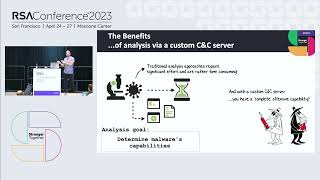
Making oRAT Go Further
Comprehensive analysis of macOS malware oRAT using unconventional methods, revealing its full functionality through custom command and control server interactions.

Offensive Anti-Analysis
Explore open-source malware analysis tools and techniques for file, URL, network traffic, and memory image analysis. Learn to build an automated analysis lab by chaining tools together.

The Work of Cyber in the Age of Mechanical Reproduction
Explore how advanced threat actors systematize and scale malware operations, and learn to analyze relationships between campaigns, malware families, and threat actors in this cybersecurity deep dive.
The Trails of WINDSHIFT APT
Explore WINDSHIFT APT's unique cyber espionage tactics, including advanced spear phishing, macOS malware, and surveillance techniques. Learn about their focus on specific individuals and hard-to-attribute methods.
Breaking Full Disk Encryption
Breaking Full Disk Encryption: Explore techniques to bypass custom FDE setups remotely, enhancing forensic analysis capabilities for compromised systems with proprietary encryption.
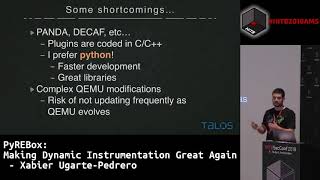
PyREBox - Making Dynamic Instrumentation Great Again
Explore PyREBox, an open-source reverse engineering tool for QEMU VM inspection, memory modification, and Python-based execution instrumentation. Learn its applications in malware analysis and debugging.
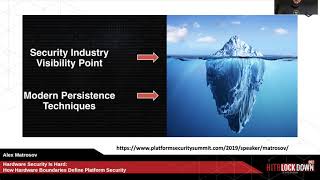
How Hardware Boundaries Define Platform Security
Exploring how hardware component boundaries impact platform security, focusing on outsourced components, supply chain risks, and threat modeling gaps in modern hardware architectures.
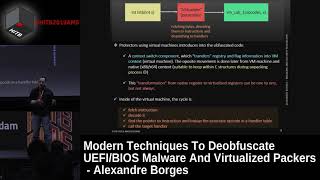
Deobfuscate UEFI - BIOS Malware and Virtualized Packers
Practical approach to reverse engineering obfuscated BIOS/UEFI malware and virtualized packers, using tools and techniques for code simplification and threat analysis.
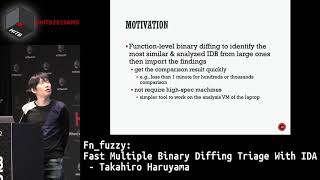
fn_fuzzy - Fast Multiple Binary Diffing Triage With IDA
Efficient binary diffing tool for IDA Pro, using fuzzy hashes to quickly compare and import function data from multiple IDBs, enhancing malware analysis productivity.
Reversing Mobile Malware
Explore live malware reversing techniques for Windows and Android, focusing on methodology and essential tools for identifying and analyzing malicious software samples.