
IoT Malware - Comprehensive Survey, Analysis Framework and Case Studies
Comprehensive exploration of IoT malware, covering its evolution, analysis frameworks, and real-world case studies. Insights into vulnerabilities, detection methods, and future challenges in securing connected devices.
From Zero to Sixty - The Story of North Korea's Rapid Ascent to Becoming a Global Cyber Superpower
Explore North Korea's rise as a cyber superpower through technical analysis and strategic insights, featuring demonstrations of rare malware variants and their global impact.
Demystifying Modern Windows Rootkits
Explore Windows rootkit development, from basic drivers to advanced hooking techniques. Learn about kernel-mode malware, network stack manipulation, and innovative methods to evade detection.
Hiding Process Memory via Anti-Forensic Techniques
Explore novel anti-forensic techniques for hiding malicious process memory, evading detection by memory analysis tools while maintaining accessibility for malware functionality.
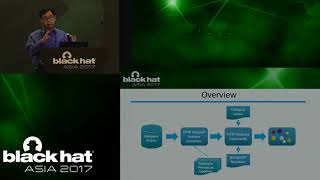
Beyond the Blacklists - Detecting Malicious URL Through Machine Learning
Explore machine learning techniques for detecting malicious URLs beyond traditional blacklists, focusing on HTTP-based communications and behavioral modeling for improved malware detection.
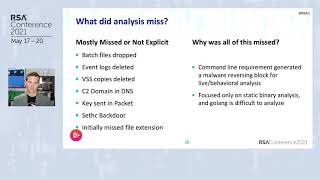
Ransomware - Creation, Detection, and Response
Explore ransomware creation, detection, and response strategies. Learn evasion techniques, novel detection methods, and tailored incident response approaches from real-world engagements.

The Great Sandbox Escape
Explore novel ransomware techniques, including virtual machine deployment for attacks. Learn about attacker strategies, detection methods, and cybersecurity insights from a malware specialist.

Crouching Hacker, Killer Robo? Removing Fear from Cyber-Physical Security
Exploring cyber-physical security beyond fear-mongering, this talk examines root causes of vulnerabilities and proposes better approaches to embed security analysis in system design.
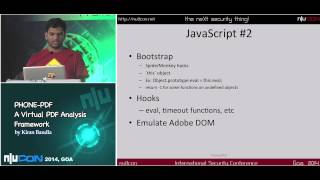
Phoneypdf - A Virtual PDF Analysis Framework
Explore tools and techniques for analyzing malicious PDF files, including phoneypdf framework. Learn to leverage Adobe PDF DOM and XFA for deeper insights into PDF exploitation and JavaScript execution.

Malware Analysis and Automation Using Binary Ninja
Explore malware analysis and automation using Binary Ninja, covering intermediate languages, headless mode, and practical techniques for decryption and reverse engineering.
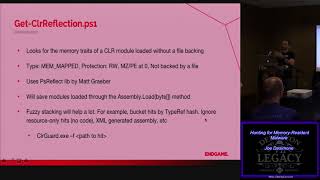
Hunting for Memory Resident Malware
Explore techniques for detecting memory-resident malware, including API analysis, post-breach detection, and CLR hooking. Learn why memory hunting is crucial in cybersecurity.
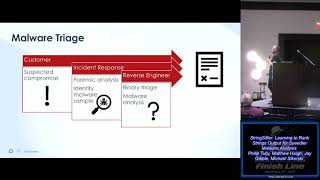
Learning to Rank Strings Output for Speedier Malware Analysis
Explore techniques for efficient malware analysis using string ranking, featuring gradient boosted decision trees and the StringSifter tool for faster threat assessment.
Testing Endpoint Protection - How Anyone Can Bypass Next Gen AV
Explore techniques to bypass next-generation antivirus software, learn about testing methodologies, and understand the effectiveness of endpoint protection solutions.
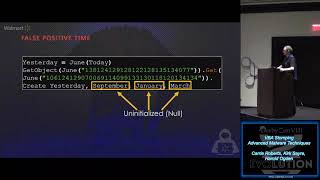
VBA Stomping Advanced Malware Techniques
Explore advanced malware techniques using VBA, including XML manipulation, object linking, and process creation. Learn about frameworks, reverse engineering, and analysis tools.
A UEFI Firmware Bootkit in the Wild
Explore the inner workings and mysterious history of CosmicStrand, a sophisticated UEFI firmware bootkit that provides deep persistence on select motherboards, evading detection and surviving OS reinstallations.
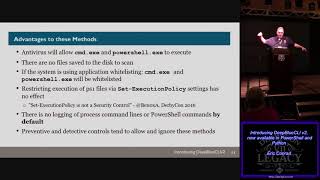
Introducing DeepBlueCLI v2 Now Available in PowerShell and Python
Explore DeepBlueCLI v2's enhanced features for Windows malware detection, including PowerShell and Python implementations, regex improvements, and automated whitelisting techniques.
Leveraging Apple's Game Engine to Detect Threats
Explore macOS threat detection using Apple's game engine. Learn about monitoring frameworks, rule-based systems, and a comprehensive platform for detecting and responding to cyberthreats on Mac systems.
When Cybercriminals with Good OpSec Attack
Explore a decade-long FBI and Symantec investigation into a cybercrime gang with strong operational security, revealing investigative techniques and lessons learned from cracking their defenses.
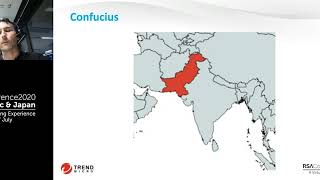
Cyberespionage - Targeted Attacks Abusing Third-Party Cloud Services
Explore how APT groups exploit cloud services for cyberespionage, examining real-world cases, attack strategies, and implications for defenders and researchers across Windows and Android platforms.
Malicious Documents Emerging Trends - A Gmail Perspective
Comprehensive analysis of malicious document trends targeting Gmail users, exploring attacker tactics and Google's defensive strategies using AI detection and traditional antivirus methods.
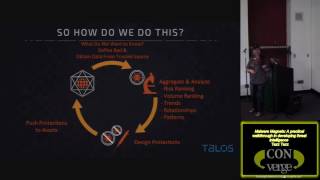
Malware Magnets - A Practical Walkthrough in Developing Threat Intelligence
Practical walkthrough for developing threat intelligence through malware analysis, covering research methods, data collection, metrics, and domain registration insights.