Linformer - Self-Attention with Linear Complexity
Detailed explanation of the Linformer model, which reduces self-attention complexity in transformers from O(n²) to O(n), improving efficiency while maintaining performance in NLP tasks.
TransCoder - Unsupervised Translation of Programming Languages
Explore unsupervised neural machine translation for code migration between Python, C++, and Java. Learn about shared embeddings, objectives, evaluation, and results of this innovative approach.
BLEURT - Learning Robust Metrics for Text Generation
Explora BLEURT, una métrica de evaluación basada en BERT para generación de texto, su preentrenamiento con datos sintéticos y su capacidad de modelar juicios humanos con pocos ejemplos.
SpineNet - Learning Scale-Permuted Backbone for Recognition and Localization
Explores SpineNet, a novel CNN architecture using scale-permuted features and cross-scale connections, outperforming traditional models in object detection and classification tasks.
Transformers Are RNNs- Fast Autoregressive Transformers With Linear Attention
Explore a novel approach to transformers using linear attention, reducing computational complexity and revealing connections to RNNs. Gain insights into faster, more efficient deep learning models for long sequences.
Is Machine Learning Smarter Than a Toddler? - Roboflow + OpenCV Webinar
Explore how AI and ML compare to toddlers in object recognition, drawing, and writing. Gain insights into the current capabilities and limitations of machine learning technology.
Intro to Computer Vision - Fireside
Explore computer vision fundamentals, from basic concepts to problem-solving approaches, model building, and ethical considerations in this comprehensive introduction.
Whisper Paper Explained - Robust Speech Recognition via Large-Scale Weak Supervision
Detailed explanation of OpenAI's Whisper model for speech recognition, covering dataset collection, model architecture, experiments, and scaling considerations.

What Is Quantum Machine Learning?
Friendly introduction to quantum computing and machine learning, covering qubits, quantum gates, entanglement, and their applications in generative modeling and optimization.
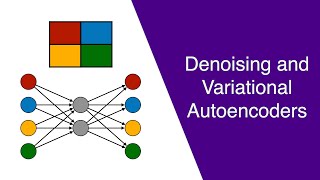
Denoising and Variational Autoencoders
Explore autoencoders, powerful generative models for dimensionality reduction and data generation. Learn about denoising and variational autoencoders, their applications, and training techniques.
A Friendly Introduction to Deep Reinforcement Learning, Q-Networks and Policy Gradients
Friendly exploration of deep reinforcement learning concepts, including Markov decision processes, Q-networks, and policy gradients, using examples and visuals to explain complex ideas.
Restricted Boltzmann Machines - A Friendly Introduction
Friendly introduction to Restricted Boltzmann Machines using real-life examples. Covers key concepts like probabilities, training, contrastive divergence, and Gibbs sampling for machine learning enthusiasts.

Support Vector Machines - A Friendly Introduction
Explore Support Vector Machines through visual explanations, covering key concepts like data separation, perceptron algorithm, classification errors, and the C parameter for optimal model performance.
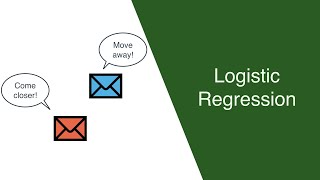
Logistic Regression and the Perceptron Algorithm - A Friendly Introduction
Friendly introduction to logistic regression and perceptron algorithm, covering key concepts like data classification, gradient descent, and neural networks with minimal math and visual explanations.

How Does Netflix Recommend Movies? Matrix Factorization
Explore matrix factorization in recommender systems, focusing on Netflix's movie recommendation algorithm. Learn about dependencies, error functions, and predicting user ratings.

A Friendly Introduction to Convolutional Neural Networks and Image Recognition
Friendly explanation of image recognition using Convolutional Neural Networks, covering basics to advanced concepts. Suitable for beginners, with minimal math required.
Machine Learning - Testing and Error Metrics
Explore machine learning model evaluation, including metrics, error types, cross-validation, and optimization techniques for improved performance and decision-making.

A Friendly Introduction to Deep Learning and Neural Networks
Explore neural networks and deep learning concepts, from gradient descent to activation functions, in this friendly introduction to AI fundamentals.

A Friendly Introduction to Machine Learning
Explore key machine learning algorithms through clear examples, from linear regression to neural networks and clustering techniques, in this beginner-friendly introduction.
MIT 6.S191 - Automatic Speech Recognition
Explore automatic speech recognition with Rev.com experts, covering data selection, speech input processing, and advanced ASR techniques like attention-based models and language modeling.

MIT: Reinforcement Learning
Explore deep reinforcement learning concepts, algorithms, and real-world applications in this comprehensive lecture from MIT's Introduction to Deep Learning course.