
AI Recap: Rumored GPT-4 Large Model and Gemini Live vs GPT-4 Advanced Voice
Explore AI advancements: OpenAI's rumored 'strawberry architecture', GPT-4 Omni model, SWE bench, and Google's Gemini Live. Analyze predictions, demos, and industry developments in this informative video.

Flux One - AI Image Customization Guide
Discover Flux One: Customize AI image generation without technical skills. Create unique visuals from pixel art to realistic photos. Learn to train personalized models using your own images.

Privacy-Friendly Applications with Ollama, Vector Functions, and LangChainJS
Explore building privacy-focused AI applications using Ollama for local LLMs, vector functions for efficient searches, and LangChainJS for versatile agents, ensuring data stays on your device.
Recent Advances in EAGO.jl and its Use With JuMP.jl
Explore EAGO.jl, an open-source global optimizer for MINLPs in Julia, and its integration with JuMP for enhanced accessibility and capabilities in solving complex optimization problems.
Recent Advances in Optimization Solvers within JuliaSmoothOptimizers
Explore cutting-edge nonlinear optimization solvers in JuliaSmoothOptimizers. Learn about new packages, performance enhancements, and flexible implementations for large-scale problems using high-level linear algebra and automatic differentiation.
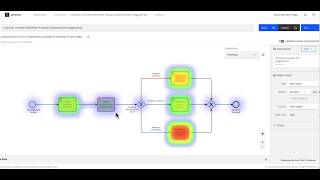
Streamlining Customer Inquiry Processes with Machine Learning and Camunda
Streamline customer inquiry handling with machine learning: Automatically analyze sentiment, route messages, and reduce processing time from 13 minutes to 1.6 seconds using Camunda's Hugging Face Connector.
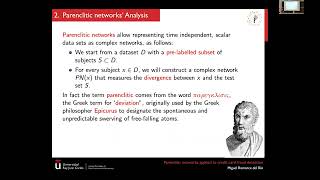
Parenclitic Networks Applied to Credit Card Fraud Detection
Explore innovative fraud detection techniques using parenclitic networks in credit card transactions, enhancing financial security through advanced data analysis.

Full Stack Development Using Oracle 23ai - React Summit 2024
Explore full-stack development with Oracle 23ai, covering database layers, Parse Server backend, and React Native frontend. Learn about vector search, property graphs, and JavaScript stored procedures.
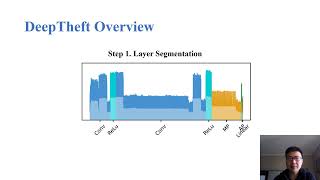
DeepTheft: Stealing DNN Model Architectures through Power Side Channel - 2024
Explore DeepTheft, a novel technique for extracting DNN model architectures through power side channel analysis, presented by Garrison Gao at IEEE.

Web Apps of the Future With Web AI
Explore cutting-edge Web AI with Google's Jason Mayes. Learn to integrate machine learning models in browsers for privacy, low latency, and offline solutions, enhancing your web development toolkit.
Open-world Segmentation and Tracking in 3D
Discover cutting-edge techniques for 3D data detection and segmentation using pseudo-labels, with insights into Lidar applications and Segment Anything technology from NVIDIA expert Laura Leal-Taixé.

Large Scale Multi-Microscope Datasets and Their Challenges in Medical AI
Explore groundbreaking research on multi-microscope datasets for malaria and leukemia detection, featuring innovative domain adaptation techniques and object detection methods to enhance early disease diagnosis.
Analyzing and Exposing Vulnerabilities in Language Models - Session 131
Delve into advanced research on language model vulnerabilities, exploring novel adversarial attack methods and gender bias analysis while discovering practical approaches to enhance AI trustworthiness and fairness.

Set Distribution Networks - A Generative Model for Sets of Images
Explores a novel framework for generating and encoding sets of images, introducing Set Distribution Networks that can create new object/identity sets while preserving key attributes.
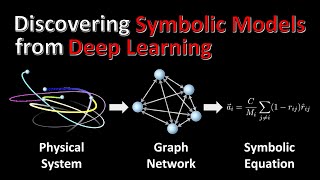
Discovering Symbolic Models from Deep Learning with Inductive Biases
Exploring how Graph Neural Networks and symbolic regression can derive accurate symbolic equations from observational data, combining deep learning with physics-inspired inductive biases.
How I Read a Paper- Facebook's DETR
Explore the process of understanding Facebook AI's DETR paper through a step-by-step analysis, from title to conclusions, with insights on interpreting research effectively.
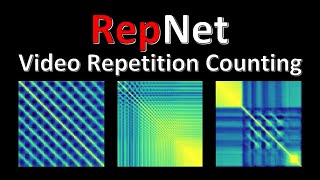
RepNet - Counting Out Time - Class Agnostic Video Repetition Counting in the Wild
Explore RepNet's innovative approach to video repetition counting using temporal self-similarity matrices, synthetic data, and a constrained model for class-agnostic period prediction in real-world videos.
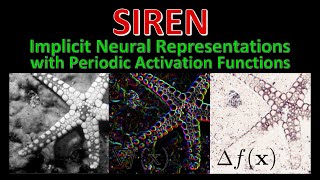
SIREN - Implicit Neural Representations with Periodic Activation Functions
Explore SIREN neural networks for representing complex signals like images and 3D shapes. Learn about their unique periodic activation functions, initialization, and applications in solving differential equations.
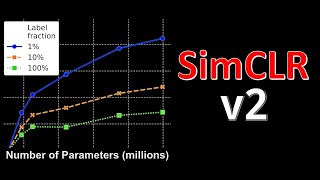
Big Self-Supervised Models Are Strong Semi-Supervised Learners
Explore SimCLRv2, a powerful semi-supervised learning approach combining self-supervised pre-training, fine-tuning, and distillation to achieve state-of-the-art results with minimal labeled data.

Bootstrap Your Own Latent: A New Approach to Self-Supervised Learning - Paper Explained
Explore BYOL, a novel self-supervised learning approach that outperforms baselines without negative samples. Learn about its innovative use of online and target networks for image representation.
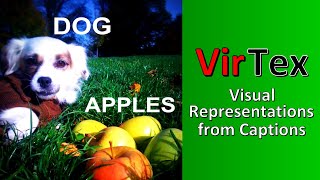
VirTex- Learning Visual Representations from Textual Annotations
Explore VirTex, a novel approach to visual representation learning using high-quality image captions, outperforming traditional methods with fewer images for various computer vision tasks.