Defeating Machine Learning - What Your Security Vendor Is Not Telling You
Explore attacker strategies to defeat machine learning-based security defenses, analyze industry issues enabling these vulnerabilities, and discover novel data sourcing solutions for improved protection.
A Scalable, Ensemble Approach for Building and Visualizing Deep Code-Sharing Networks
Innovative ensemble approach for detecting code-sharing in malware, combining multiple analysis techniques to overcome obfuscation and scale to millions of samples. Includes visualization and open-source implementation.
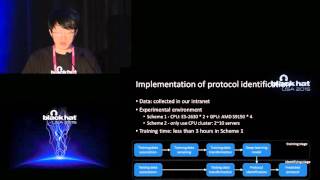
The Applications of Deep Learning on Traffic Identification
Explore deep learning for network traffic identification, covering neural networks, automatic feature learning, and anomaly detection. Improve protocol identification beyond traditional methods.
Why Security Data Science Matters and How It's Different
Explore security data science challenges and solutions, including machine learning for attack detection, threat intelligence, and malware analysis, with focus on overcoming unique security-specific obstacles.
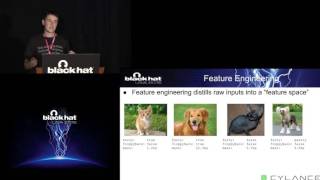
Deep Learning on Disassembly
Explore deep learning techniques applied to disassembly for malware identification, covering the process from raw binaries to model training and evaluation against active malware feeds.
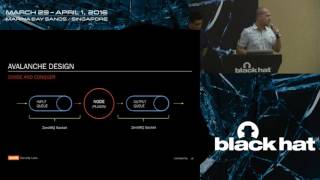
The Security Wolf of Wall Street - Fighting Crime With High-Frequency Classification
Explore real-time threat detection using machine learning on massive DNS data. Learn about Avalanche stream processing and NLP-Rank for automated phishing detection at scale.
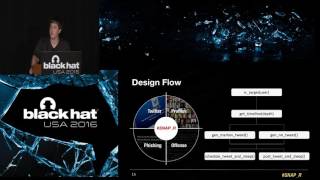
Weaponizing Data Science for Social Engineering - Automated E2E Spear Phishing on Twitter
Automated spear phishing on Twitter using machine learning and social engineering techniques. Explores target profiling, content generation, and high-value target identification for more effective phishing campaigns.

Bilmeden Bilmek - Örüntü Gözü
Sinan Canan, beyin ve biliş uzmanı, örüntü tanıma ve bilinçsiz bilgi edinme süreçlerini keşfediyor. Beynin gizli yeteneklerini ve sezgisel öğrenmenin gücünü anlamak için ilham verici bir yolculuk.
Identifying the Intersections - User Experience + Research Scientist Collaboration in a Generative Machine Learning Interface
Explores collaboration between UX researchers and ML scientists in developing creative generative interfaces. Highlights a novel program embedding UXers in ML teams, offering insights and practical suggestions for effective interdisciplinary cooperation.
Future of Media and Misinformation
Experts discuss the future of media and misinformation, exploring AI's role in predicting behavior, online social systems, and the impact of changing information infrastructure on political action.
Parsing Natural Languages in Swift
Explore creating an MLModel for parsing natural languages in Swift, addressing ambiguity and context in language processing through practical iOS development techniques.
The Future of JavaScript and AI
Explore AI-powered JavaScript apps using TensorFlow.js and APIs. Learn to build innovative applications without extensive math or experience, unlocking new possibilities for JS developers.
Learning From Machines
Explore the intersection of neuroscience and machine learning, uncovering insights into human cognition, perception, and consciousness through computational models and visual metaphors.
Strike a Pose - Gesture Recognition in JS with Machine Learning
Explore gesture recognition using JavaScript, Arduino, and machine learning to create intuitive human-technology interactions. Learn to build a simple system for smarter, adaptive experiences.
So, You Want to Do Big Data?
Overview of major components in ML connected fitness system using Akka and Spark. Includes infrastructure, continuous deployment, monitoring, and live demos. Offers lessons learned and tips to avoid pitfalls in complex Akka & Spark systems.
Discovering the Untold User Stories of Kubernetes With Applied Anthropology
Explore Kubernetes user stories through applied anthropology, integrating cultural concepts to gain insights into community interactions and refine Certified Kubernetes service definitions.
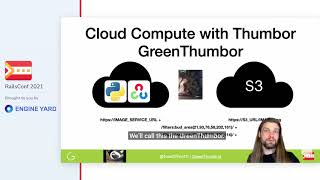
Exploring Real-time Computer Vision Using ActionCable
Integrate Rails and Python for real-time computer vision analysis, combining OpenCV with ActionCable & Sidekiq to broadcast insights and create time-lapse renderings with graphs.
Scaling ML Pipelines with KALE - The Kubeflow Automated Pipeline Engine
Discover KALE, the Kubeflow Automated Pipeline Engine, for scaling ML pipelines. Learn how to transform Jupyter Notebook experiments into production-grade pipelines for efficient model training and real-time serving.
AI Inference on the Edge Cloud Using WebAssembly
Explore WebAssembly-based AI inference on edge cloud, covering Tensorflow approaches and performance gains. Learn about future prospects for edge AI using WebAssembly.
Machine Learning with Wasm - WASI-NN
Explore machine learning with WebAssembly using WASI-NN for near-native performance on various devices. Learn interface design, implementation, and build an image classification app.
Apache Teaclave - An Open Source Universal Secure Computing Platform in Rust
Explore Apache Teaclave, a Rust-based secure computing platform using Intel SGX for privacy-sensitive data processing, supporting various tasks like machine learning and multi-party computation.