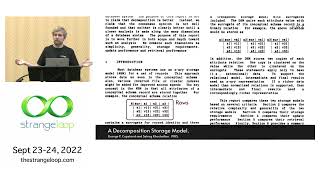
Light and Adaptive Indexing for Immutable Databases
Explore innovative indexing strategies for large-scale immutable databases, including learned and adaptive indexes, addressing engineering challenges in distributed environments.

Exploring Deep Space and Deep Ocean with AI Guidance
Discover how AI and ML advance exploration of extreme environments like deep oceans and space, focusing on autonomous decision-making, data collection, and spectroscopy techniques.
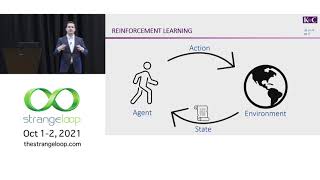
Crowd Dynamics, RL and Unity - A Journey
Explore crowd dynamics modeling using reinforcement learning and Unity. Learn about extended Kalman filters, PPO in Unity-ML, and result validation for simulating diverse crowd behaviors.
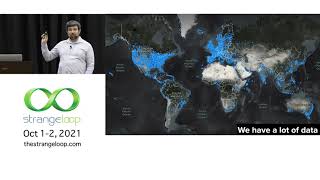
Impacting Global Policy by Understanding Litter Data
Explore how data analysis of global litter can inform policy, influence packaging, and inspire personal responsibility using computer vision and machine learning techniques.
Client Side Deep Learning Optimization with PyTorch
Explore real-time computer vision on mobile devices using PyTorch. Learn model porting, optimization techniques, and performance benchmarking for client-side deep learning applications.
CloudLeak - DNN Model Extractions from Commercial MLaaS Platforms
Explore DNN model extraction vulnerabilities in cloud-based machine learning services, examining security risks and potential countermeasures for MLaaS platforms.

Uncommon Sense - Detecting Exploits with Novel Hardware Performance Counters and ML Magic
Explore novel hardware performance counters and machine learning techniques to detect advanced exploits like speculative execution, Rowhammer, and ROP, enhancing cybersecurity defenses against evolving threats.
Superman Powered by Kryptonite - Turn the Adversarial Attack into Your Defense Weapon
Explore how AI-powered attacks on security mechanisms can be turned into defensive strategies, focusing on adversarial examples and innovative countermeasures in cybersecurity.

Demystify AI Security Products With a Universal Pluggable XAI Translator
Explore a universal XAI translator to evaluate AI-powered security products, bridging research and practice for informed decision-making in the rapidly evolving field of AI security.
Measuring the Speed of the Red Queen's Race - Adaption and Evasion in Malware
Explore the dynamic evolution of malware and security measures using machine learning to quantify adaptation rates in the ongoing cybersecurity arms race.

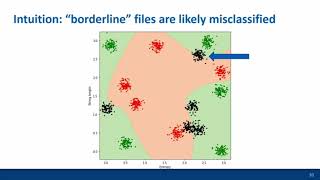
Those Don't Matter! Effective Prioritization Through Exploit Prediction
Discover a machine learning classifier for data-driven vulnerability prioritization, enhancing risk management strategies and improving decision-making in cybersecurity.
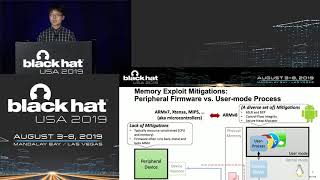
PeriScope - An Effective Probing and Fuzzing Framework for the Hardware-OS Boundary
Explore PeriScope, a Linux-based framework for analyzing device-driver interactions, enabling passive monitoring and active fuzzing to enhance hardware-OS boundary security.

DeepPhish - Simulating Malicious AI
Explore AI-driven phishing simulation techniques, including neural networks and URL prediction, to enhance cybersecurity defenses against sophisticated email-based attacks.
Your Voice is My Passport
Explore machine learning's impact on voice authentication security, including synthetic audio generation and potential vulnerabilities in financial and home automation systems.

Graph Convolutional Network-Based Suspicious Communication Pair Estimation for Industrial Control Systems
Explore graph convolutional networks for detecting suspicious communication pairs in industrial control systems, enhancing security monitoring beyond traditional whitelisting methods.

Attacking and Defending Machine Learning Applications of Public Cloud
Explore techniques for attacking and defending machine learning applications in public cloud environments, focusing on visual classification vulnerabilities and countermeasures.

Perception Deception - Physical Adversarial Attack Challenges
Explore physical adversarial attacks on object detection systems, focusing on YOLOv3. Learn tactics to overcome challenges in real-world scenarios and understand implications for AI security.

Protecting the Protector - Hardening Machine Learning Defenses Against Adversarial Attacks
Strategies for enhancing machine learning model resilience against tampering, comparing cloud and client-based models, and exploring defense techniques for endpoint protection systems.
How Supercomputer-Scale Neural Network Models Apply to Defensive Cybersecurity Problems
Explore how large-scale neural networks revolutionize cybersecurity, enabling custom explanations of attacker behavior and improved threat detection with limited data. Learn to leverage public models like GPT-3 for security applications.
Smashing the ML Stack for Fun and Lawsuits
Explore legal risks and ethical considerations of testing commercial ML systems' security, with insights on potential lawsuits and regulatory implications for researchers.
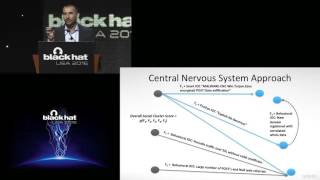
From False Positives to Actionable Analysis
Modeling human behavior in network traffic to automatically label security events, using distributed forensic AI for threat detection and response optimization.