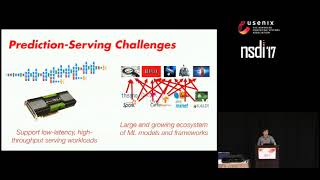
Clipper - A Low-Latency Online Prediction Serving System
Explore Clipper, a low-latency prediction serving system that enhances machine learning deployment with improved latency, throughput, accuracy, and robustness across various frameworks and applications.
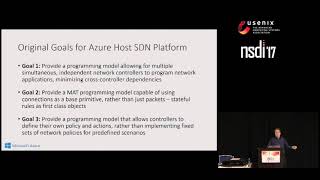
VFP - A Virtual Switch Platform for Host SDN in the Public Cloud
Explore Microsoft Azure's Virtual Filtering Platform (VFP), a programmable virtual switch for host SDN in public clouds. Learn its design, API, flow language, and real-world performance in large-scale deployments.
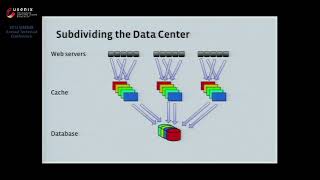
TAO - Facebook’s Distributed Data Store for the Social Graph
Explore Facebook's TAO, a distributed data store designed for efficient social graph access. Learn about its architecture, API, and how it handles billions of reads and millions of writes per second.
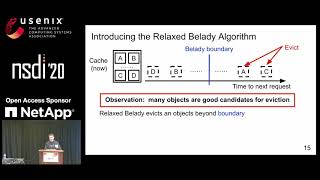
Learning Relaxed Belady for Content Distribution Network Caching
Innovative machine learning approach for CDN caching, approximating Belady MIN algorithm. Reduces WAN traffic, outperforms state-of-the-art methods, with modest overhead for real-world deployment.
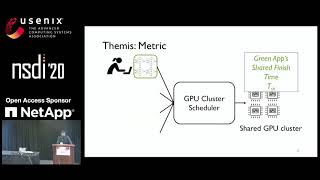
Themis - Fair and Efficient GPU Cluster Scheduling
Innovative GPU cluster scheduling framework for fair and efficient allocation of resources in distributed machine learning workloads, addressing unique challenges of long-running, gang-scheduled tasks and placement sensitivity.
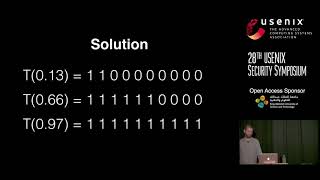
Lessons Learned from Evaluating the Robustness of Defenses to Adversarial Examples
Explore lessons from evaluating adversarial example defenses, common pitfalls, and recommendations for thorough defense assessments in machine learning security research.
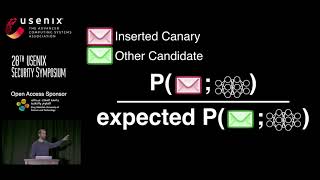
The Secret Sharer - Evaluating and Testing Unintended Memorization in Neural Networks
Explore techniques to evaluate and mitigate unintended memorization in neural networks, focusing on privacy risks and practical strategies for deep learning practitioners.
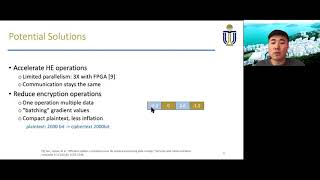
BatchCrypt - Efficient Homomorphic Encryption for Cross-Silo Federated Learning
Efficient homomorphic encryption system for cross-silo federated learning, reducing encryption and communication overhead while maintaining privacy and accuracy in collaborative machine learning.
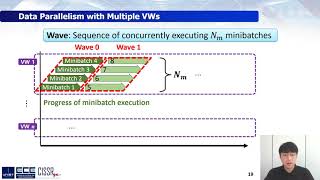
HetPipe - Enabling Large DNN Training on Heterogeneous GPU Clusters through Integration of Pipelined Model Parallelism and Data Parallelism
Explores HetPipe, a system integrating pipelined model parallelism and data parallelism for training large DNNs on heterogeneous GPU clusters, improving performance and enabling use of less powerful GPUs.
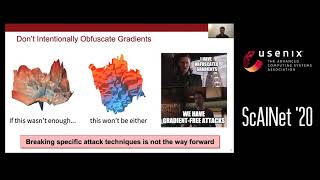
On Adaptive Attacks to Adversarial Example Defenses
Explore adaptive attacks on adversarial example defenses, examining challenges, whitebox attacks, and key observations to understand vulnerabilities in machine learning security.
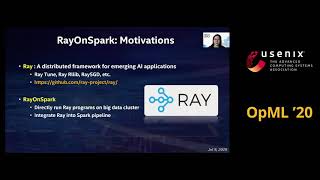
Scalable AutoML for Time Series Forecasting Using Ray
Explore scalable AutoML for time series forecasting using Ray, covering feature generation, model selection, and distributed hyper-parameter tuning with real-world applications and insights.
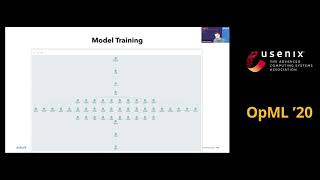
Managing ML Models at Scale - Intuit’s ML Platform
Explore Intuit's ML Platform for scalable, secure model lifecycle management using GitOps, SageMaker, Kubernetes, and Argo Workflows. Learn about feature management, cost optimization, and enterprise-level ML model deployment.
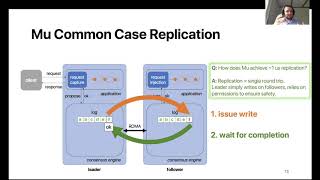
Microsecond Consensus for Microsecond Applications
Innovative consensus protocol leveraging RDMA for microsecond-scale replication and rapid fail-over in latency-sensitive applications, significantly outperforming existing systems.
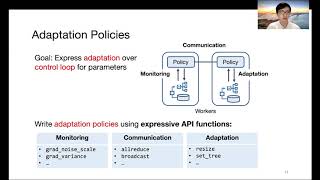
KungFu - Making Training in Distributed Machine Learning Adaptive
KungFu: adaptive distributed machine learning library for TensorFlow. Enables real-time parameter tuning using high-level policies, efficient monitoring, and asynchronous communication for improved training performance.
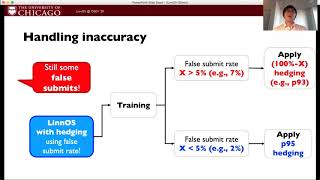
LinnOS - Predictability on Unpredictable Flash Storage with a Light Neural Network
Explore LinnOS, an OS using neural networks to predict SSD performance, enhancing storage application efficiency and outperforming industrial mechanisms with minimal overhead.

Stealing Machine Learning Models via Prediction APIs
Explores model extraction attacks on machine learning systems, demonstrating vulnerabilities in publicly accessible ML interfaces and proposing potential countermeasures to protect confidential models.
Automating Performance Tuning with Machine Learning
Explore machine learning-driven automation for optimizing Kubernetes microservices and JVM settings, enhancing performance, efficiency, and cost-effectiveness in complex tech stacks.
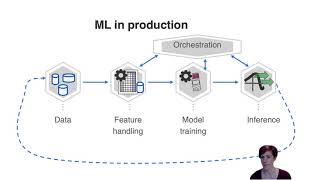
Demystifying Machine Learning in Production - Reasoning about a Large-Scale ML Platform
Explore techniques for managing and improving reliability in large-scale machine learning production systems, focusing on common failure modes, best practices, and practical strategies for SREs.
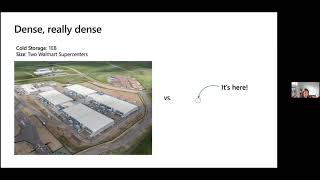
DNA Data Storage and Near-Molecule Processing for the Yottabyte Era
Explore DNA data storage and near-molecule processing for the yottabyte era, including encoding, decoding, random access, and potential for hybrid electronic/molecular computing systems.
Zen and the Art of Adversarial Machine Learning
Explore security concerns in machine learning integration, including data extraction, model evasion, and biased outcomes. Learn operational guidance and tools for addressing these challenges.

Finding Vulnerabilities in TensorFlow
Explore vulnerabilities in TensorFlow through advanced fuzzing techniques, focusing on deep issues hidden in complex code logic and semantic contexts beyond traditional API fuzzing methods.