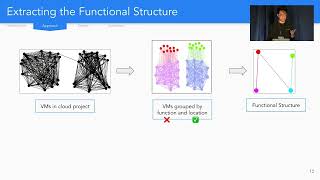
CloudCluster - Unearthing the Functional Structure of a Cloud Service
Unearths cloud service functional structure using VM-to-VM traffic matrix clustering. Aids management by revealing design patterns, enabling cost reduction, and identifying anomalies and misconfigurations.

Machine Learning Models that Predict Mental Health Status on Twitter and Their Privacy Implications
Exploring machine learning's potential to predict mental health from social media posts, discussing privacy implications, language patterns, and mitigation strategies for ethical implementation.

Someone Is Lying to You on the Internet - Using Analytics to Find Bot Submissions in the FCC Net Neutrality Submissions
Uncover bot-driven FCC net neutrality comments using open-source analytics. Learn how data analysis revealed stark differences between bulk API submissions and individual website comments, exposing potential manipulation of public opinion.
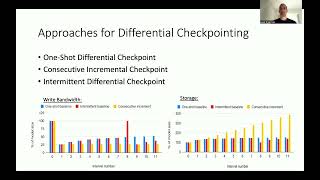
Check-N-Run - A Checkpointing System for Training Deep Learning Recommendation Models
Innovative checkpointing system for large ML models, reducing bandwidth and storage needs through differential checkpointing and quantization techniques without compromising training accuracy.
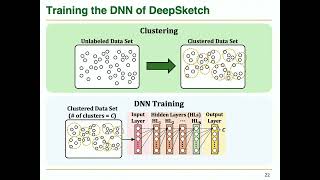
DeepSketch - A New Machine Learning-Based Reference Search Technique for Post-Deduplication Delta Compression
Explores DeepSketch, a machine learning-based technique for post-deduplication delta compression in storage systems, improving data reduction efficiency through enhanced reference search accuracy.
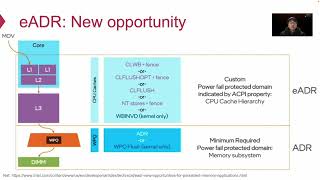
HTMFS - Strong Consistency Comes for Free with Hardware Transactional Memory in Persistent Memory File Systems
Explore hardware-software cooperation for high-performance, strongly consistent persistent memory file systems using Hardware Transactional Memory, overcoming traditional trade-offs between speed and data integrity.
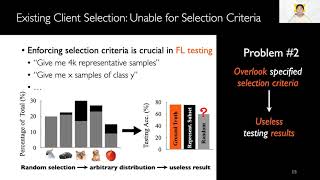
Oort - Efficient Federated Learning via Guided Participant Selection
Efficient federated learning system that improves model training and testing by intelligently selecting participants based on data utility and device capabilities, enhancing accuracy and performance.
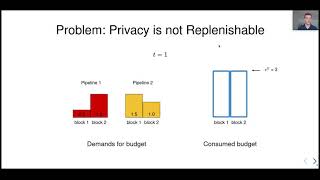
Privacy Budget Scheduling
Explores privacy budget scheduling in machine learning, introducing PrivateKube for managing differential privacy as a resource. Presents DPF algorithm for fair allocation of non-replenishable privacy budgets in ML workloads.
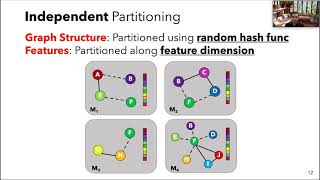
Distributed Deep Graph Learning at Scale
Explores a novel system for scaling Graph Neural Network training to large real-world graphs, introducing pipelined push-pull parallelism for faster and more efficient distributed processing.
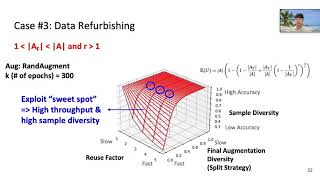
Refurbish Your Training Data - Reusing Partially Augmented Samples for Faster Deep Neural Network Training
Innovative data refurbishing technique accelerates deep neural network training while maintaining model generalization by reusing partially augmented samples and optimizing CPU-GPU overlap.
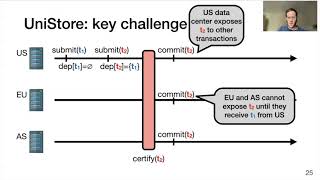
UniStore - A Fault-Tolerant Marriage of Causal and Strong Consistency
Explores a fault-tolerant data store combining causal and strong consistency for geo-distributed systems, addressing liveness challenges and optimizing durability costs in multi-consistency environments.
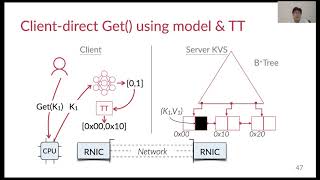
Fast RDMA-based Ordered Key-Value Store Using Remote Learned Cache
Explores XSTORE, an RDMA-based key-value store using machine learning models as cache for tree-based indexes, improving performance and scalability while efficiently handling dynamic workloads and reducing client-side memory usage.

IPv666 - Address of the Beast
Explore IPv6 security implications, including enumeration techniques, statistical models for host discovery, and honeypotting methods. Learn about IPv6 exposure compared to IPv4 and access open-source scanning software.
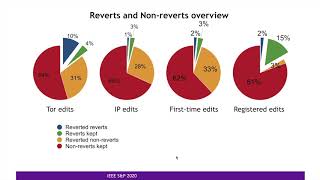
Are Anonymity-Seekers Just like Everybody Else? An Analysis of Contributions to Wikipedia from Tor
Análisis de contribuciones anónimas a Wikipedia a través de Tor, comparando calidad y patrones con otros tipos de usuarios para evaluar el impacto de bloquear proxies de privacidad.
Algorithmic Transparency via Quantitative Input Influence - Theory and Experiments with Learning Systems
Exploring quantitative input influence measures to enhance algorithmic transparency in machine learning systems, with applications in decision-making, oversight, and privacy-preserving transparency reports.

Hear "No Evil", See "Kenansville" - Efficient and Transferable Black-Box Attacks on Automatic Speech Recognition Systems
Explore efficient black-box attacks on automatic speech recognition systems, including untargeted and targeted attacks, their impact on transcription, and real-world implications through demos and user studies.

The Future of Augmented Intelligence - If You Can’t Beat ‘em, Join ‘em
Experts explore the potential of humans working with AI, discussing trust in machine decisions, societal benefits, and the redefinition of AI as Augmented Intelligence.

AI and the Art of Ingenuity - Computational Creativity
Explore the future of creativity as artists, scientists, and experts discuss AI's role in art, music, and innovation, examining the potential and limitations of computational creativity.
SRE and ML - Why It Matters
Explore the intersection of SRE and Machine Learning, discussing its importance, challenges in ML reliability, and potential changes to the SRE profession. Skeptically examines ML automation in production.

All of Our ML Ideas Are Bad - and We Should Feel Bad
Explores limitations of Machine Learning in production engineering, debunking common misconceptions and discussing potential feasible applications for SREs.

Advanced Napkin Math - Estimating System Performance from First Principles
Learn to quickly estimate system performance using base rates and napkin math, enabling informed decision-making in technical discussions and design processes without building systems first.