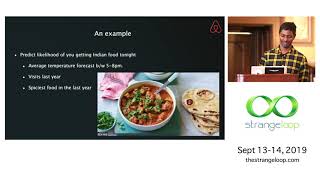
Zipline - A Declarative Feature Engineering Library
Explore Zipline, Airbnb's declarative feature engineering library for ML, reducing data preparation time from months to days and enabling efficient point-in-time correct feature generation.
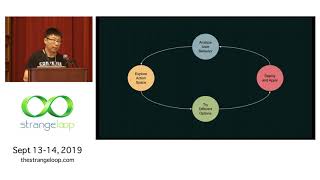
Realtime Hybrid Reinforcement Learning at Scale
Explore hybrid reinforcement learning for next best action recommendations, addressing challenges in incomplete feedback, dynamic actions, complex objectives, and real-time decision-making at scale.
Explainable AI - The Apex of Human and Machine Learning
Explore the emerging field of Explainable AI, its importance in high-risk domains, and how it bridges the gap between human cognition and machine learning for more intuitive and understandable AI systems.
Federated Learning - Private Distributed ML
Explore federated learning for private, distributed machine learning across devices or entities, addressing data sharing constraints while enabling collaborative model training.
Just-So Stories for AI - Explaining Black-Box Predictions
Explore state-of-the-art strategies for explaining black-box AI predictions, discussing interpretability challenges and insights into human decision-making and ethical implications.
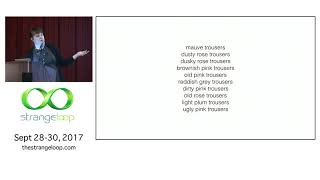
Experimental Creative Writing with the Vectorized Word
Explore experimental creative writing using vector representations of language, blending computational techniques with poetic expression for unique semantic and phonological effects.
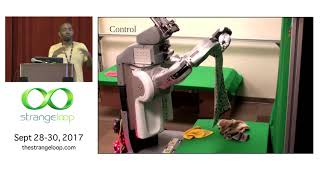
Running Programs in Reverse for Deeper A.I.
Explore inverse simulation for AI advancement, covering mental simulation, animation, and a novel approach using ReverseFlow to compile programs into their inverses, enhancing vision and planning capabilities.
Poetry - Teaching Versification to a Neural Network
Explore poetry generation using neural networks, balancing constraints and expression. Learn techniques to spot and create poetry with minimal assumptions, touching on classical rules and deep learning models.
Democratizing AI - Back-Fitting End-to-End Machine Learning
Explore LinkedIn's journey in democratizing AI, enhancing modeler efficiency, and scaling machine learning across engineering teams through innovative infrastructure and practices.

Learning from Machines
Explore cognitive models inspired by machine learning, offering insights into perception, expertise, and trauma. Gain a new perspective on human cognition and self-awareness.
Algorithms That Teach You Math
Explore algorithms designed to teach math step-by-step, optimizing for intuitive explanations rather than speed. Learn about mathsteps, an open-source library for solving and explaining algebra problems.
Immutable Data Science with Datomic, Spark and Kafka
Explore innovative data science architecture using Datomic, Spark, and Kafka for scalable real-time analysis without traditional ETL, offering immutability, multi-database querying, and horizontal read scalability.
What You Always Wanted to Know About Deep Learning, but Were Afraid to Ask
Demystifying deep learning concepts like back-propagation, gradient descent, and neural networks. Practical guide to training a model for object recognition using TensorFlow and Keras.
F# as a Better Python
Explore how F# addresses Python's limitations in web development, data scripting, and machine learning while leveraging Python's ecosystem. Learn F#'s advantages in static typing, environment setup, and functional programming.
Natural Language Processing with Deep Learning and TensorFlow
Explore deep learning for NLP using TensorFlow. Learn to create embeddings, build neural networks, and apply them to classification tasks with hands-on labs and interactive learning.
Automatic Text Summarization
Explore algorithms and tools for automatic text summarization, including extractive and abstractive methods, and learn about evaluation techniques for assessing summary quality.
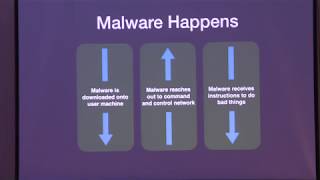
Deep Learning for Realtime Malware Detection
Explore an ensemble deep learning model for real-time malware detection, combining CNN, LSTM, and NLP techniques to analyze domain names and identify potential threats with high accuracy.
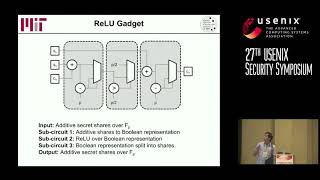
GAZELLE - A Low Latency Framework for Secure Neural Network Inference
Efficient framework for secure neural network inference combining homomorphic encryption and two-party computation, outperforming existing systems in speed while preserving privacy for cloud-based machine learning.

Why Do Keynote Speakers Keep Suggesting That Improving Security Is Possible
Humorous critique of tech industry's approach to security, highlighting flaws in machine learning, AI, and IoT while advocating for ethical computing and thoughtful development.
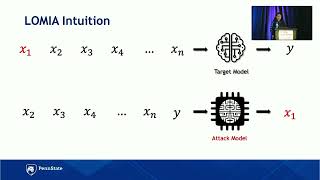
Are Your Sensitive Attributes Private? Novel Model Inversion Attribute Inference Attacks on Classification Models
Novel model inversion attacks on classification models reveal vulnerabilities in ML technologies, potentially leaking sensitive training data. Explores confidence score-based and label-only attacks, demonstrating disparate vulnerability across different…
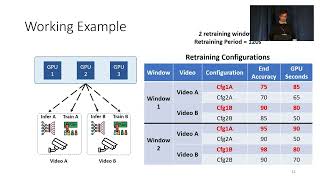
Ekya - Continuous Learning of Video Analytics Models on Edge Compute Servers
Continuous learning for edge video analytics models, addressing data drift and balancing inference-retraining tradeoffs. Ekya optimizes resource allocation for improved accuracy with fewer GPU resources.