
Insights from NSA’s Cybersecurity Threat Operations Center
Exclusive insights into NSA's Cybersecurity Threat Operations Center, covering top threats, best practices for cyber-defense, and emerging technologies like machine learning. Equips audience with actionable strategies for daily operations.
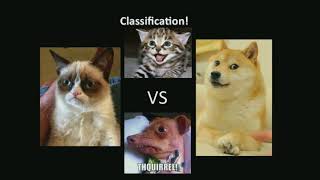
Predicting Exploitability - Forecasts for Vulnerability Management
Discover how machine learning models can predict vulnerability exploits with 90% accuracy, enhancing security forecasting and vulnerability management strategies.
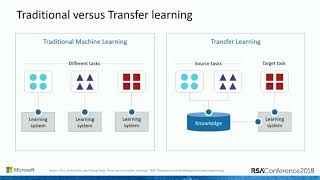
Transfer Learning - Repurposing ML Algorithms from Different Domains to Cloud Defense
Explore innovative ML applications in cybersecurity through transfer learning, leveraging algorithms from other domains to enhance cloud defense and tackle emerging threats.
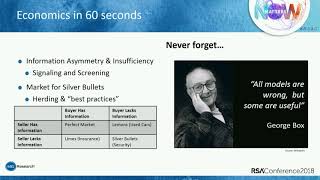
Endpoint Security - A Marketplace of Silver Bullets
Explore modern endpoint security trends, techniques, and vendor groupings. Learn about analytic approaches, market dynamics, and future directions in this evolving field.
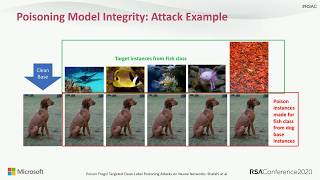
AI Security Engineering - Modeling - Detecting - Mitigating New Vulnerabilities
Explore AI security threats, including adversarial attacks and data poisoning. Learn detection, protection, and mitigation strategies for AI/ML systems from Microsoft experts.
Beyond Sentiment Analysis - Real Time Object Detection with ML NET
Explore real-time object detection using ML.NET, learn about computer vision applications, and discover tools for image labeling and model building in the .NET ecosystem.
AI - Machine Learning - What is Actually Working in Cybersecurity
Explore real-world applications of AI and ML in cybersecurity, focusing on practical use cases that have shown value in reducing detection, response, and restoration times.
Nowhere to Hide - How HW Telemetry and ML Can Make Life Tough for Exploits
Explore how CPU telemetry and machine learning can detect concealed malicious code, with insights on feature selection, overhead management, and platform-specific design for effective threat detection.
Securing the Software Development Life Cycle with Machine Learning
Learn to leverage machine learning and NLP for identifying and tracking security bugs throughout software development, covering concepts, challenges, and practical implementation strategies.
Protect Privacy in a Data-Driven World - Privacy-Preserving Machine Learning
Explore privacy-preserving machine learning techniques to harness AI's power while maintaining data confidentiality, with insights on federated learning, trusted execution environments, and homomorphic encryption.
Malicious Documents Emerging Trends - A Gmail Perspective
Comprehensive analysis of malicious document trends targeting Gmail users, exploring attacker tactics and Google's defensive strategies using AI detection and traditional antivirus methods.
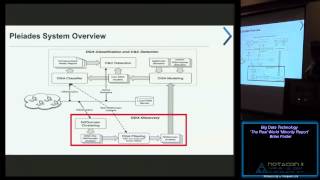
Big Data Technology - The Real World Minority Report
Explore big data's role in cybersecurity, including network analysis, domain reputation, and machine learning techniques for threat detection and prevention.

Using Machine Learning to Support Information Security
Explore machine learning applications in information security, covering types of ML, data gathering, and practical implementation strategies for InfoSec professionals.
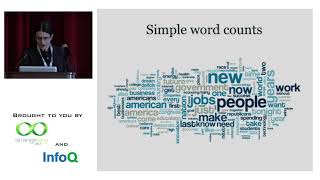
How Does Text Become Data
Explore concept-based text understanding and its applications in NLP. Learn to build models of human thinking for search engines, recommender systems, and classifiers using practical examples and code.
Machine Learning for Relevance and Serendipity
Explore machine learning for personalized content discovery, featuring real-time relevance models, topical classification, and targeted serendipity in news recommendation systems.
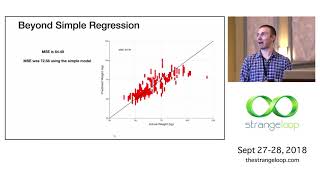
Scala DSLs and Probabilistic Programming
Explore ScalaStan, a type-safe DSL for statistical modeling with Stan, enabling programmatic manipulation and generation of Stan programs within Scala for efficient Bayesian inference and data analysis.

Machine Learning Failures - For Art
Explore hilarious machine learning failures in art, from cookie recipes to pony classification, and learn how to deliberately create amusing AI mistakes.

Privacy - The Last Stand for Fair Algorithms
Explore privacy's role in creating fair algorithms and ethical machine learning models. Learn about privacy-preserving techniques and their impact on data science and product design.
An Overview of Probabilistic Programming
Explore probabilistic programming through BayesDB, Picture, and Venture platforms. Learn about Bayesian databases, 3D scene perception, and general-purpose probabilistic computing for data analysis and AI applications.

Architectural Patterns of Resilient Distributed Systems
Explore architectural patterns for building resilient distributed systems, focusing on adaptation, decomposition, consistency, and safety. Learn strategies for system evolution and testing.

Probabilistic Scripts for Automating Common-Sense Tasks
Explore probabilistic scripting for automating common-sense tasks, focusing on data cleaning. Learn how to encode domain knowledge and leverage probabilistic programming for efficient problem-solving.