Predicting Energies from Electron Densities - Machine Learning for Reactive Molecular Dynamics
Explore machine learning techniques for predicting molecular energies from electron densities, with applications in reactive molecular dynamics and density functional theory.
Learning Science with Machine Learning - Opening the Pandora Box
Explore how machine learning techniques can enhance scientific understanding and data analysis in cosmology, with insights on model interpretation and innovative approaches.
Tensor Networks and Neural Network States - From Chiral Topological Order to Image Classification
Explore neural networks in quantum physics and image recognition, bridging manybody physics with machine learning for innovative applications in various fields.
From Reinforcement Learning to Spin Glasses - The Many Surprises in Quantum State Preparation
Explore quantum state preparation, reinforcement learning, and spin glasses, uncovering surprising connections and insights in this cutting-edge physics research presentation.
Bridging Deep Learning and Many-Body Quantum Physics via Tensor Networks
Explore connections between deep learning and quantum physics through tensor networks, examining architectures, entanglement measures, and information flow in neural networks.
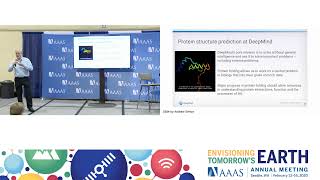
AI for Science - Expo Stage Talk - AAAS Annual Meeting
Explore the impact of deep learning on scientific research, from cryoelectron microscopy to AlphaFold, and discover how AI is revolutionizing various scientific disciplines.
Innovation in Quantum Software - Alán Aspuru-Guzik - AAAS Annual Meeting
Explore innovative quantum software algorithms and their applications in chemical discovery, combining quantum computing with machine learning for accelerated scientific breakthroughs.
Machine Learning Can't Solve the Gold Standard Problem in Cancer Diagnosis - Adewole Adamson - AAAS Annual Meeting
Machine learning in cancer diagnosis: promises, challenges, and potential harms. Explores the gold standard problem and proposes solutions to maximize benefits while mitigating risks.

Unlocking the Power of ML for Your JavaScript Applications with TensorFlow.js
Explore TensorFlow.js for ML in JavaScript: learn to integrate, retrain models, and leverage ML beyond browsers. Includes demos of virtual makeup try-on and radiology diagnostics.
The Future of Apache Mesos and DC/OS
Explore the future of Apache Mesos and DC/OS, covering container orchestration, stateful services, machine learning, and GPU-based scheduling. Gain insights into evolving ecosystem and upcoming developments.
Automated Performance Tuning with Bayesian Optimization
Explore automated performance tuning using Bayesian optimization for efficient resource management in large-scale microservice architectures, focusing on JVM optimization and continuous improvement.
Hands-On Real Time Stream Processing for Machine Learning
Explore real-time stream processing for machine learning with hands-on examples, covering key concepts like windowing, checkpointing, and scalable architectures for continuous data analysis.
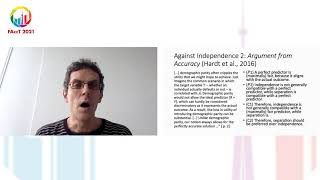
Group Fairness - Independence Revisited
Explore the concept of group fairness and independence in algorithmic decision-making, examining its implications, limitations, and potential improvements for ethical AI systems.
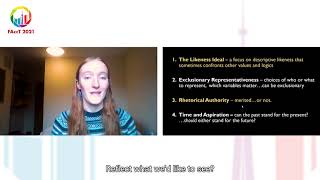
Representativeness in Statistics, Politics, and Machine Learning
Explore the concept of representativeness across statistics, politics, and machine learning, examining its roots, applications, and ethical implications in various fields.
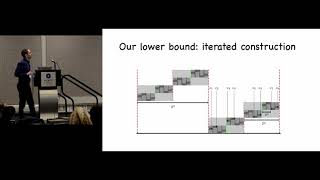
Finding Monotone Patterns in Sublinear Time
Explore efficient algorithms for detecting monotone patterns in large datasets, focusing on sublinear time complexity and adaptive techniques for various pattern types.
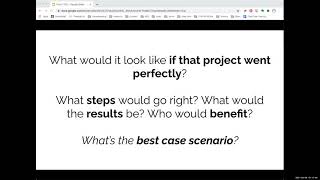
Translation Tutorial - Thinking Through and Writing About Research Ethics Beyond "Broader Impact"
Explore research ethics beyond "broader impact" in computing, focusing on lifecycle approaches and case studies to develop a more comprehensive ethical framework for technology projects.
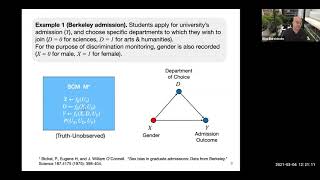
Translation Tutorial - Causal Fairness Analysis
Explore causal fairness analysis through structural causal models, examining real-world cases like university admissions and criminal justice predictions to understand and mitigate algorithmic bias.
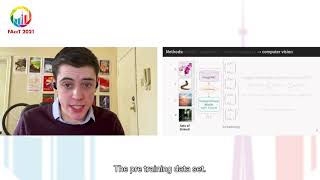
Image Representations Learned With Unsupervised Pre-Training Contain Human-like Biases
Explore how unsupervised pre-training in image representations can lead to human-like biases, examining methods, results, and implications for AI fairness and ethics.
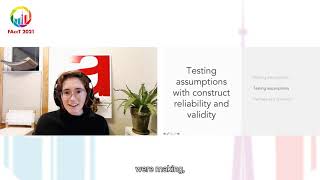
Measurement and Fairness
Explore the intersection of measurement and fairness in computing, examining reliability, validity, and group fairness concepts to enhance ethical decision-making in technology.
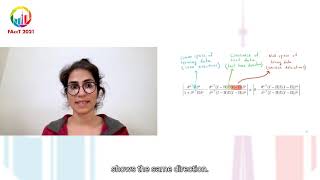
Removing Spurious Features Can Hurt Accuracy and Affect Groups Disproportionately
Explore the impact of removing spurious features on model accuracy and group fairness in machine learning, examining potential unintended consequences and ethical implications.
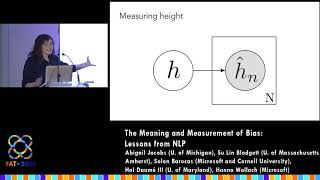
The Meaning and Measurement of Bias - Lessons from NLP
Explore the complexities of bias in NLP, covering measurement processes, construct validity, and fairness evaluation. Gain insights into representational harms and practical examples in word embeddings.