
Positionality-Aware Machine Learning
Explore positionality in machine learning, examining its impact on data, models, and outcomes through case studies and diverse perspectives.

Learning Algorithms
Exploration of fairness in machine learning algorithms, focusing on disparity assessment, classification with fairness constraints, and comparative studies of fairness-enhancing interventions.

The Cost of Fairness in Binary Classification
Explore the cost of fairness in binary classification, analyzing risk, optimal classifiers, and fairness frontiers with implications for stereotypes and decision-making.

Interpretable Active Learning
Explore interpretable active learning techniques for machine learning models, focusing on transparency and understanding of model decisions in real-world applications.

Interventions over Predictions - Reframing the Ethical Debate for Actuarial Risk Assessment
Reframing ethical debates on actuarial risk assessment, focusing on interventions over predictions. Explores historical context, machine learning implications, and causal inference in risk evaluation.

Towards Intersectional Feminist and Participatory ML - A Case Study in Supporting Feminicide Counterdata Collection
Explore intersectional feminist approaches to machine learning through a case study on feminicide data collection, addressing biases and promoting participatory methods.

Subverting Fair Image Search with Generative Adversarial Perturbations
Explore techniques to manipulate fair image search algorithms using adversarial perturbations, examining methods, experiments, and implications for algorithmic fairness.
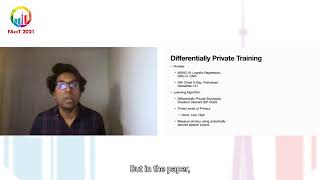
Chasing Your Long Tails - Differentially Private Prediction in Health Care Settings
Explore differential privacy in healthcare ML, addressing unique challenges, extreme tradeoffs, and fairness considerations for underrepresented groups in medical datasets.

One Label, One Billion Faces - Usage and Consistency of Racial Categories in Computer Vision
Explores racial categorization in computer vision, examining usage, consistency, and implications for fairness in AI systems. Highlights challenges and potential biases in facial recognition technology.
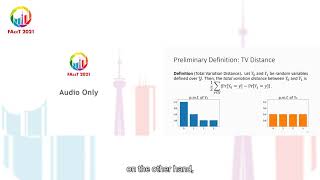
Avoiding Disparity Amplification under Different Worldviews
Explore strategies to prevent amplification of disparities in machine learning systems while considering diverse worldviews, with a focus on fairness and utility in decision-making processes.
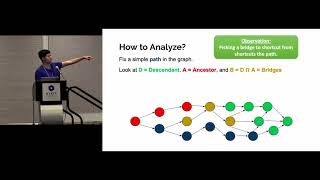
Parallel Reachability in Almost Linear Work and Square Root Depth
Explore efficient parallel algorithms for graph reachability, focusing on distributed computing and improved runtime complexity in large-scale networks.
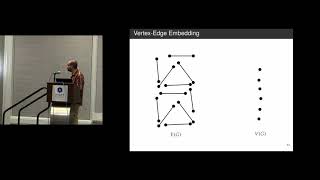
Inapproximability of Clustering in Lp Metrics
Explores computational complexity of clustering in Lp metrics, discussing approximation algorithms, hardness of approximation, and key concepts like Johnson Coverage Hypothesis.
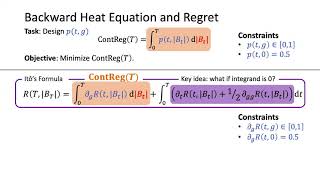
Optimal Anytime Regret with Two Experts
Explore optimal anytime regret in expert learning, focusing on two-expert scenarios. Discover techniques, proof overviews, and algorithmic designs for minimizing regret in prediction tasks.
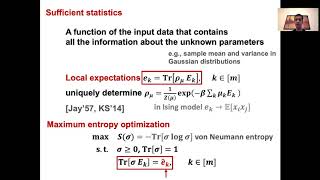
Sample-Efficient Learning of Quantum Many-Body Systems
Learn efficient techniques for studying complex quantum systems, exploring probability distributions, state operators, and optimization methods in quantum mechanics.

Smoothed Analysis in Unsupervised Learning via Decoupling
Explore smoothed analysis in unsupervised learning, focusing on tensor decomposition, high-dimensional data, and robust subspace recovery. Gain insights into condition number bounds and perturbation techniques.
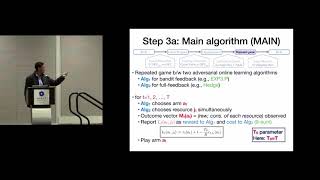
Adversarial Bandits with Knapsacks
Explore dynamic pricing and bandits with knapsacks in adversarial settings, covering algorithms, challenges, and future research directions in this field.
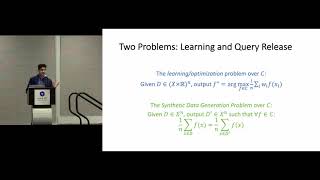
How to Use Heuristics for Differential Privacy
Learn about differential privacy heuristics, their properties, and applications in machine learning. Explore modular design, universal identification, and privacy analysis techniques.

Collaborative Learning with Limited Interaction - Tight Bounds for Distributed Exploration in Bandits
Explore distributed multi-armed bandit algorithms for collaborative learning with limited communication, analyzing tradeoffs between runs and speedup in adaptive and non-adaptive settings.
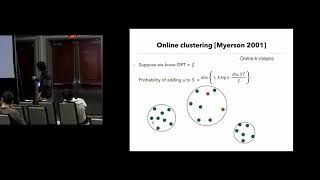
Residual Based Sampling for Online Low Rank Approximation
Explore online low rank approximation through residual-based sampling, covering PCA, column subset selection, and online algorithms. Learn techniques for efficient data analysis and clustering.

Digital Transformation, AI & an Innovation Mindset
Explore AI's impact on innovation, culture, and business with industry leaders. Learn to foster customer-centric thinking, leverage machine learning, and embrace new perspectives for success.

Leveling Up Through Customer Engagement
Explore strategies for building and maintaining engaged gaming communities, focusing on personalization, social engagement, and innovative retention tactics in the evolving video game industry.