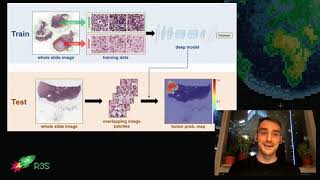
Artificial Intelligence? More Like Artificial Stupidity!
Kritische Betrachtung der Grenzen und Risiken von KI/ML, mit Fokus auf Diskriminierung von Minderheiten und mögliche tödliche Konsequenzen. Erläutert Ursachen für Fehler und Lösungsansätze.
Corona-Warn-App
Explore the Corona-Warn-App's architecture, focusing on data privacy, security, and invisible aspects like plausible deniability and risk calculation. Learn about backend design and protection measures.
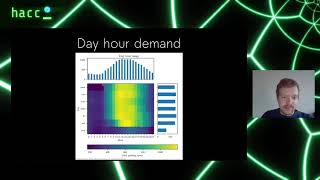
A Few Quantitative Thoughts on Parking in Marburg - RC3 - 2020
Analyse des données de stationnement à Marburg : tendances, modèles et prévisions pour optimiser l'utilisation des espaces de stationnement et améliorer la planification urbaine.
Automating Cookie Consent and GDPR Violation Detection - Karel Kubicek - Media.CCC.De
Explore automated GDPR compliance for cookie consent, including violation detection and a browser extension for enforcing privacy preferences using machine learning techniques.
FeatureSmith- Learning to Detect Malware by Mining the Security Literature - USENIX Enigma 2017
Automated feature engineering system for malware detection using AI to synthesize knowledge from research papers, achieving comparable performance to manual methods and suggesting new informative features.
Attack Vectors in Biometric Recognition Systems - Mobile Authentication Use Case, Blockchain, and More
Explore vulnerabilities in biometric recognition systems, including mobile authentication, spoofing techniques, and emerging technologies like blockchain, with insights on future developments and security challenges.

Application Logging in the Era of GDPR
Explore application logging best practices in the GDPR era, covering security, privacy, data protection, and compliance recommendations for developers and operations teams.
Achieve AI-powered API Privacy Using Open Source
Explore AI-powered API privacy using open-source tools. Learn about Privacy-by-Design, threat modeling, and leveraging deep neural networks to protect customer data in software development.

On the Internet, Nobody Knows You're a Dog - Revisiting the Meme After 25 Years
Explore the evolution of online identity verification, from historical trends to current challenges and future opportunities, including AI and ML applications in authentication and access management.
How to Build an Effective Malware Protection Architecture for File Uploads in Modern Web Apps
Explore a novel approach to automated malware analysis for file uploads in web apps, focusing on scalability, performance, and effective detection of malicious content.
Pose a Threat - How Perceptual Analysis Helps Bug Hunters
Innovative techniques for efficient bug hunting using perceptual analysis, serverless infrastructure, and machine learning to identify security vulnerabilities at scale.
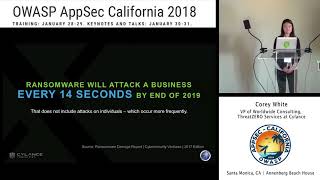
Prevention as a Business Strategy
Explore how prevention-focused cybersecurity strategies using AI and machine learning can protect businesses from evolving threats, reducing risks and costs associated with traditional detect-and-respond approaches.
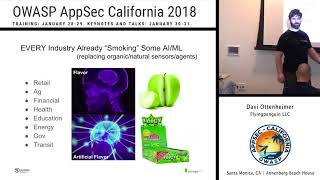
Unpoisoned Fruit - Seeding Trust into a Growing World of Algorithmic Warfare
Exploración de los desafíos éticos y de seguridad en la inteligencia artificial y el aprendizaje automático, enfocándose en la necesidad de transparencia y confianza en los sistemas algorítmicos para prevenir conflictos y desastres humanitarios.
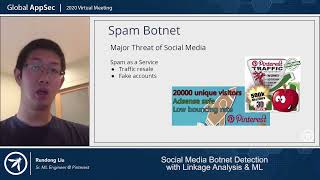
Social Media Botnet Detection with Linkage Analysis and Machine Learning
Explore techniques for detecting social media spam botnets using linkage analysis and machine learning, covering unsupervised and semi-supervised approaches and their applications.
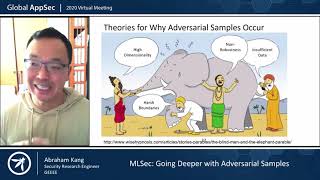
MLSec Going Deeper
Explore advanced machine learning security concepts, including adversarial samples, attack strategies, and defensive techniques for various ML models.
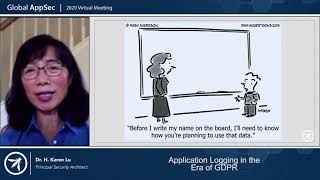
Application Logging in the Era of GDPR
Explore GDPR-compliant application logging practices, data privacy laws, and effective strategies for protecting sensitive information in production logs.
Temporal - Bot or Human? Detecting Malicious Bots with Machine Learning in 2021
Explore advanced techniques for detecting sophisticated bots using machine learning, combining server-side and client-side signals, and leveraging supervised and unsupervised approaches for maximum accuracy.
Machine Learning and the Real Space Renormalization Group
Explore the intersection of machine learning and renormalization group theory, focusing on real-space applications and information theory perspectives in physics.
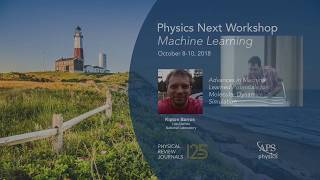
Advances in Machine Learned Potentials for Molecular Dynamics Simulation
Explore machine learning advancements in molecular dynamics simulations, covering symmetries, training methods, and applications in hydrocarbon reactions and IR spectra analysis.
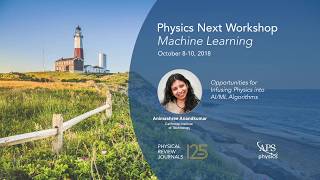
Opportunities for Infusing Physics into AI - ML Algorithms
Explore the fusion of physics and AI algorithms, covering neural programming, hierarchies, equations, and applications in autonomous systems and technology.
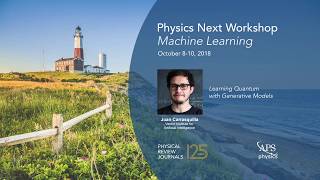
Learning Quantum with Generative Models
Explore generative models for quantum state learning, covering neural networks, RBMs, and applications to GHZ states and local Hamiltonians.