
Algorithmic Fairness in Predicting Opioid Use Disorder using Machine Learning
Explore machine learning's role in predicting opioid use disorder, focusing on algorithmic fairness and ethical considerations in healthcare applications.

Evaluating Fairness of Machine Learning Models Under Uncertain and Incomplete Information
Explore methods for assessing ML model fairness with limited data, addressing challenges in uncertain and incomplete information scenarios.
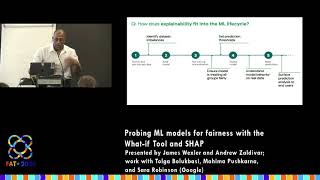
Probing ML Models for Fairness with the What-if Tool and SHAP
Explore ML model fairness using What-if Tool and SHAP. Learn to analyze and visualize model behavior, detect biases, and understand feature importance for responsible AI development.
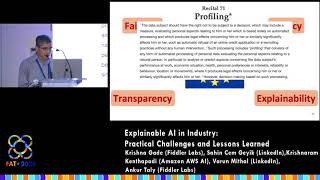
Explainable AI in Industry - Practical Challenges and Lessons Learned
Explore practical challenges and industry insights on implementing explainable AI, featuring expert perspectives from leading tech companies and researchers.

Implications Tutorial - Reasoning About Subtle Biases in Data
Explore subtle biases in data-driven decision support tools, their impact on reliability, and strategies to address dataset shifts for improved generalization and robustness in real-world applications.

Challenges of Incorporating Algorithmic Fairness into Industry Practice
Explore challenges in implementing algorithmic fairness in industry, covering stakeholder involvement, data gathering, resourcing, and prioritizing tradeoffs. Gain insights into practical approaches and potential pitfalls.

Toward a Theory of Race for Fairness in Machine Learning
Exploring critical race theory concepts for machine learning practitioners to develop a nuanced understanding of race in algorithmic fairness, through discussions and interactive activities.
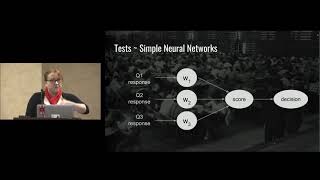
Translation Tutorial - A History of Quantitative Fairness in Testing
Explores historical quantitative fairness definitions in education and hiring, translating 1960s-70s concepts to modern machine learning notation and highlighting challenges for current fairness research.

Explainability
Explore cutting-edge research on explainable AI, including actionable recourse, model reconstruction, diverse explanations, and human-AI comparisons in deception detection.

Law and Policy
Explore ethical and legal challenges in AI, including anthropomorphism, explainability, racial categorization, and algorithmic fairness. Gain insights from experts on crucial issues shaping the future of technology and society.

Content Distribution
Exploring algorithmic biases in content distribution, including microtargeting, truth perception, polarization control, and recommender systems' effects on online news environments.

Corporate Social Responsibility via Multi-Armed Bandits
Explore how multi-armed bandit algorithms can be applied to corporate social responsibility, balancing profit maximization with societal impact in decision-making processes.

Popularity and Demographic Biases in Recommender Systems
Exploring popularity and demographic biases in recommender systems, their impact on evaluation and effectiveness, and strategies for ensuring equitable recommendations across diverse user groups.

Recommendation Independence
Explore recommendation independence in AI systems, focusing on fair treatment of content providers and regularization approaches to mitigate bias in algorithmic recommendations.

Runaway Feedback Loops in Predictive Policing
Explore runaway feedback loops in predictive policing, examining assumptions, theory, and potential solutions to address reinforcement issues in law enforcement algorithms.

Decoupled Classifiers for Group-Fair and Efficient Machine Learning
Explore group-fair machine learning with decoupled classifiers, balancing efficiency and fairness in algorithmic decision-making. Gain insights into innovative approaches for ethical AI development.

Should Attention Be All We Need? The Ethical and Epistemic Implications of Unification in Machine Learning
Explore the ethical and epistemic implications of unification in machine learning, focusing on attention mechanisms and their impact on AI development and society.
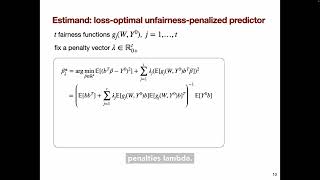
FADE - FAir Double Ensemble Learning for Observable and Counterfactual Outcomes
Learn a novel machine learning approach for fair prediction of both observable and counterfactual outcomes, enhancing decision-making in various domains.

Multi-disciplinary Fairness Considerations in Machine Learning for Clinical Trials
Explore fairness in machine learning for clinical trials through a multi-disciplinary lens, examining ethical implications and potential biases in healthcare research.

Towards Accountability for Machine Learning Datasets - Practices from Software Engineering and Infrastructure
Explore practices from software engineering to enhance accountability in machine learning datasets, addressing ethical concerns and improving transparency in AI development.
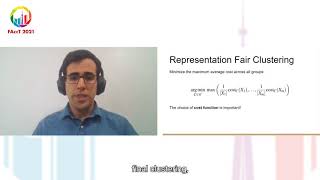
Fair Clustering via Equitable Group Representations
Explore equitable group representations in fair clustering algorithms, addressing bias and promoting fairness in machine learning applications.