
What Are GANs - Generative Adversarial Networks Explained
Explore generative adversarial networks (GANs), their working principles, training phases, and applications in AI and deep learning. Learn how GANs generate realistic data through generator-discriminator competition.
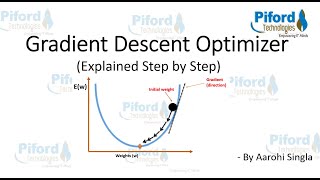
Explained Gradient Descent Optimizer
Comprehensive explanation of gradient descent optimization, covering mathematical foundations, weight updates, and backpropagation for machine learning and deep learning applications.
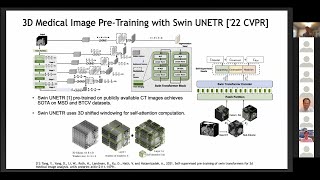
Modern Medical Image Segmentation, AutoML, and Beyond
Explore advanced medical image segmentation techniques, including AutoML and deep learning, for improved disease understanding and clinical diagnosis.
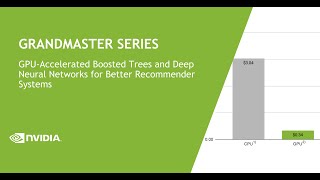
Boosted Trees and Deep Neural Networks for Better Recommender Systems
Explore GPU-accelerated boosted trees and deep neural networks for building winning recommender systems, featuring insights from Kaggle Grandmasters on the ACM RecSys Challenge.

Getting Started with Caffe - Deep Learning Framework Introduction - Class 3
Learn to define, train, and deploy Deep Neural Networks using Caffe framework. Covers data management, network definition, training monitoring, and deployment for classification or feature extraction.
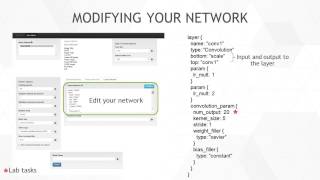
NVIDIA Deep Learning: Getting Started with DIGITS - Class 2
Learn to create, test, and optimize deep neural networks using NVIDIA's DIGITS tool for image classification tasks, with hands-on examples and practical deployment strategies.
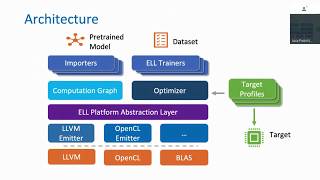
ELL: The Microsoft Embedded Learning Library - Principles and Applications
Explore Microsoft's Embedded Learning Library for efficient AI on resource-constrained devices. Learn about quantization, acceleration techniques, and architecture search for optimized machine learning deployment.
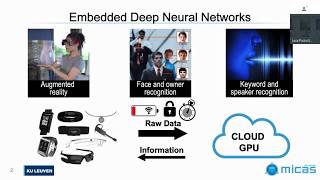
From Small to Tiny: Co-designing ML Models, Computational Precision, and Circuits - Energy-Accuracy Trade-offs
Explore co-designing ML models, computational precision, and circuits for energy-efficient tinyML systems. Learn about cross-layer optimization and cascaded networks for embedded applications.
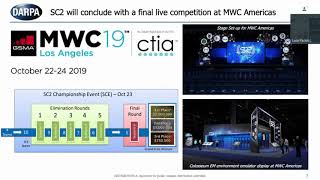
Better Learning Through Specialization - tinyML Summit 2019
Explore DARPA's innovative approaches to machine learning, including experiential learning, feature recognition, and spectrum collaboration, with insights on specialized hardware and self-play techniques.

Ultra-Low-Power Command Recognition for Ubiquitous Devices
Explore ultra-low-power command recognition for ubiquitous devices, covering noise challenges, system goals, core functions, training, and implementation on tiny hardware.
tinyMLPerf: Benchmarking Ultra-low Power Machine Learning Systems
Explore benchmarking for ultra-low power ML systems, focusing on tinyMLPerf's methodology, tasks, and ecosystem impact. Learn about quantization and community-driven efforts in this emerging field.
Energy-efficient On-device Processing for Next-generation Endpoint ML - tinyML Summit 2020
Explore energy-efficient on-device processing for endpoint machine learning, focusing on Arm's Cortex-M55 CPU and Ethos-U55 NPU for next-generation AI applications.

Resource Efficient Machine Learning in a Few KBs of RAM - tinyML Summit 2020
Explore resource-efficient machine learning techniques for IoT devices with limited RAM, focusing on Microsoft's EdgeML library and algorithms like ProtoNN and FastRNN for edge computing.

Build Your Own AI Assistant - Object Classification with Python
Learn to build an AI assistant using Python, TensorFlow, and Google Colab for object classification. Covers neural networks, image processing, and hands-on demos for practical implementation.
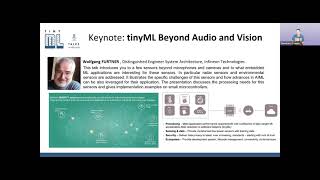
TinyML Talks - Review of the TinyML EMEA Forum - The Seeds Have Been Planted, Time for the EMEA
Comprehensive review of the inaugural tinyML EMEA Forum, highlighting key events, discussions, and future directions for the tinyML movement in Europe, Middle East, and Africa.

The "Top" Ten tinyML Commandments
Explore ten essential principles for tinyML success, covering data engineering, codesign, metrics, reproducibility, and industry collaboration, to drive innovation in embedded machine learning.
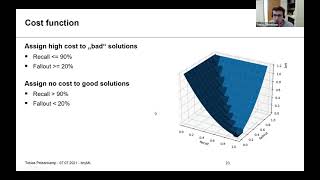
Analysis of ECG Data by Energy Efficient Decision Trees on a Reconfigurable ASIC
Innovative approach using decision tree ensembles for energy-efficient ECG analysis, achieving high accuracy in detecting atrial fibrillation with minimal energy consumption.
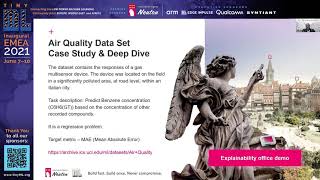
Avoiding Loss of Quality in Tiny Models - Neuton.ai Partner Session
Explore compact AI models without sacrificing quality. Learn to assess model quality, understand decision-making logic, evaluate training data, and interpret model outputs for tinyML applications.
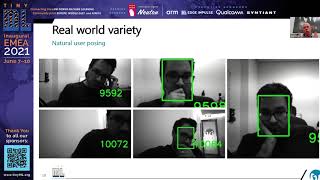
TinyML Journey - From Face Detection Demo to Real-Life Commercial Deployment
Explore the journey of TinyML from face detection demos to large-scale commercial deployment in notebooks, addressing real-world challenges and bridging the gap between technology and business.
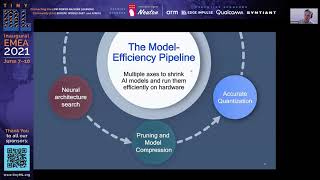
The Model Efficiency Pipeline: Enabling Deep Learning Inference at the Edge
Explore optimizing deep learning for edge devices through model efficiency techniques, including neural architecture search, pruning, quantization, and conditional processing.
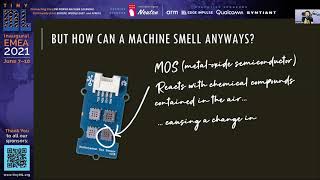
Lessons Learned from Building a TinyML-Powered Artificial Nose
Explore building a TinyML-powered artificial nose, from concept to implementation. Learn about hardware, sensors, models, and integrating TinyML applications into IoT ecosystems.