TinyML Talks - Building TinyML Applications Using Rune
Explore containerization for TinyML apps using Rune and Hammer. Learn to build efficient, portable solutions for healthcare, field ops, and telecom, with a focus on cough detection in public spaces.
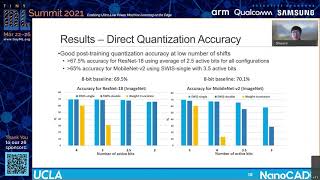
SWIS: Shared Weight Bit Sparsity for Efficient Neural Network Acceleration
Explore SWIS, a quantization framework for efficient neural network inference acceleration, offering improved performance and storage compression through weight decomposition and scheduling algorithms.
hls4ml: An Open-Source Co-Design Workflow for Scientific Low-Power Machine Learning Devices
Explore hls4ml, an open-source workflow for implementing machine learning algorithms on FPGAs and ASICs, enabling real-time processing for scientific applications and accelerating discoveries.
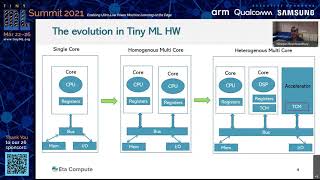
TinyML Summit 2021 Tiny Talks - TinyML Software Runtime for Hybrid Multicore Architecture
Explore software runtime for hybrid multicore architecture in TinyML, focusing on efficient resource allocation, minimized processing overhead, and optimized memory transfers for edge AI hardware.
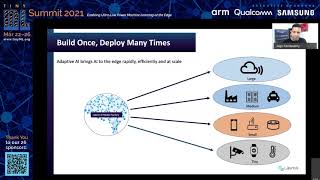
How Adaptive AI Solves Big Challenges for tinyML
Explore how Adaptive AI addresses challenges in tinyML, enabling efficient deployment of Edge AI models for smart devices and enterprise solutions.
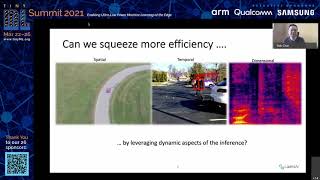
Adaptive Neural Networks for Agile TinyML - Keynote
Explore adaptive neural networks for efficient tinyML, enabling dynamic footprint minimization and runtime flexibility. Learn about throttleable networks, controller training, and hardware acceleration.
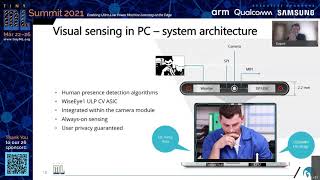
TinyML Journey: From Face Detection Demo to Real-Life Commercial Deployment
Exploring the journey from tinyML face detection demos to large-scale commercial deployment, addressing real-world challenges and bridging the gap between prototypes and practical applications.
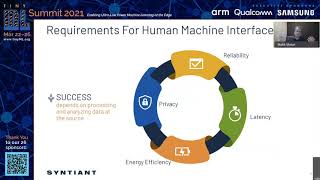
tinyML: Impact and Growth of Always-On Devices
Explore the growing impact of tinyML devices in everyday life, from always-on voice in phones to environmental sensing in machines, and learn about the market's rapid expansion and technological requirements.
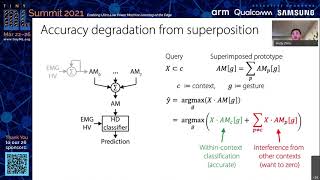
Memory-Efficient, Limb Position-Aware Hand Gesture Recognition Using Hyperdimensional Computing
Memory-efficient hand gesture recognition using hyperdimensional computing and sensor fusion. Improves accuracy by 17.79% while reducing memory footprint, addressing limb position changes for human-machine interfaces and prosthetics.
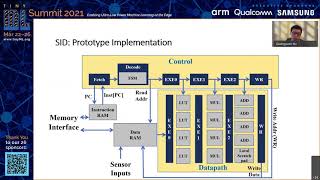
Smartphone Impostor Detection with Behavioral Data Privacy and Minimalist Hardware Support
Innovative smartphone security: Deep Learning for quick impostor detection, preserving user privacy with on-device processing and minimal hardware support.
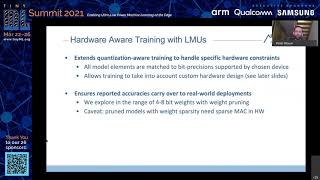
Hardware Aware Training for Efficient Keyword Spotting - tinyML Research Symposium 2021
Explore hardware-aware training for efficient keyword spotting, focusing on Legendre Memory Unit networks to achieve state-of-the-art accuracy and power efficiency on various hardware platforms.
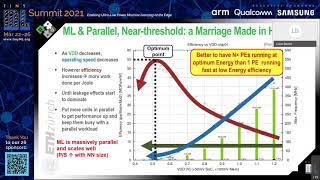
Many Shades of Acceleration - An Open TinyML Platform Perspective
Explore extreme edge AI, energy efficiency, and acceleration techniques for TinyML applications with insights from the PULP platform and RISC-V processors.
TinyML Vision Challenge - Summit 2021
Discover the tinyML Vision Challenge: Create innovative computer vision applications using tinyML, compete for $6k in prizes, and gain recognition from the tinyML Foundation.
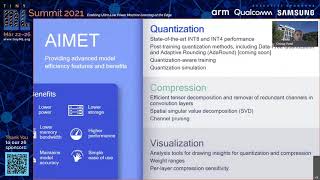
Advanced Network Quantization and Compression Using AIMET - tinyML Summit 2021
Explore advanced network quantization and compression techniques using AIMET to optimize AI models for efficient deployment on end devices, addressing memory, compute, and energy constraints.

Build Industrial-Grade TinyML Applications with Edge Impulse - Tutorial
Learn to build industrial-grade tinyML applications using Edge Impulse. Covers dataset collection, model design, training, optimization, and integration into embedded systems running on MCUs.
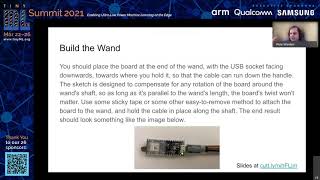
Building a Magic Wand with TensorFlow Lite Micro - Tutorial
Learn to build an IMU-based gesture recognition model for Arduino, covering data gathering, training, and deployment using TensorFlow Lite Micro and CMSIS-NN library.
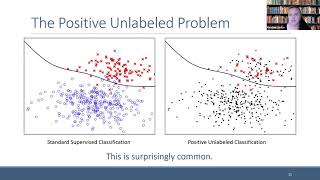
Positive Unlabeled Learning for Tiny ML
Explore positive unlabeled learning for embedded applications, including wearable health sensors and wildlife monitoring. Learn low-complexity solutions for effective machine learning with limited labeled data.
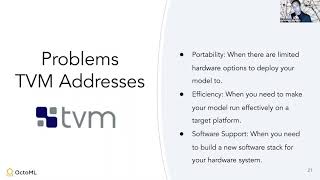
An Introduction to Optimizing ML Models with TVMC
Explore optimizing ML models with TVMC, a front-end to Apache TVM. Learn high-level TVM concepts and practical TVMC usage for building efficient models across various platforms.
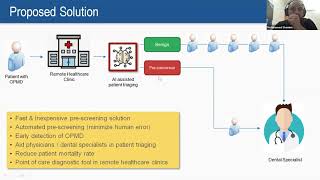
Oral Tongue Lesion Detection Using TinyML on Embedded Devices
Explore oral tongue lesion detection using TinyML on embedded devices for early cancer screening, supporting physicians in remote healthcare settings with limited specialized resources.
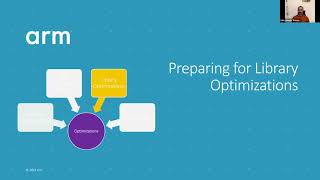
CMSIS-NN & Optimizations for Edge AI
Explore Edge AI optimizations, CMSIS-NN library, and TensorFlow Lite for microcontrollers. Learn performance enhancement techniques and see a live demo on Arduino Nano 33 BLE Sense board.
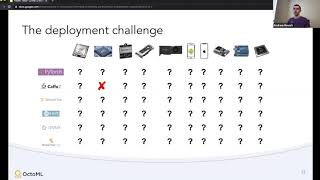
MicroTVM: A Tensor Compiler for Bare Metal
Explore microTVM, a tensor compiler for bare metal devices, its functionality, and future directions. Learn about deployment challenges and see a demonstration of the technology.