
Resolution-Robust Large Mask Inpainting with Fourier Convolutions - With Author Interview
Explore LaMa, an advanced image inpainting system using Fourier convolutions for large mask removal. Learn about its architecture, loss function, and impressive results in reconstructing complex structures.

NÜWA - Visual Synthesis Pre-training for Neural Visual World Creation
Explore NÜWA, a unified multimodal model for visual synthesis tasks. Learn about its 3D transformer framework, 3D Nearby Attention mechanism, and applications in text-to-image/video generation and manipulation.
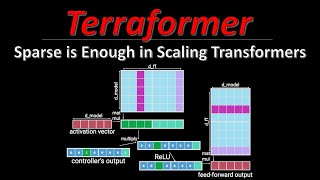
Sparse Is Enough in Scaling Transformers - ML Research Paper Explained
Detailed explanation of Scaling Transformers and Terraformer architecture, focusing on leveraging sparsity to improve efficiency and speed in large language models while maintaining accuracy.
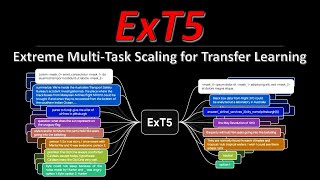
Towards Extreme Multi-Task Scaling for Transfer Learning
Explores ExT5, an advanced NLP model pre-trained on 107 diverse tasks. Analyzes multi-task scaling benefits, task co-training effects, and demonstrates ExT5's superior performance across various NLP benchmarks.
Parameter Prediction for Unseen Deep Architectures - With First Author Boris Knyazev
Explore parameter prediction for neural networks using graph hypernetworks. Learn about DeepNets-1M dataset, training techniques, and experimental results for efficient network training paradigms.
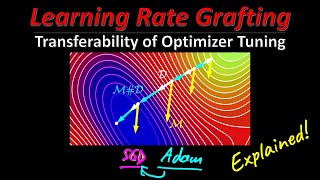
Learning Rate Grafting: Transferability of Optimizer Tuning - Machine Learning Research Paper Review
Explore grafting technique for transferring learning rate schedules between optimizers, improving deep learning model performance and reducing computational costs in hyperparameter tuning.
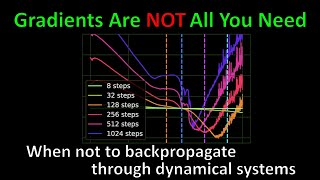
Gradients Are Not All You Need - Machine Learning Research Paper Explained
Explores limitations of differentiable programming in machine learning, focusing on chaos-based failures in various systems. Discusses alternatives to backpropagation for gradient estimation in complex, stochastic environments.
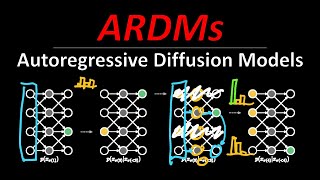
Autoregressive Diffusion Models - Machine Learning Research Paper Explained
Explore Autoregressive Diffusion Models, a novel approach combining autoregressive and diffusion models for efficient, order-agnostic generation and compression of text and image data.
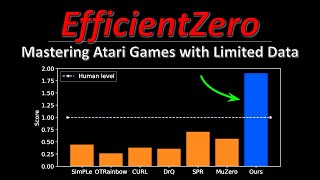
EfficientZero - Mastering Atari Games with Limited Data
Explore EfficientZero, a groundbreaking reinforcement learning algorithm achieving human-level performance on Atari games with minimal data, outperforming previous methods in sample efficiency and performance.
Symbolic Knowledge Distillation- From General Language Models to Commonsense Models Explained
Explore how to distill commonsense knowledge from large language models to create high-quality knowledge graphs and train smaller, specialized models for improved performance in commonsense reasoning tasks.
Topographic VAEs Learn Equivariant Capsules - Machine Learning Research Paper Explained
Explore Topographic VAEs: a novel approach to deep generative models with organized latent variables, bridging topographic organization and equivariance in neural networks for improved feature learning and transformation handling.

Infinite Memory Transformer - Research Paper Explained
Explores innovative Transformer model with unbounded memory, enabling processing of arbitrarily long sequences. Discusses continuous attention mechanisms, sticky memories, and potential applications in language modeling.
Train Short, Test Long - Attention With Linear Biases Enables Input Length Extrapolation
ALiBi: A novel attention mechanism enabling transformers to process longer sequences than trained on. Uses linear biases instead of position encodings, improving efficiency and extrapolation capabilities.
PonderNet - Learning to Ponder - Machine Learning Research Paper Explained
Explore DeepMind's PonderNet, a novel approach to adaptive computation in neural networks. Learn how it dynamically allocates computational steps based on problem complexity, improving efficiency and performance.
The Dimpled Manifold Model of Adversarial Examples in Machine Learning - Research Paper Explained
Explores the Dimpled Manifold Model to explain adversarial examples in machine learning, challenging existing theories and providing experimental evidence for a new perspective on neural network vulnerabilities.
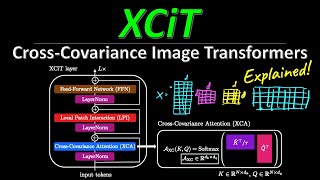
XCiT- Cross-Covariance Image Transformers - Facebook AI Machine Learning Research Paper Explained
Explore XCiT, a novel Transformer architecture for computer vision using cross-covariance attention. Learn about its linear complexity, scalability, and performance across various vision tasks.
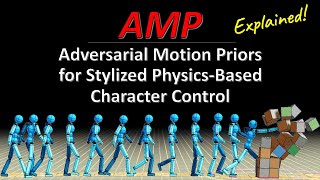
AMP- Adversarial Motion Priors for Stylized Physics-Based Character Control
Explores adversarial imitation learning for physics-based character control, combining goal-achieving reinforcement learning with style imitation from motion datasets to produce realistic, task-oriented behaviors.

Efficient and Modular Implicit Differentiation - Machine Learning Research Paper Explained
Explores a unified framework for implicit differentiation in machine learning, enabling automatic differentiation of optimization problems without manual derivations or loop unrolling, with applications in meta-learning and hyperparameter optimization.
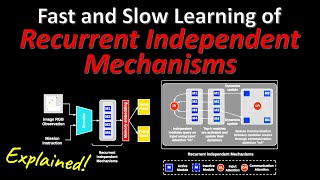
Fast and Slow Learning of Recurrent Independent Mechanisms - Machine Learning Paper Explained
Explores fast and slow learning in Recurrent Independent Mechanisms for multi-task reinforcement learning, addressing catastrophic forgetting and improving zero-shot transfer performance through modular knowledge decomposition.
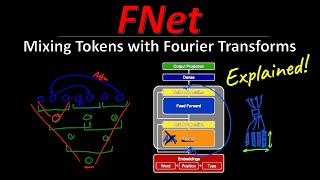
FNet - Mixing Tokens with Fourier Transforms
Explores FNet, a Transformer variant replacing attention with Fourier transforms. Discusses architecture, token mixing, and performance comparisons, highlighting efficiency gains and accuracy trade-offs in natural language processing tasks.
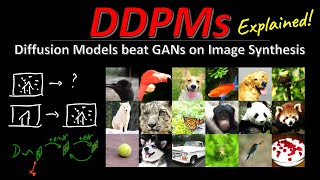
Diffusion Models Beat GANs on Image Synthesis - Machine Learning Research Paper Explained
Explore how Diffusion Models outperform GANs in image synthesis, with improved architecture, classifier guidance, and better sample quality while maintaining distribution coverage.