
Scaling Autoregressive Models for Content-Rich Text-to-Image Generation
Explore Parti, a groundbreaking autoregressive text-to-image model. Learn about its architecture, datasets, experimental results, and capabilities in generating realistic, accurate images from text prompts.

Author Interview - ACCEL- Evolving Curricula with Regret-Based Environment Design
Explore ACCEL, a novel approach combining regret-based sampling and level-editing for training robust AI agents. Learn about curriculum generation, minimax regret, and the future of reinforcement learning.
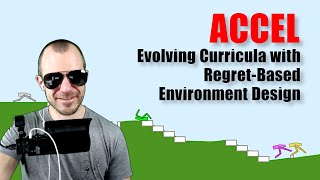
ACCEL - Evolving Curricula with Regret-Based Environment Design
Explore ACCEL, a novel approach combining regret-based sampling and level-editing for creating adaptive curricula in reinforcement learning, enhancing agent capabilities and robustness.
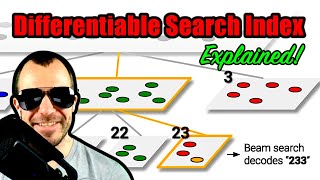
Transformer Memory as a Differentiable Search Index - Machine Learning Research Paper Explained
Explore a novel approach to information retrieval using a single Transformer model that encodes corpus information in its parameters, enabling direct query-to-document mapping without external indices.

Improving Intrinsic Exploration with Language Abstractions - Author Interview
Interview exploring how language abstractions can improve intrinsic exploration in reinforcement learning, discussing experimental results, challenges, and future directions in this promising research area.

Improving Intrinsic Exploration with Language Abstractions - Machine Learning Paper Explained
Explores using natural language to improve reinforcement learning agents' exploration in sparse-reward environments, demonstrating significant performance gains across challenging tasks in MiniGrid and MiniHack.
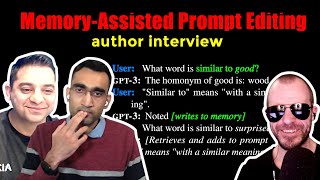
Author Interview - Memory-Assisted Prompt Editing to Improve GPT-3 After Deployment
Explore a method to improve GPT-3's performance post-deployment by maintaining interaction memory and dynamically adapting prompts, enhancing accuracy without retraining the model.
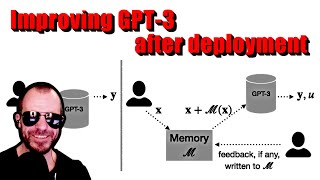
Memory-Assisted Prompt Editing to Improve GPT-3 After Deployment - Machine Learning Paper Explained
Explore adaptive methods to enhance GPT-3's performance post-deployment using memory-based prompts, improving accuracy without retraining the model. Learn about applications in fine-tuning and personalization.

Author Interview - Typical Decoding for Natural Language Generation
Interview exploring typical sampling, a new decoding method for language models that balances generating high-probability and high-information samples, aiming to produce more diverse and interesting text while reducing repetitive outputs.
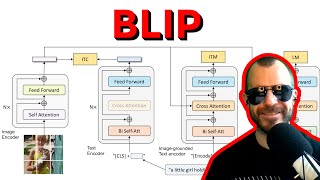
BLIP- Bootstrapping Language-Image Pre-Training for Unified Vision-Language Understanding and Generation
BLIP: A versatile vision-language pre-training framework that excels in both understanding and generation tasks. Utilizes bootstrapping to improve noisy web data, achieving state-of-the-art results across various vision-language tasks.

Active Dendrites Avoid Catastrophic Forgetting - Interview With the Authors
Interview exploring how active dendrites in neural networks can mitigate catastrophic forgetting, enabling better multi-task and continual learning for AI systems in dynamic environments.
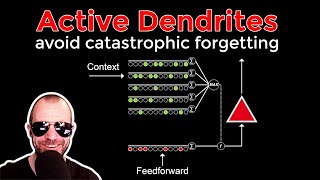
Avoiding Catastrophe - Active Dendrites Enable Multi-Task Learning in Dynamic Environments
Explore how active dendrites in neural networks mitigate catastrophic forgetting, enabling multi-task learning and adaptation in dynamic environments through context-sensitive gating and sparse representations.
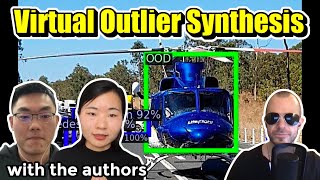
Author Interview - VOS- Learning What You Don't Know by Virtual Outlier Synthesis
Interview exploring Virtual Outlier Synthesis for out-of-distribution detection in neural networks. Discusses motivations, methodology, and key findings of novel approach to improve model robustness using synthesized outlier data.

Spurious Normativity Enhances Learning of Compliance and Enforcement Behavior in Artificial Agents
Explore how arbitrary social norms enhance learning of rule enforcement in AI agents, with insights on societal implications and potential applications in artificial general intelligence.

Can Wikipedia Help Offline Reinforcement Learning - Author Interview
Exploring the potential of pre-trained language models in offline reinforcement learning, discussing experimental results, model performance, and future directions for leveraging sequence modeling techniques in RL tasks.
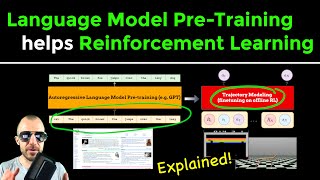
Can Wikipedia Help Offline Reinforcement Learning? - Paper Explained
Exploring how pre-training on Wikipedia improves offline reinforcement learning models, enhancing performance, reducing parameters, and revealing connections between language and RL domains.

CM3- A Causal Masked Multimodal Model of the Internet
Explore CM3, a groundbreaking multimodal model that processes HTML, text, and images. Learn about its innovative training strategy and potential applications in various AI tasks.

HyperTransformer - Model Generation for Supervised and Semi-Supervised Few-Shot Learning
Explore HyperTransformer, a novel approach to few-shot learning using transformers to generate CNN weights. Learn about its architecture, advantages, and potential applications in machine learning.

Language Models as Zero-Shot Planners - Extracting Actionable Knowledge for Embodied Agents
Exploring how large language models can translate high-level tasks into actionable steps for virtual environments, with techniques to improve executability and potential real-world applications.

Predicting the Rules Behind - Deep Symbolic Regression for Recurrent Sequences
Explore deep symbolic regression for predicting rules behind number sequences using transformers. Learn about data encoding, training processes, and applications beyond mathematics in this in-depth interview.
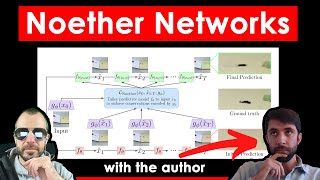
Noether Networks - Meta-Learning Useful Conserved Quantities
Explore Noether Networks: a novel approach to meta-learning conserved quantities in sequential prediction problems, inspired by Noether's theorem and aimed at discovering useful symmetries and inductive biases.