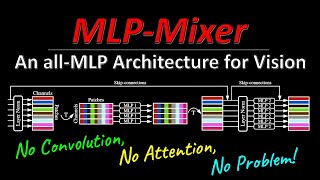
MLP-Mixer - An All-MLP Architecture for Vision - Machine Learning Research Paper Explained
Explores MLP-Mixer, a novel architecture using only multi-layer perceptrons for image classification. Discusses its design, performance, and implications for computer vision beyond CNNs and Transformers.

Emerging Properties in Self-Supervised Vision Transformers - Facebook AI Research Explained
Explore Facebook AI's DINO system, combining self-supervised learning with Vision Transformers for impressive image analysis without labels. Learn about its architecture, methodology, and groundbreaking results in computer vision.
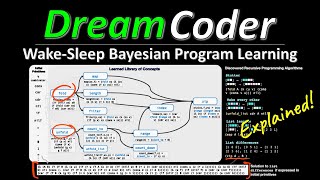
DreamCoder- Growing Generalizable, Interpretable Knowledge With Wake-Sleep Bayesian Program Learning
Explores DreamCoder's approach to program synthesis, combining neural-guided search with symbolic reasoning to learn generalizable knowledge and solve complex tasks through iterative abstraction and refinement.
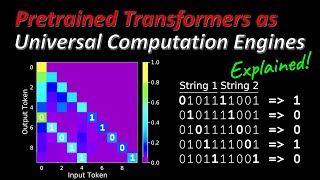
Pretrained Transformers as Universal Computation Engines
Explore how pretrained language transformers can be fine-tuned for diverse tasks like vision and protein folding, with minimal parameter adjustments, demonstrating their potential as universal computation engines.
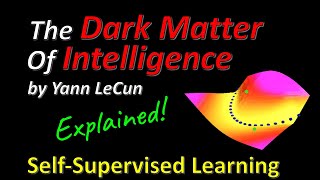
Self-Supervised Learning - The Dark Matter of Intelligence
Explore self-supervised learning as a promising approach for AI to develop background knowledge and common sense, with insights from Yann LeCun and Ishan Misra of Facebook AI Research.
Reproducible Machine Learning and Experiment Tracking Pipeline with Python and DVC
Learn to build reproducible machine learning pipelines using Python and DVC. Track experiments, manage data versions, and compare model metrics for improved ML workflow efficiency.

Transfer Learning for Image Classification with PyTorch & Python Tutorial - Traffic Sign Recognition
Learn to classify traffic signs using transfer learning with PyTorch. Explore data, build datasets, train a pre-trained ResNet model, evaluate performance, and make predictions on new images.
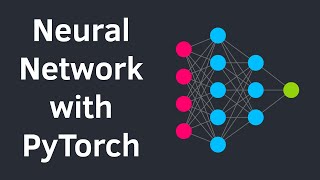
Build a Neural Network with Python Tutorial - Deep Learning with PyTorch
Learn to build, train, and evaluate a neural network for weather prediction using PyTorch. Covers data preprocessing, model architecture, GPU acceleration, and practical applications.
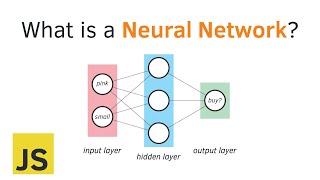
What Is a Neural Network? - Machine Learning for JavaScript Hackers with TensorFlow.js
Explore neural networks, perceptrons, and sigmoid neurons using TensorFlow.js. Learn about activation functions, network architecture, and weight initialization for machine learning in JavaScript.
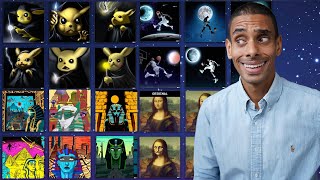
AI Drew All of These - DALLE-2 Walkthrough
Explore DALLE-2's capabilities in generating hyper-realistic images from text prompts. Learn about prompts, in-painting, and practical techniques for creating stunning AI-generated visuals.
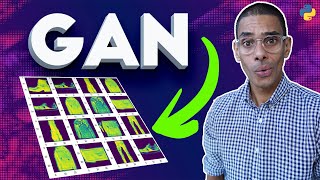
Build a Generative Adversarial Neural Network with Tensorflow and Python - Deep Learning Projects
Learn to build a Generative Adversarial Network from scratch using Python and TensorFlow. Master data visualization, neural network construction, custom training loops, and image generation in this hands-on deep learning project.
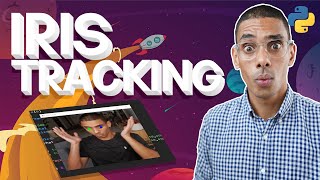
Build a Deep Iris Detection Model Using Python and Tensorflow - Keypoint Detection
Develop an iris tracking model using keypoint detection with TensorFlow and Python. Learn data preparation, model creation, training, and real-time detection for advanced computer vision applications.
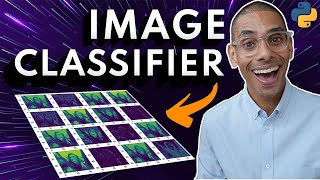
Build a Deep CNN Image Classifier with Any Images
Learn to build a custom deep CNN image classifier from scratch using Python, TensorFlow, and Keras. Covers data pipeline, preprocessing, network building, training, evaluation, and model saving.

Getting Started with Python Deep Learning for Beginners
Learn to set up Python, Jupyter, and TensorFlow for deep learning. Create environments, configure GPU, and train an image classifier. Perfect for beginners starting their deep learning journey.

Build a Deep Audio Classifier with Python and Tensorflow
Learn to build a deep audio classifier using Python and TensorFlow, covering data loading, preprocessing, model creation, and prediction for audio classification tasks.

Build a Street Fighter AI Model with Python - Gaming Reinforcement Learning Full Course
Learn to create an AI model for Street Fighter using Python, covering setup, preprocessing, hyperparameter tuning, and model fine-tuning. Gain hands-on experience in gaming reinforcement learning.
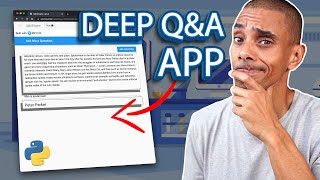
Build a Deep Q&A Web App with Transformers and Anvil - Python Deep Learning App
Learn to create a deep learning Q&A web app using Python, Transformers, and Anvil. Covers model loading, app development, integration, and deployment in a hands-on tutorial.
Build a Doom AI Model with Python - Gaming Reinforcement Learning Full Course
Learn to create AI models for Doom using Python, VizDoom, OpenAI Gym, and Stable Baselines 3. Master reinforcement learning techniques, curriculum learning, and reward shaping for game AI development.

Build a Mario AI Model with Python - Gaming Reinforcement Learning
Learn to create an AI model that plays Super Mario using Python and reinforcement learning. Set up the environment, preprocess data, build and train the model, and see the results in action.

Build a Python Facial Recognition App with Tensorflow and Kivy
Learn to create a facial recognition app using Python, TensorFlow, and Kivy. Covers deep learning model development, image processing, and app integration for practical authentication implementation.
Build a Deep Facial Recognition App - Kivy Computer Vision App with OpenCV and Tensorflow
Learn to build a deep facial recognition app using Kivy, OpenCV, and TensorFlow. Implement facial verification, create a custom layer, handle webcam input, and fine-tune the model for optimal performance.