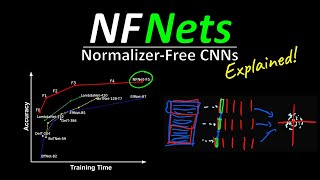
NFNets - High-Performance Large-Scale Image Recognition Without Normalization
Explore Normalizer-Free Networks, a novel approach to image recognition that achieves state-of-the-art accuracy without batch normalization, offering faster training and improved transfer learning performance.
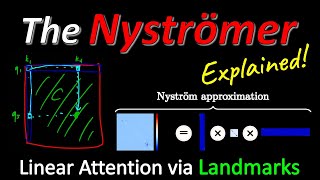
Nyströmformer- A Nyström-Based Algorithm for Approximating Self-Attention
Explore Nyströmformer, a novel algorithm for approximating self-attention in Transformers with linear complexity, enabling processing of longer sequences and improving scalability in natural language tasks.
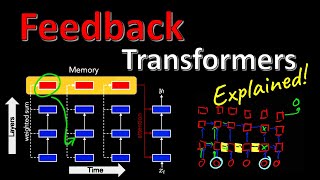
Feedback Transformers - Addressing Some Limitations of Transformers with Feedback Memory
Explores Feedback Transformers, an architecture that improves on standard Transformers by allowing higher-level representations to inform lower-level processing, enhancing performance on complex reasoning and long-range dependency tasks.
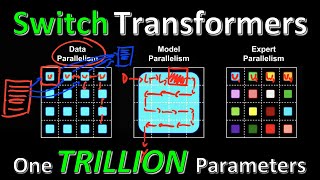
Switch Transformers: Scaling to Trillion Parameter Models with Simple and Efficient Sparsity
Explore Switch Transformers: a novel approach to scaling AI models to trillion parameters using sparsity and hard routing, offering improved speed and efficiency compared to dense counterparts.
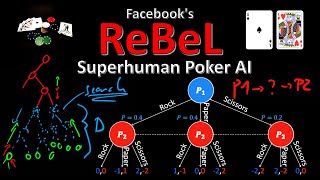
ReBeL - Combining Deep Reinforcement Learning and Search for Imperfect-Information Games
Explores ReBeL, an AI framework combining reinforcement learning and search for imperfect-information games. Explains its application to poker, convergence to Nash equilibrium, and superhuman performance with minimal domain knowledge.
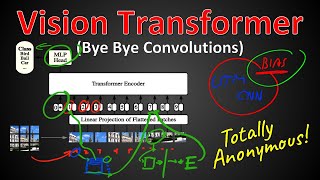
An Image is Worth 16x16 Words - Transformers for Image Recognition at Scale
Explore how Transformers outperform CNNs in image recognition, delving into Vision Transformer architecture, experimental results, and implications for AI research.
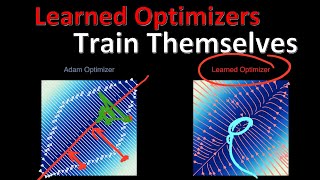
Training More Effective Learned Optimizers, and Using Them to Train Themselves - Paper Explained
Explores a novel approach to machine learning optimization using neural networks, discussing its architecture, training process, and potential to revolutionize model training through self-improvement and generalization.
The Hardware Lottery - Paper Explained
Explores the "hardware lottery" concept in AI research, discussing how hardware availability influences algorithmic success, with historical examples and future implications for machine learning progress.
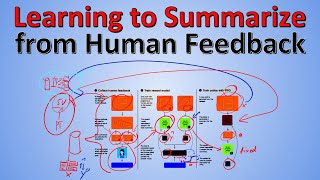
Learning to Summarize from Human Feedback
Explore OpenAI's innovative approach to text summarization using human feedback and reinforcement learning, improving summary quality beyond traditional metrics and supervised learning methods.
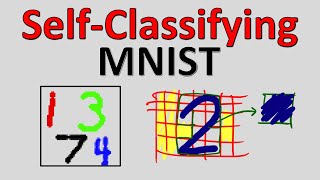
Self-Classifying MNIST Digits - Paper Explained
Explore how neural cellular automata can achieve global consensus through local communication, applied to digit classification. Discover innovative approaches to modeling biological systems and machine learning tasks.
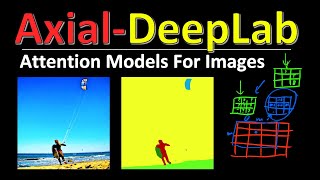
Axial-DeepLab - Stand-Alone Axial-Attention for Panoptic Segmentation
Explore a novel approach to image processing using axial-attention, combining positional embeddings and factorized self-attention to achieve state-of-the-art results in image segmentation tasks.
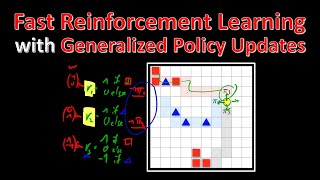
Fast Reinforcement Learning With Generalized Policy Updates - Paper Explained
Explanation of a novel reinforcement learning framework that enables agents to transfer knowledge between tasks, potentially solving new problems with zero-shot learning through generalized policy updates.
REALM- Retrieval-Augmented Language Model Pre-Training
Explore REALM, a novel approach to language model pre-training that integrates a latent knowledge retriever, enhancing open-domain question answering and offering interpretability and modularity benefits.
Meta-Learning Through Hebbian Plasticity in Random Networks - Paper Explained
Explores biologically-inspired Hebbian learning for adaptive AI agents. Demonstrates how random neural networks can self-organize during runtime to solve RL tasks and adapt to new situations without fixed policies.
Hopfield Networks Is All You Need - Paper Explained
Explores the connection between Hopfield networks and transformer attention, analyzing BERT through this lens and applying Hopfield attention to immune repertoire classification.
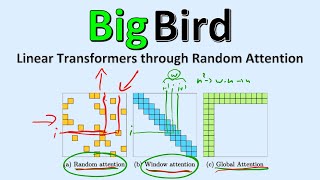
Big Bird- Transformers for Longer Sequences
Explanation of BigBird's sparse attention mechanism for transformers, enabling longer sequence processing. Covers theoretical foundations, architecture details, and experimental results in NLP and genomics applications.
ImageNet Classification with Deep Convolutional Neural Networks - Paper Explained
Detailed explanation of AlexNet, the groundbreaking deep convolutional neural network that revolutionized computer vision and kickstarted the deep learning era in image classification.
Word2Vec- Distributed Representations of Words and Phrases and Their Compositionality
Explore Word2Vec, a groundbreaking technique for creating word vectors. Learn about distributed representations, skip-gram model, negative sampling, and subsampling methods to improve vector quality and training efficiency.
Deep Ensembles: A Loss Landscape Perspective
Explore deep ensembles' effectiveness in neural networks, their superiority over Bayesian models, and how they capture non-convex loss landscapes to improve generalization and robustness in AI.

A Path Towards Autonomous Machine Intelligence - Paper Explained
Explanation of Yann LeCun's paper on autonomous machine intelligence, combining self-supervised learning, energy-based models, and hierarchical predictive embedding for creating world models and planning.
Learning to Act by Watching Unlabeled Online Videos - Paper Explained
Exploring OpenAI's Video PreTraining for Minecraft: leveraging unlabeled gameplay footage to create an AI agent capable of complex tasks, including crafting a diamond pickaxe.