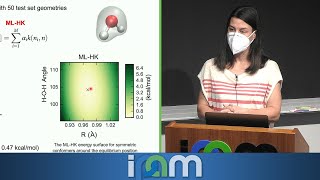
Molecular Electron Densities via Machine Learning - IPAM at UCLA
Explore machine learning techniques for predicting molecular electron densities and energies, with applications in quantum mechanics and molecular dynamics simulations.
Connectome-Based Modeling of Real World Clinical Outcomes in Addictions
Exploring connectome-based modeling to predict addiction outcomes, focusing on cocaine and opioid abstinence, network stability, and brain states. Discusses potential clinical applications and theoretical models.
Computational Contributions to Understanding Impaired Motivation and Effort in Psychosis
Exploring computational approaches to understand impaired motivation and effort in psychosis, focusing on reinforcement learning and decision-making to aid treatment development.
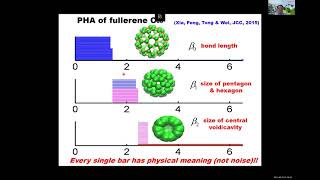
Kelin Xia - Persistent Function Based Machine Learning for Drug Design
Exploring persistent function-based machine learning for drug design, focusing on novel molecular representations and their application in improving predictive models for drug discovery.
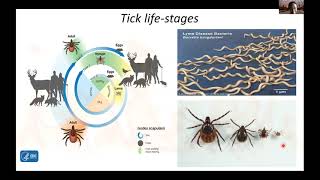
Ticks and Fire - Exploring the Effects of Prescribed Fire on Tick-Borne Disease
Explore the impact of prescribed fire on tick-borne diseases through mathematical modeling, data analysis, and spatial considerations in this seminar on ecological disease management.
Cosmology - DM Halo - Local Group - Risa Wechsler (Stanford)
Explore cosmology, dark matter halos, and the local group with Stanford researcher Risa Wechsler. Gain insights into cutting-edge astrophysical concepts and their implications for our understanding of the universe.
Modeling Dwarf Galaxy Formation with UniverseMachine - Richie Wang (Stanford)
Explore dwarf galaxy formation using UniverseMachine, a statistical tool for modeling galaxy evolution in cosmological simulations. Learn about abundance matching, multiresolution simulations, and future research directions.
Observation of Time-Crystalline Eigenstate Order on a Quantum Processor - Pedram Roushan
Explore time-crystalline eigenstate order on quantum processors. Discover non-equilibrium many-body physics and its implications across diverse scientific fields, from statistical physics to high-energy physics.
Absence of Superdiffusion in Certain Random Spin Models - Austen Lamacraft
Explore non-equilibrium many-body physics and universal aspects in diverse fields. Discover novel phases of matter, entanglement dynamics, and connections between classical and quantum systems.
Extracting Complexity of Quantum Dynamics Using Machine Learning - Zala Lenarcic
Explores machine learning techniques to analyze complex quantum dynamics, focusing on non-equilibrium many-body physics and its applications across various fields of physics.
Fully Quantum Scalable Approaches to Driven-Dissipative Lattice Models - Marzena Szymanska
Explores quantum approaches to driven-dissipative lattice models, discussing non-equilibrium many-body physics and universal aspects in diverse fields like AMO, condensed matter, and high-energy physics.
Out-of-Equilibrium Phenomena in Trapped-Ion Spin Systems - Guido Pagano
Explore non-equilibrium phenomena in trapped-ion spin systems, focusing on universal aspects of many-body physics and novel phases of matter beyond equilibrium paradigms.
Dynamical Mean-Field Theory in Non-Equilibrium Many-Body Statistical Physics - Giulio Biroli
Explores dynamical mean-field theory in non-equilibrium many-body systems, focusing on aging, glassy dynamics, and high-dimensional chaos. Discusses universal aspects and novel phases of matter far from equilibrium.
Adiabatic Flows and Many-Body Dark States in a Non-Integrable Ising Model - Anatoli Polkovnikov
Explores adiabatic flows and many-body dark states in non-integrable Ising models, discussing novel aspects of non-equilibrium many-body physics and their implications for quantum simulators.
Exact Spectral Form Factors in Interacting Lattice Systems - Tomaz Prosen
Explores exact spectral form factors in interacting lattice systems, discussing non-equilibrium many-body physics and universal aspects of quantum systems far from equilibrium at the interface of various physics fields.
Influence Matrix Approach to Ergodic and Non-Ergodic Quantum Dynamics - Dmitry Abanin
Explores influence matrix approach for understanding ergodic and non-ergodic quantum dynamics, focusing on universal aspects of many-body systems far from equilibrium in statistical physics, AMO, and condensed matter.
Atmospheric Radiation - Using Machine Learning for the Unknowable and Uncomputable - Robert Pincus
Exploring machine learning applications in atmospheric radiation to tackle unknowable and uncomputable aspects, enhancing climate modeling and understanding of Earth's energy balance.
Skillful El Nino Prediction Beyond Predictability Barriers - Henk Dijkstra
Explores advanced techniques for predicting El Niño events beyond traditional limitations, discussing innovative approaches to enhance climate forecasting accuracy and extend prediction timeframes.
Relating Coastal Sea Level to Its Drivers in the Interior - Abigail Bodner
Explore the connection between coastal sea levels and interior drivers using advanced data analysis and machine learning techniques to enhance climate change understanding and prediction.
Objective Discovery of Dominant Dynamical Regimes - Bryan Kaiser - Climate-C21
Discover dominant dynamical regimes in climate systems using machine learning and big data. Explore objective methods to advance theoretical understanding and inform future climate predictions at regional scales.
Revealing the Impact of Global Heating on the Meridional Overturning Circulation
Explore the effects of global heating on ocean circulation using transparent machine learning techniques. Gain insights into climate system dynamics and future regional impacts.