
Running Linux in Windows - Setting Up Virtual Machines and WSL
Learn to set up and run Linux virtual machines in Windows using VirtualBox, VMware Workstation Pro, and Windows Subsystem for Linux (WSL). Gain practical skills for creating and managing virtual environments.
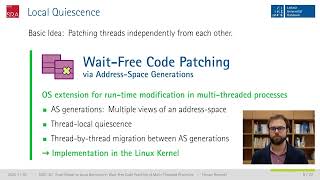
From Global to Local Quiescence: Wait-Free Code Patching of Multi-Threaded Processes
Explore wait-free code patching for multi-threaded processes, enabling gradual application of updates without disrupting service. Learn about WfPatch's implementation and its impact on system performance.
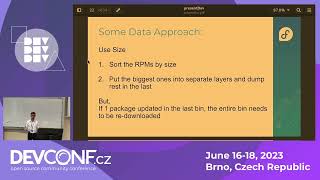
Intelligently Packing OS in Container Images - Lessons from CoreOS
Explore CoreOS layering for efficient OS customization and deployment in containers, focusing on rpm-ostree's data-driven approach to optimize updates and reduce download sizes.

Automate Your Applications with Podman and Ansible
Explore Ansible automation for Podman containers, simplifying management and deployment of containerized applications in cloud environments.

Anaconda Kickstart with Superpower - Automated Provisioning for Fedora and Red Hat Systems
Explore automated provisioning for Fedora and Red Hat systems with a prototype kickstart HTTP endpoint and out-of-band server power management project.

How to Upgrade OpenWRT Firmware In-Place - Step-by-Step Guide
Learn how to safely upgrade OpenWRT firmware while preserving your configuration settings through a step-by-step process, from initial backup to post-upgrade verification.

VirtualBox Tutorial - How to Install and Use Virtual Machines for Beginners
Master the basics of Oracle VirtualBox through hands-on guidance - from installation and setup to creating and managing virtual machines. Learn to test different operating systems and applications in isolated environments.
Automotive Grade Linux in the Cloud - Progress on AMI Builds
Discover how to effectively deploy and run Automotive Grade Linux (AGL) on Amazon Web Services, including detailed insights into AMI build processes and cloud implementation.
Virtio-Loopback Status and Development Roadmap for Hardware Abstraction
Discover the latest developments in virtio-loopback technology, including multi-device support and prioritization features for hardware abstraction in both virtualized and non-virtualized systems.

Python Backend Developer Skills and Learning Path - 2024 Guide
Discover the essential skills, tools, and knowledge required to become a successful Python backend developer, from core language concepts to deployment strategies.
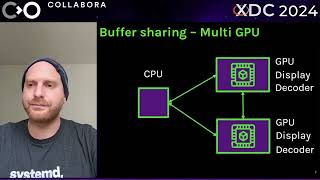
Video Offloading on the Wayland Linux Desktop - Efficient Playback and HDR Developments
Explore recent advancements in Linux desktop video playback efficiency, focusing on Wayland compositors, GStreamer, GNOME, and Chromium developments, including HDR capabilities.
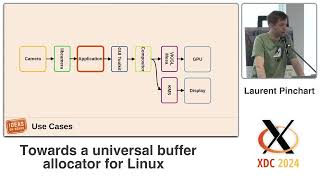
Towards a Universal Buffer Allocator for Linux
Explore the challenges and potential solutions for universal buffer allocation in Linux, focusing on media content frameworks, kernel-side improvements, and cross-device sharing capabilities.
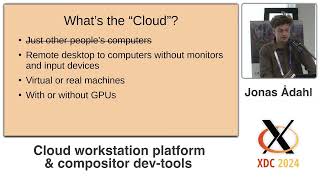
Cloud Workstation Platform and Compositor Developer Tools with PipeWire and Libei
Explore how cloud workstations leverage PipeWire and libei in post-X11 environments, while discovering innovative approaches to compositor development tooling.
VDUSE Performance - A Comparison with Vhost-user and VETH Solutions
Dive into VDUSE performance metrics and comparisons with Vhost-user and VETH pairs in virtual networking environments, exploring acceleration techniques for packet processing.
Challenges Faced When Building Various DPDK-based Applications
Explore real-world challenges and solutions in migrating Linux networking applications to DPDK, focusing on performance optimization and practical implementation strategies.
Combining Rust and DPDK: Security, Stability, and Performance Optimization
Explore how Rust APIs can enhance DPDK functionality through improved security, user experience, and performance optimization while processing network packets efficiently.
ABI Versioning Explained - A Guide to API Stability in DPDK
Dive into ABI versioning techniques for DPDK, exploring implementation methods, stability maintenance, and practical examples across different CPU architectures.
Augmenting P4 Software Pipelines with Accelerators - The IPsec Use Case
Explore how to enhance P4 software pipelines with accelerators, focusing on IPsec implementation using DPDK libraries for efficient packet processing and network security.
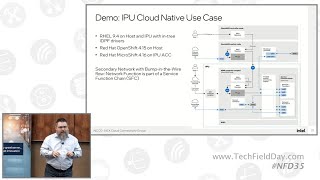
Intel IPU Cloud Native Use Case Demo - Workload Acceleration and Network Function Optimization
Discover how Intel's IPU technology accelerates cloud-native workloads and optimizes network function communications on RHEL 9.4 and Red Hat OpenShift platforms.
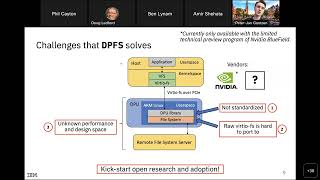
DPU-Powered File System Virtualization - Improving Cloud Infrastructure Efficiency
Discover how DPU-powered file system virtualization improves cloud infrastructure efficiency by offloading client-side drivers, enhancing tenant isolation, and delivering 4.4× CPU efficiency gains without host modifications.
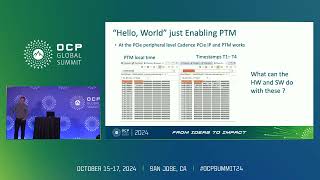
PCIe Precision Time Measurement (PTM) Support in Embedded Processors and MCUs
Explore PCIe precision time measurement implementation in embedded systems, focusing on time synchronization, integration with IEEE 1588, and practical applications in Linux-based and RTOS environments.