
But Mummy I Don't Want to Use CUDA - Open Source GPU Compute
Explore alternatives to CUDA for GPU computing, focusing on open-source options like OpenCL, SPIR-V, and SYCL. Discuss challenges and potential solutions for a vendor-neutral Linux compute stack.
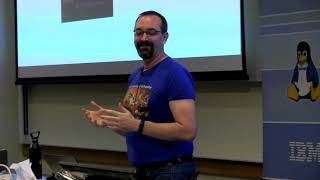
Making C Less Dangerous in the Linux Kernel
Exploring strategies to enhance C safety in the Linux kernel, including removing Variable Length Arrays, enforcing stack variable initialization, and implementing Control Flow Integrity measures.

Easy Geo-Redundant Handover + Failover with MARS + systemd
Simplify geo-redundancy and long-distance replication using MARS and systemd. Learn how to automate handover/failover for various application stacks, reducing complexity and costs.
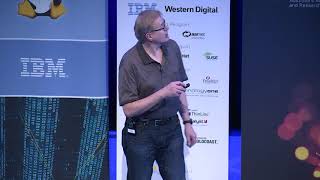
Easy Geo-Redundancy with MARS
Explore MARS, an external kernel module for geo-redundancy and data migration. Learn its principles, differences from DRBD, and future plans for kernel integration.
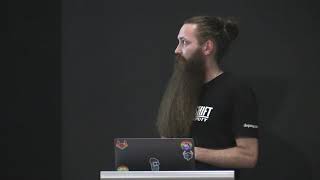
Every Image Has a Purpose
Explore tailored container image creation for different scenarios, optimizing size and tools for deployment, development, and integration environments.
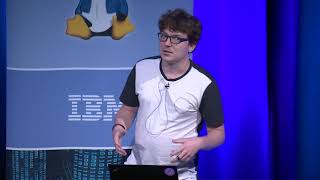
Kernel Hacking Like It's 2020
Explore modern tools and techniques for Linux kernel development, including advanced editors, code completions, linters, debuggers, and automated testing suites.
Landing a Large Series
Insights on navigating complex kernel development, addressing challenges in large infrastructure changes, and strategies for successful collaboration in open-source projects.
Desktop Linux, Without a Keyboard, Mouse or Desk
Explore alternative input methods for Linux desktops, including speech recognition, eye tracking, and foot pedals. Learn about ergonomic solutions for programmers seeking functionality and customization.
Large Pages in Linux
Explore the evolution, benefits, and challenges of large pages in Linux, including performance improvements, hardware optimizations, and future limitations for kernel developers.
Linux in the Cloud, on Prem, or on a Mainframe?
Explore Linux on mainframes: history, benefits, and future potential. Discover alternative architectures like ARM and POWER, and learn about hardware-driven encryption technologies for enhanced data protection.
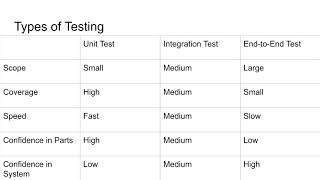
KUnit - Unit Testing for the Linux Kernel
Explore KUnit, a lightweight unit testing framework for the Linux kernel. Learn its benefits, implementation, and future roadmap for enhancing kernel development and testing practices.
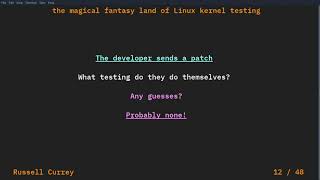
The Magical Fantasy Land of Linux Kernel Testing
Explore automated Linux kernel testing methods, from CI to hardware tests, aiming for a bug-free, efficient development process in this comprehensive overview.
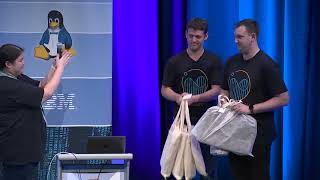
Conference Close
Closing ceremony of linux.conf.au 2020, featuring raffle winners, awards, acknowledgments, and the announcement of the 2021 conference location.
DingoCar - Perception Module Small Scale, Self-Driving Car
Explore TensorFlow-powered perception for self-driving model cars, covering data acquisition, testing, and implementation in this informative talk on small-scale autonomous vehicles.
SMBcmp - A New Tool to Diff Network Captures
Explore a new open-source tool for comparing network captures, enhancing Wireshark's capabilities to efficiently debug protocol issues and analyze packet differences.
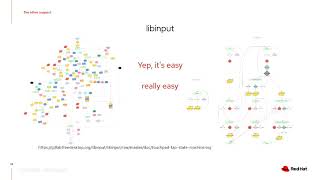
How to Make Kernel and User Space CI for Input Devices
Explore CI techniques for kernel and user space input devices, covering regression testing advancements and strategies to ensure compatibility across various hardware configurations.
Rootless Containers with Podman
Explore rootless containers with Podman, enhancing security and user capabilities. Learn core concepts, benefits, and integration with Systemd, SELinux, and CGroups through real-world home automation examples.
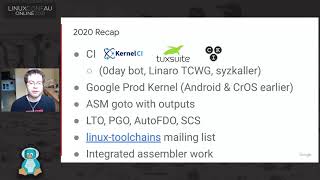
ClangBuiltLinux - What's Next?
Explore LLVM's adoption for Linux kernel builds, 2020 achievements, and future focus. Learn about tradeoffs, upcoming work, and how to contribute to kernel and toolchain development.
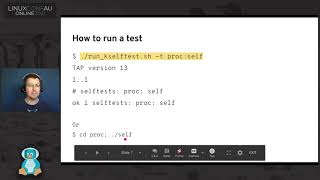
How to Write Your First Kernel Selftest
Learn to create Linux kernel selftests: understand their purpose, location, and mechanics. Gain confidence in writing simple tests, even without kernel development experience. Opportunity for assisted upstream submission.
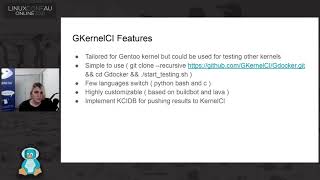
GKernelCI v.2 New Features and KernelCI Compatibility
Explore GKernelCI v.2's new features, including Docker integration, LAVA testing, and KernelCI compatibility via Kcidb, enhancing Gentoo Kernel source testing and stabilization processes.
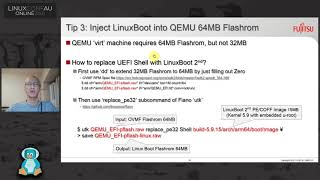
Getting Started with LinuxBoot Firmware on AArch64 Server
Explore LinuxBoot implementation on AArch64 servers, covering overview, QEMU demonstration, and kernel decompression challenges. Learn to configure, inject, and debug LinuxBoot for AArch64 systems.