Promoting Linux - An End-User Manifesto for Increasing Adoption
Strategies for promoting Linux adoption: advocacy, tolerance, acknowledging limitations, highlighting improvements, separating from FOSS ideology, campaigning for applications, and contributing to the community.

Linux for Beginners - Full Course
Comprehensive introduction to Linux, covering installation, terminal usage, file systems, permissions, and shell scripting. Ideal for beginners seeking practical skills in Linux administration and command-line operations.
Empower Your Users to Maintain Software Within the Debian Repository
Learn to create and manage a basic Debian repository, enabling users to update software easily. Explore CI package generation, Git versioning, and streamlined developer workflows.
Snapshot in Time - Leveraging Snap and Flatpak to Preserve Software Legacy
Explore how Snap and Flatpak containerization can be used to preserve older software, addressing challenges in software preservation and ensuring long-term access to our digital heritage.
The RISC-V Revolution - Overview, Challenges, and Ubuntu Support
Explore the RISC-V CPU architecture's growth, ecosystem drivers, profiles, extensions, software development challenges, and Ubuntu support in this informative overview.
Improving Snap Maintenance - Automating Updates for New Upstream Releases
Learn to automate Snap updates using GitHub actions, streamlining maintenance and saving time. Explore custom workflows with real-world examples and implement efficient update processes for your projects.
Linux in Space: Fault Detection, Recovery and Fault-Tolerant System Designs
Explore fault detection, recovery, and fault-tolerant system designs for Linux in space environments. Learn strategies to ensure reliability and autonomy in hostile conditions.
Real-time Scheduling Fault Simulation
Explore methods for simulating real-time scheduling faults in Linux, including jitter and deadline misses. Learn to test error handling and mitigations for safety-critical applications.
From Hardware to Linux - A Step-by-Step Guide
Explore a step-by-step guide for developing a fully functional Linux system, from hardware design to userspace tools, emphasizing debugging strategies and system bringup techniques.
Getting Linux Distributions to New Processor Architectures
Automate porting Linux distributions to new processor architectures using open-source tools. Overcome pitfalls in binary package adaptation for emerging platforms like RISC-V.
Inspecting and Optimizing Memory Usage in Linux
Explore RAM management in Linux, focusing on allocation across areas and optimization techniques for restricted hardware platforms. Gain insights into kernel and user space memory usage.
Linux Power Management Features, Their Relationships and Interactions
Explore Linux kernel power management features, their interactions, and potential conflicts, using real-world examples from automotive SoC development.
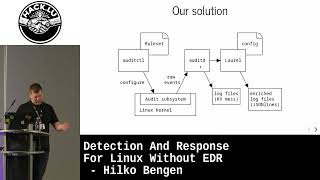
Detection and Response for Linux Without EDR
Discover effective Linux security monitoring techniques and incident response strategies without relying on EDR solutions, focusing on native system capabilities and open-source tools.
Build a Developer's Linux Workstation - Complete Guide
Comprehensive guide to building a Linux workstation for developers, covering hardware assembly, OS installation, and setup of essential development tools, IDEs, and productivity software.
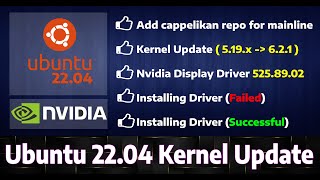
Ubuntu 22.04 Kernel Update with Latest Nvidia Display Driver
Step-by-step guide to updating Ubuntu 22.04 kernel to 6.2.1 and installing the latest Nvidia display driver 525.89.02, covering potential issues and solutions.

Ubuntu 20.04 for Windows Users
Comprehensive guide for Windows users transitioning to Ubuntu 20.04, covering installation, basic usage, printer setup, and application management on an external SSD.

Running Windows in Linux - VirtualBox Configuration
Learn to install VirtualBox in Linux, set up a Windows virtual machine, and configure features like Guest Additions, shared folders, clipboard sharing, and USB support for seamless integration.

Linux Terminal Introduction
Learn essential Linux terminal commands for navigating directories, manipulating files, and installing applications. Ideal for Windows users transitioning to Linux or Raspberry Pi enthusiasts.

Linux Mint 19 for Windows Users
Comprehensive guide for Windows users transitioning to Linux Mint 19: installation, essential tools setup, application management, and understanding Linux file system structure.

Running Windows Programs on Linux
Explore methods to run Windows programs on Linux using Wine, PlayOnLinux, Winetricks, and CrossOver, demonstrated on Zorin OS and Linux Mint distributions.
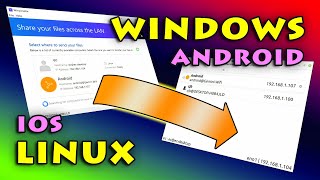
Warpinator- Easy Network File Transfer between Windows, Linux, Android & iOS
Learn to use Warpinator for easy file transfers across Windows, Linux, Android, and iOS. Covers installation, demos, settings, and troubleshooting tips for seamless network file sharing.