Randomized Methods for Quantum Many-Body Problems - A Mathematical Primer
Explore randomized methods for quantum many-body problems, focusing on Monte Carlo techniques to approximate ground and excited states in large systems. Learn about VMC and FCIQMC algorithms.
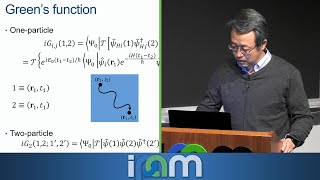
Low Rank Approximation in Electron Excitation Calculations - IPAM at UCLA
Explore low rank approximation techniques for efficient electron excitation calculations, focusing on the Interpolative Separable Density Fitting method and its applications in quantum mechanics.
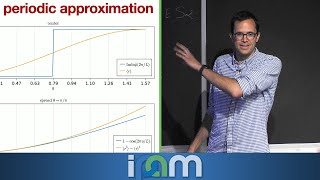
Localization Methods - Perspectives on Initialization and Optimization - IPAM at UCLA
Explore Wannier localization in quantum mechanics, its mathematical formulation, challenges, and new approaches for efficient orbital localization in condensed matter systems.

Introduction to Quantum Mechanics and Light Polarization
Explore the math of superposition and quantum states, focusing on polarized light and its relation to classical electromagnetic waves. Gain insights into quantum mechanics fundamentals.
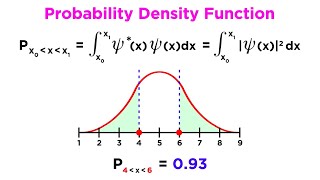
Wavefunction Properties, Normalization, and Expectation Values
Explore quantum mechanics through wavefunctions, normalization, and expectation values. Learn about Hilbert spaces, bra-ket notation, and the superposition principle to gain a deeper understanding of quantum systems.
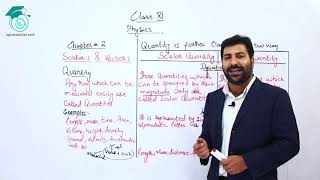
Physics Scalars & Vectors
Comprehensive exploration of scalars and vectors in physics, covering definitions, types, operations, and properties, with practical examples and numerical problem-solving.
Spectral Gaps of Random Covers of Hyperbolic Surfaces
Explore spectral gaps in random hyperbolic surfaces, including Laplacian resonances and a probabilistic version of Selberg's 3/16 theorem, using transfer operators and zeta functions.
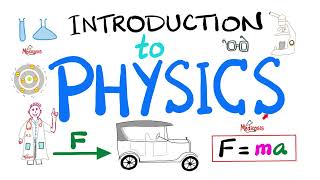
Introduction to Physics - Graphs, Slope, Scalars, Vectors, Distance, Displacement, Forces, Motion
Explore fundamental physics concepts including graphs, scalars, vectors, and motion. Learn to analyze physical quantities, interpret graphs, and understand key principles of forces and displacement.
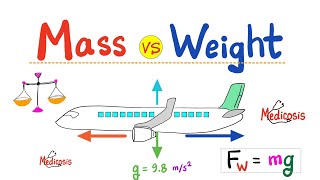
Mass vs Weight - Forces in Physics and Flight
Explore key physics concepts: mass vs weight, forces, acceleration, and gravitational effects. Understand vector components and their applications in flight mechanics and motion analysis.
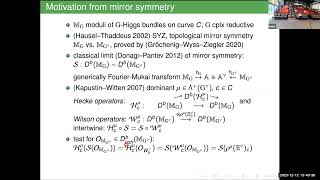
Mirror Symmetry and Big Algebras in the Hitchin System
Explore mirror symmetry, Hitchin systems, and algebraic structures in representation theory. Discover connections between equivariant cohomology, Kirillov algebras, and affine Schubert varieties.
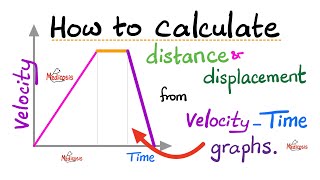
Calculating Distance and Displacement from Velocity-Time Graphs - Kinematics
Learn to analyze velocity-time graphs, calculating distance and displacement for various motion scenarios in kinematics. Master key concepts for physics exams and problem-solving.
Length Contraction, Time Dilation, and Velocity Addition in Special Relativity - Lecture 39
Explore Einstein's Special Relativity through a novel approach, deriving length contraction, time dilation, and velocity addition using Lorentz transformations and linear algebra concepts.
Oriented Circles and 3D Relativistic Geometry - Part 1
Explores 3D relativistic geometry, hyperboloids as relativistic spheres, and connections with oriented circles. Introduces cyclography and its relation to relativistic quadrance.
Measurement and Wave Function Collapse in Computational Quantum Mechanics - Part 3
Explore quantum measurement and wave function collapse through computer animations, visualizing the dramatic changes in a particle's state during measurement.
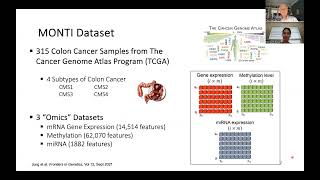
TUSCA: A Method for Tucker3 Modeling with ASCA+ - Webinar
Explore TUSCA, a novel method combining Tucker3 and ASCA+ for analyzing multi-way datasets from designed experiments, enhancing interpretation and visualization of complex data structures.
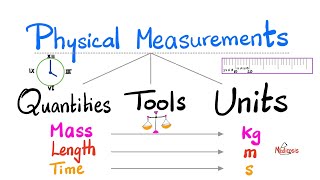
Physical Measurements - Units, Quantities, and Tools
Comprehensive overview of physical measurements, covering units, quantities, and tools. Explores fundamental concepts crucial for physics and related sciences, preparing students for various exams.
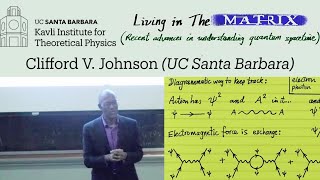
Living in the Matrix - Recent Advances in Understanding Quantum Spacetime
Explore recent advances in quantum gravity, including "random matrix" models for spacetime emergence, and their implications for understanding black holes and the universe's origins.
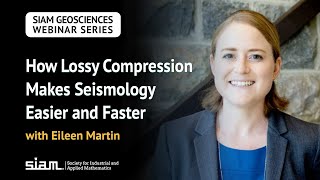
Lossy Compression in Seismology - Improving Efficiency and Speed
Explore lossy compression techniques in seismology to manage large datasets, improve storage, and accelerate analysis without significant loss of accuracy or event detection capabilities.
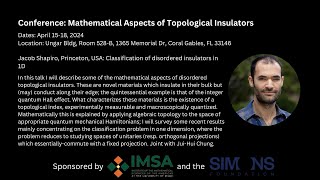
Classification of Disordered Insulators in One Dimension
Explore mathematical aspects of disordered topological insulators, focusing on 1D classification and the application of algebraic topology to quantum mechanical Hamiltonians.

Classification of Disordered Insulators in One Dimension
Explore mathematical aspects of disordered topological insulators, focusing on 1D classification and the application of algebraic topology to quantum mechanical Hamiltonians.
Spectral Gap Estimates for the Random Field Ising Model - Lecture
Spectral gap estimates for random field Ising model: convergence rates, Glauber dynamics, Griffiths phase. Combines stochastic localization and percolation-theoretic coarse-graining techniques.