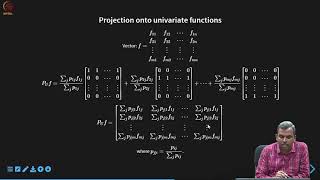
Minimum Mean Squared Error Estimation
Explore minimum mean squared error estimation techniques, covering inner product spaces, univariate subspaces, bivariate functions, and MMSC estimation.

Introduction to the Finite Element Method: 2D Basis Functions
Explore 2D basis functions in finite element method. Learn key concepts and applications for advanced numerical analysis and engineering problem-solving.
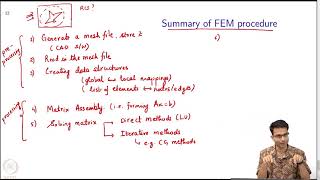
2D Finite Element Method - Summary of FEM Procedure
Explore the 2D Finite Element Method procedure, covering key steps and applications in engineering analysis. Gain insights into this powerful numerical technique for solving complex problems.
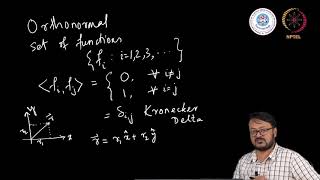
Orthogonality of Signals - Lecture 10
Explore orthogonality of signals, a fundamental concept in signal processing and communication systems. Gain insights into its applications and importance.

Why is Reciprocity Useful in Practice? - Lecture 1.6
Explore the practical applications and benefits of reciprocity in electrical engineering, enhancing understanding of circuit analysis and design.
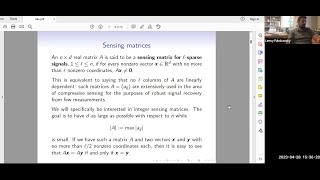
Geometric Constructions for Sparse Integer Signal Recovery
Explore geometric constructions for sparse integer signal recovery, focusing on matrix design for robust vector reconstruction in compressed sensing applications.

On the Fourier Weight of F2 Polynomials
Explore Fourier weight of F2 polynomials, focusing on level k and degree d relationships. Gain insights into pseudorandom generators and recent mathematical proofs.
MFEM: High-Performance Finite Element Methods Tutorial - 2024
Explore MFEM, a parallel C++ library for finite element methods. Learn to develop scalable algorithms for various platforms, from laptops to supercomputers.
The Spectra of Some Arithmetical Matrices
Explore the spectral analysis of GCD matrices and their connection to analytic number theory, focusing on recent developments in this classical field.
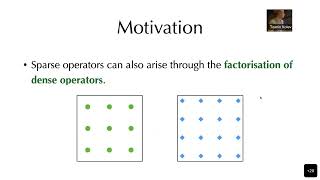
FSSpMDM - Accelerating Small Sparse Matrix Multiplications by Run-Time Code Generation
Explore code generation strategies for accelerating small sparse matrix multiplications in high-order finite element solvers, focusing on performant operator kernels for prismatic and hexahedral elements.
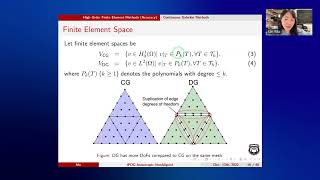
An Efficient and Effective FEM Solver for Diffusion Equation with Strong Anisotropy
Explore an efficient discontinuous Galerkin scheme with auxiliary space preconditioning for solving diffusion equations with strong anisotropy, focusing on magnetic confinement fusion applications.
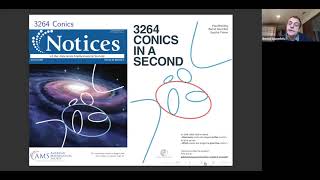
Linear Spaces of Symmetric Matrices - SIAM SAGA Seminar
Explore linear spaces of symmetric matrices, their algebraic geometry, and applications in statistics and optimization with Bernd Sturmfels in this advanced mathematics seminar.

Principal Component Analysis
Explore dimensionality reduction through PCA, covering variance, covariance, eigenvectors, and eigenvalues. Learn key concepts with visual explanations and practical applications in data analysis.
R for Data Scientists and Data Analysts
Master essential R skills for data analysis and science, covering variables, vectors, functions, and control structures in a comprehensive tutorial.
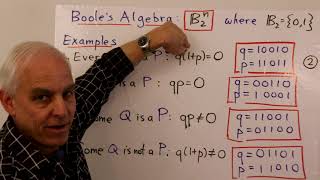
The Algebra of Boole Is Not Boolean Algebra - Math Foundations
Exploring Boole's original algebra, its connection to Aristotelian logic, and its distinction from modern Boolean algebra. Delves into syllogisms, existential import, and applications in mathematics.

Randomized Numerical Linear Algebra - Overview
Explore randomized numerical linear algebra techniques for efficient matrix computations, covering sampling methods, error bounds, and applications to least-squares problems and SVD.
Sampling for Linear Algebra, Statistics, and Optimization I
Explore randomized numerical linear algebra techniques for efficient data analysis, covering sampling methods, matrix multiplication, and regression algorithms.
Sketching for Linear Algebra - Basics of Dimensionality Reduction and CountSketch I
Explore dimensionality reduction and CountSketch techniques for efficient linear algebra computations, focusing on regression analysis and subspace embeddings.
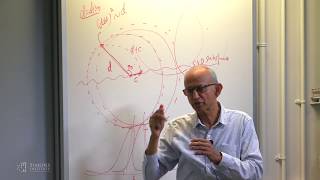
Foundations of Data Science II
Explore advanced data science concepts including SVD, Gaussian mixtures, and Markov chains. Learn about randomized algorithms and low-rank approximations for efficient data handling.
Intro and Foundations of Data Science I
Explore key concepts in data science, including random variables, distributions, dimension reduction, and singular value decomposition, with experts from Microsoft Research India.
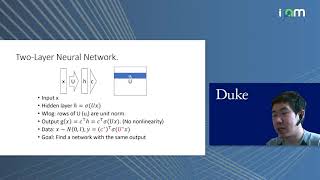
Beyond Lazy Training for Over-parameterized Tensor Decomposition
Explore tensor decomposition in over-parameterized settings, analyzing gradient descent variants and their performance beyond lazy training regimes for improved optimization in neural networks.