
Fine-tuning FLAN-T5 Models for Text Summarization with PyTorch
Master Flan-T5 model fine-tuning for text summarization through hands-on PyTorch implementation, complete with practical code examples and real-time demonstrations.
Domain-Specific AI Models - Creating Customized BERT and SBERT Models for Business Applications
Discover how to effectively train and fine-tune BERT and SBERT models for specialized domains, focusing on medical and biochemical terminology, with practical solutions for business applications.
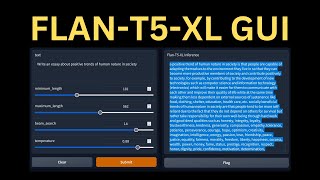
Building a FLAN-T5 XL Model GUI with Gradio in Google Colab - A Step-by-Step Tutorial
Learn to build a Gradio GUI for FLAN-T5-XL model on Google Colab, enabling free text generation, summarization, and translation capabilities with minimal computational resources and step-by-step implementation.
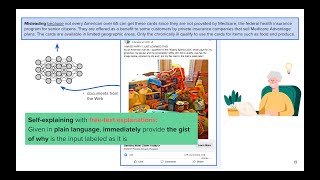
Uncertainty, Prompting, and Chain-of-Thoughts in Large Language Models - Part 2
Dive into advanced AI concepts including temperature scaling, Bayesian calibration, prompt-based finetuning, and chain-of-thought techniques for more reliable and explainable language models.
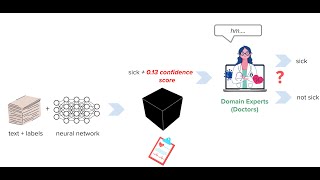
Pretrain-Finetune and Uncertainty Estimation in Machine Learning - Part 1
Dive into advanced machine learning concepts, from masked language modeling and pretrained vision models to uncertainty estimation and probability calibration techniques.
Role-Playing Language Agents with MindEcho - Creating Personal AI Clones
Explore groundbreaking Chinese AI research on creating virtual KOL clones through Role-Playing Language Agents, examining technical implementation and ethical considerations.
Performance Analysis of 12 AI Language Models for Clinical Decision Making in Healthcare
Explore the comparative analysis of 12 AI language models in clinical settings, examining their effectiveness in processing health records and performance against specialized medical systems.
The Bitter Lesson of Retrieval in Generative Language Model Workflows
Discover how leveraging data and compute in RAG architectures can enhance generative AI applications, with insights from YOKOT.AI's implementation for enterprise data solutions.
Deep Learning: BERT and GPT Models - Lecture 11
Dive into the evolution and architecture of transformer models, exploring BERT, GPT series, and T5 to understand their impact on modern natural language processing.
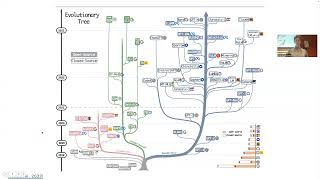
Transformer Types and Practical Considerations
Explore different transformer architectures and key implementation factors for building effective natural language processing models and applications.
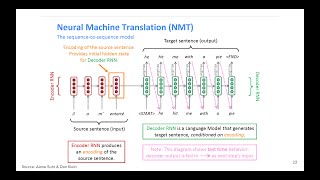
Introduction to Machine Translation with Sequence-to-Sequence Models
Master sequence-to-sequence modeling fundamentals and applications in machine translation, focusing on neural network architectures and practical implementation techniques.
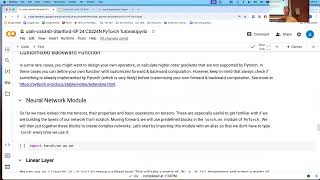
Language Modeling - Fundamentals and Applications
Master the fundamentals of language modeling, exploring statistical and neural approaches, probability distributions, and practical applications in natural language processing.
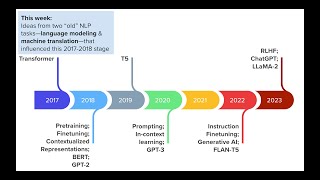
Introduction to Language Modeling: From N-grams to Neural Networks
Explore the evolution of language modeling, from n-grams to neural architectures, covering key concepts like embeddings, transformers, and RLHF implementations.

Chain of Thought and Instruction Fine-Tuning for Enhanced Language Model Performance
Explore how Chain of Thought and instruction fine-tuning techniques enhance language models' performance, from basic reasoning tasks to simulating human behavior and decision-making processes.
Creating Self-Instruct Data Sets for LLM Fine-Tuning with ChatGPT
Master the creation of synthetic instruction datasets using ChatGPT and GPT-4 for fine-tuning language models, covering data generation, multi-task training, and task decomposition techniques.
Self-Instruct Fine-Tuning of Large Language Models - Introduction to Alpaca
Master self-instruct fine-tuning techniques for LLMs, focusing on synthetic data generation using ChatGPT/GPT-4 to enhance model performance in specific tasks like summarization and translation.
Inside ChatGPT- Unveiling the Training Process of OpenAI's Language Model
Explore the training process behind ChatGPT, including generative pretraining, supervised fine-tuning, and reinforcement learning through human feedback. Gain insights into AI language model development.
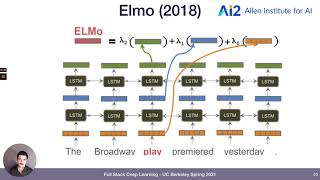
Transfer Learning and Transformers - Full Stack Deep Learning - Spring 2021
Explore transfer learning's evolution from computer vision to NLP, diving into embeddings, language models, and the revolutionary Transformer architecture. Gain insights into various models and their applications.
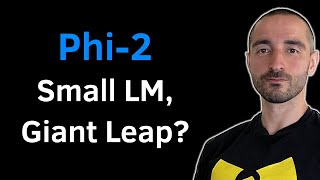
Phi-2: Small Language Model Performance Tutorial - Google Colab with Python
Explore Microsoft's Phi-2, a compact yet powerful language model outperforming larger counterparts. Learn its training methods and test capabilities in coding, math, reasoning, and data extraction using Google Colab.
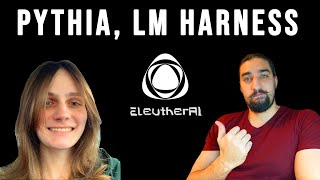
EleutherAI Pythia and Open-Source Language Models - Interview with Hailey Schoelkopf
Explore EleutherAI's Pythia, open-source language models, and AI research infrastructure with Hailey Schoelkopf. Gain insights into Llemma, LM-Eval-Harness, and the future of AI development.
Tuning Gemma for a Spoken Language AI Assistant - Build with Google AI
Explore creating a multilingual AI assistant using Gemma. Learn to tune models for specific tasks and languages, with insights from developers and practical extension tips.