Decoding AI Landscape: Business, Market Trends, and Risks
Explore an in-depth NLP analysis of AI's business landscape, market dynamics, and risk factors through comprehensive media discourse examination and language model insights.
From RNNs to Transformers - A Journey Through Language Modeling
Explore the evolution of language models from RNNs to Transformers, understanding attention mechanisms and investigating the minimal requirements for coherent language generation in AI systems.
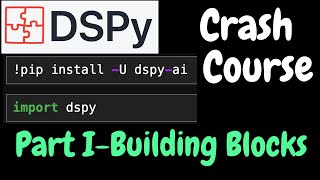
Introduction to DsPy Framework and Building Blocks - Part 1
Discover the fundamentals of DsPy framework for optimizing LLM pipelines, exploring its core components and how it differs from LangChain and LlamaIndex in this introductory guide.
OpenAI O1 Preview: Understanding AI Reasoning Models and Chain of Thought
Explore OpenAI's groundbreaking o1 preview model and its advanced reasoning capabilities for solving complex puzzles, mathematical problems, and coding challenges through detailed examples and practical applications.

Matrix Long Short-Term Memory (mLSTM) - A New Alternative to Transformer LLMs
Explore the innovative xLSTM architecture and its matrix-based approach to neural networks, comparing its potential advantages over traditional transformer models in language processing.
Understanding DSPy - Programming AI Pipelines for Language Models
Explore DSPy's innovative approach to AI pipeline programming, from its ColBERT v2 origins to practical applications in modular pipeline generation and self-improving language programs.

RecurrentGemma: Moving Past Transformers with Griffin Architecture for Long Context Length
Explore Google's RecurrentGemma-2B architecture, featuring Griffin's innovative approach to language modeling that surpasses traditional transformers with enhanced efficiency and long-context processing capabilities.
FASTER Code for Supervised Fine-Tuning and DPO Training with UNSLOTH
Explore practical implementation of UNSLOTH for accelerated Supervised Fine-Tuning and DPO-Alignment of LLMs using Jupyter notebooks with HuggingFace compatibility.
DSPy: Building Self-Improving Language Model Pipelines - Beyond LangChain Templates
Explore DSPy's innovative approach to building self-improving LLM pipelines, featuring automatic prompt engineering and graph-based optimization - moving beyond traditional prompt templates.

The iPhone Moment of AI - Natural Language Processing and Generative AI Revolution
Explore the transformative impact of Generative AI and NLP, from GPT-3's capabilities to practical applications in text generation and voice cloning, while addressing ethical considerations and corporate implementation.
WizardCoder 34B: Understanding Complex Fine-Tuning for Code Generation
Delve into the advanced fine-tuning techniques behind WizardCoder-34B, exploring its performance improvements through complex instruction cascading and evolutionary approaches.
ChatGPT vs GPT-4 - A Direct Comparison and Analysis
Explore a side-by-side analysis of GPT-3.5 and GPT-4 through 10 diverse challenges, revealing key differences in reasoning, creativity, and problem-solving capabilities.
Mistral 7B - Understanding the Architecture and Performance Improvements
Dive into the technical innovations of Mistral 7B, exploring its groundbreaking attention mechanisms, caching strategies, and performance improvements over existing language models.
Textbooks Are All You Need - Understanding Microsoft's Phi-1.5 Model
Discover Microsoft's Phi-1.5, a compact yet powerful transformer-based language model that achieves remarkable performance despite its smaller size compared to other recent LLMs.
Getting Started with HuggingFace Transformers - Pipeline, Tokenizer, and Model Development
Master HuggingFace Transformers library fundamentals, from pipelines and tokenizers to models and Hub integration, enabling you to effectively work with and fine-tune Large Language Models.
Self-Harmonized Chain of Thought (ECHO) - Understanding Complex Reasoning in Language Models
Explore the innovative ECHO method for enhancing language model reasoning through iterative refinement, clustering, and cross-validation techniques to achieve more accurate and consistent solutions.
Comparing GraphRAG and SpeculativeRAG Systems for Knowledge Integration
Explore the latest advancements in RAG systems, comparing GraphRAG and SpeculativeRAG frameworks for optimal performance in knowledge integration and response generation.
Tool LLM for API Calls - Understanding Fine-Tuned Language Models for API Performance
Explore how Tool LLama, a fine-tuned LLM, leverages API capabilities through ToolBench dataset to achieve ChatGPT-level performance in handling API interactions.

Cost Analysis for Fine-Tuning FLAN-T5 Large Language Models
Discover practical cost estimates and expert insights for fine-tuning FLAN-T5 language models, with guidance on cloud infrastructure optimization and budget management for different model sizes.
Fine-tuning Flan-T5 LLM with HuggingFace Accelerate - Tutorial
Learn how to fine-tune Flan-T5 LLM using HuggingFace Accelerate for multi-GPU environments, with step-by-step guidance on preprocessing and implementation for specific downstream tasks.

Fine-tune T5 Language Model for Text Summarization on Google Colab
Master fine-tuning techniques for T5 language models using HuggingFace's latest code, focusing on text summarization tasks with hands-on implementation in Google Colab's free GPU environment.