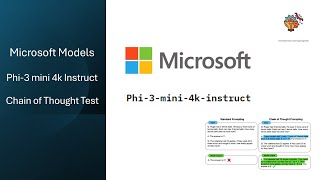
Microsoft Phi3 Mini 4K Instruct - Chain of Thought Prompting Test en Español
Explora pruebas de prompts de Cadena de Pensamiento con Microsoft Phi3 Mini 4K, comparando con otros modelos y técnicas de ajuste fino para razonamiento mejorado.
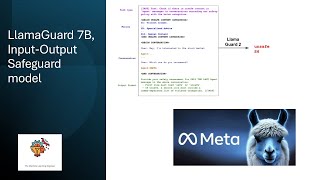
LlamaGuard 7B: Modelo de Salvaguarda de Entrada-Salida - Explicación en Español
Descubre cómo LlamaGuard detecta contenido no seguro en interacciones con LLM, mejorando la seguridad en aplicaciones de IA.
Revisión de los Últimos Modelos Multimodales: Gemini Pro 1.5 Flash, OpenAI GPT-4o y Claude 3 Opus
Compara las capacidades de los modelos multimodales más recientes: Gemini Pro 1.5 Flash, GPT-4o y Claude 3 Opus. Explora sus fortalezas y limitaciones.
Gemma-2 9B: Prueba de Prompts CoT en Español
Explora Gemma-2 de Google: opciones de uso, tamaños y formatos. Realiza pruebas de razonamiento con prompts CoT comparando con otros modelos.
Modeling Reality: Then and Now
Odkryj ewolucję modelowania rzeczywistości w fizyce teoretycznej, od klasycznych metod po nowoczesne sieci neuronowe i modele językowe, prezentowane przez eksperta w dziedzinie.

Do As I Can, Not As I Say - Grounding Language in Robotic Affordances
Explanation of SayCan, a system combining language models with robotic skills for real-world task execution. Covers methodology, implementation, and experimental results for complex instruction following.
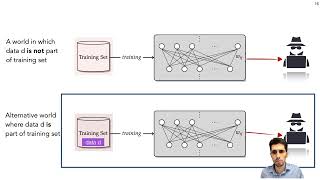
Auditing Data Privacy for Machine Learning
Explores privacy risks in machine learning, including data extraction from models, membership inference attacks, and tools for auditing privacy. Discusses implications for AI regulations and privacy-by-design approaches.
Data Analytics and Generative AI: Streamlining Tasks and Transforming the Workforce
Explore how generative AI revolutionizes data analytics, streamlines tasks, and transforms the workforce. Learn practical applications using Python and Power BI with real-world examples.
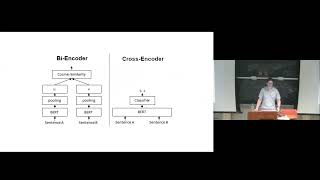
Using Language Models for Instruction-Based Information Retrieval
Explore instruction-based information retrieval using language models. Learn about Promptriever, a new retriever showing significant gains in instruction following and promptability.

NevIR: Negation in Neural Information Retrieval
Explore negation's impact on neural information retrieval models, analyzing performance across architectures and proposing strategies to improve handling of negated queries.
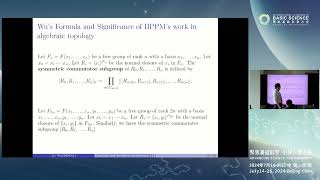
Topology and Artificial Intelligence - Applications and Recent Progress
Explore recent advancements in algebraic topology and AI, including language models for homotopy groups and statistical modeling for complex networks and diseases.

Passive Learning of Causal Strategies in Language Models
Exploring passive learning of causal strategies in AI, including generalization from interventional data and the role of natural language explanations in enhancing causal understanding.
Fall 2017
Explore AI, ML, NLP, and Lisp through comprehensive lectures covering semantic spaces, classification, language models, and parsing techniques for advanced computational linguistics.
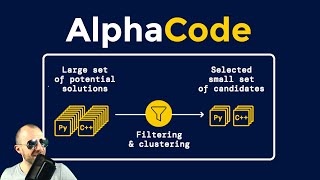
Competition-Level Code Generation with AlphaCode - Paper Review
Explore DeepMind's AlphaCode system for solving competitive programming problems, its architecture, and performance in real competitions. Learn about key components and innovative techniques.
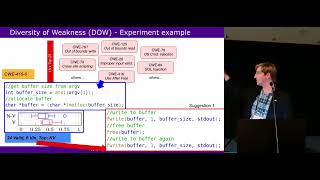
Asleep at the Keyboard? Assessing the Security of GitHub Copilot's Code Contributions
Explore the security implications of GitHub Copilot's AI-generated code contributions, analyzing common weaknesses and potential risks in various programming scenarios.
Building Humane User Interfaces with Language Models
Explore how AI can revolutionize human-computer interaction, moving beyond text-based interfaces to create more intuitive and user-friendly experiences.
How to Add Genuinely Useful AI to Your Webapp - Not Just Chatbots
Explore practical ways to integrate AI into web UIs, enhancing user experience beyond chatbots. Learn to anticipate needs and streamline tasks using language models in Blazor, MVC, and C#.
DSPy for Code Generation: Building and Optimizing Language Model Pipelines
Explore DSPy, a Stanford framework for optimizing language model pipelines in code generation. Learn its applications, potential, and hands-on usage with the HackerCup dataset.
SWEAgent: Solving Programming Problems with AI - NeurIPS Hacker Cup
Explore SWEAgent: AI tool for solving complex coding challenges. Learn setup, customization, and practical applications through live demonstrations and real-world examples.

Mission: Impossible - Testing Language Models on Unnatural Grammar Rules
Explore groundbreaking research challenging assumptions about language models' ability to learn impossible languages through systematic experiments with synthetic language variations and GPT-2.
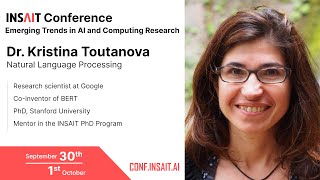
Representing Text in Context - Language Models and Contextual Understanding
Explore advanced language models and contextualized text representations through cutting-edge research on pre-training methods, visual context integration, and real-world NLP applications.