Creating and Using Langchain Tools with OpenAI for Data Science and Machine Learning
Create and use Langchain tools with OpenAI for data science and machine learning applications. Learn to integrate powerful AI capabilities into your projects.
Building Chatbots with LangChain and OpenAI
Construye chatbots avanzados utilizando LangChain y OpenAI. Aprende técnicas de procesamiento de lenguaje natural para crear asistentes virtuales inteligentes y personalizados.
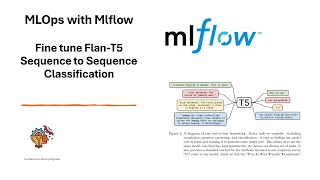
Fine-tuning Flan-T5 for Sequence-to-Sequence Classification with MLFlow
Fine-tune Flan-T5 for sequence-to-sequence classification using MLflow. Learn advanced MLOps techniques for optimizing language models in data science projects.
Llama3 8B QLora Fine-Tuning with Chain-of-Thought Dataset
Fine-tune Llama3 8B model using QLora with chain-of-thought dataset. Learn step-by-step process and access provided notebooks for Llama3, Llama2, and Mistral models.
Gemini API: How to Use Code Execution Capability with Python SDK
Explore Gemini API's code execution capability using Python SDK for machine learning and data science applications.
Local Llama 3.2 (3B) Tutorial - Summarization, Structured Text Extraction, and Data Labelling
Explore Llama 3.2 (3B) on Ollama for summarization, data extraction, and labeling. Learn setup, coding, and practical applications in this hands-on tutorial.
Hands on Data and Algorithmic Bias in Recommender Systems
Explore data and algorithmic bias in recommender systems through real-world examples, practical use cases, and mitigation techniques. Gain hands-on experience with Jupyter notebooks using data from actual platforms.
Auditing Black-box Models
Learn techniques to audit and interpret complex machine learning models, focusing on detecting unintended dependencies and biases using a specialized software library through hands-on examples.
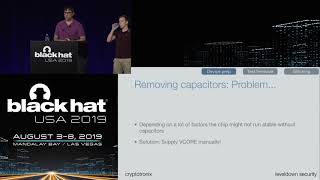
Chip.Fail - Glitching the Silicon of the Connected World
Explore fault injection attacks on popular IoT processors using affordable equipment. Learn about voltage glitching techniques and tools for breaking silicon security in connected devices.
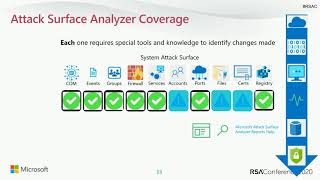
Open Source Tooling for Threat Analysis and Attack Surface Management
Explore open-source tools for threat hunting and attack surface analysis, featuring MYSTICPY and Attack Surface Analyzer. Learn practical applications and benefits for cybersecurity professionals.
Democratizing AI - Back-Fitting End-to-End Machine Learning
Explore LinkedIn's journey in democratizing AI, enhancing modeler efficiency, and scaling machine learning across engineering teams through innovative infrastructure and practices.
F# as a Better Python
Explore how F# addresses Python's limitations in web development, data scripting, and machine learning while leveraging Python's ecosystem. Learn F#'s advantages in static typing, environment setup, and functional programming.
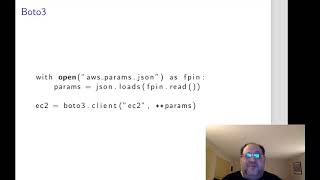
Jupyter as Incident Response Tool
Explore using Jupyter for incident response in SRE, showcasing its dynamic exploration and result-sharing capabilities through a simulated cache slowdown scenario and post-incident best practices.
Jupysec - Auditing Jupyter to Improve AI Security
Explore techniques for auditing Jupyter notebooks to enhance AI security, focusing on identifying vulnerabilities and implementing best practices for safer AI development.
How to Make Your Python Jupyter Notebook Standalone
Learn to make Python Jupyter notebooks reproducible and standalone using a JupyterLab extension for dependency management. Explore resolution engines, handle various scenarios, and ensure project reusability in cloud environments.
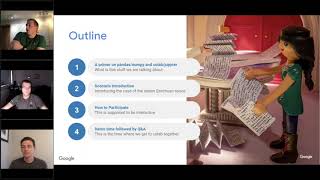
Exploring the Wonders of Timesketch and Jupyter
Harness the power of notebooks and Timesketch to solve forensic challenges. Learn data analysis, visualization, and API integration for effective digital investigations.

A Code-Driven Introduction to Reinforcement Learning
Hands-on introduction to reinforcement learning, covering Markov decision processes and RL algorithms. Includes live coding of a GridWorld simulation and practical steps for industrial applications.
Abzu's Pioneering Technology, the QLattice, Introduces a New Standard of Interpretability to Artificial Intelligence
Explore Abzu's QLattice, an explainable AI technology inspired by Feynman's path integrals. Learn how it predicts and explains outcomes using simple mathematical equations, demonstrated through a heart failure case study.
Building a Data Platform with Apache Spark on Kubernetes
Explore building a data platform using Apache Spark on Kubernetes, focusing on challenges and solutions for managing on-demand Spark clusters and Jupyter Notebooks in containerized environments.
Interactive C++ - Meet Jupyter - Cling
Explore interactive C++ using Jupyter and Cling. Learn prototyping techniques, interface guidance, and powerful combinations for data science and exploratory programming.
Edit Live Jupyter Notebook Cells with Emacs
Edit live Jupyter notebook cells with Emacs using GhostText and Atomic Chrome. Learn setup, supported browsers, and precautions. Includes demos for Python and Julia code editing.