Machine Learning Fundamentals with Python and R
Comprehensive introduction to machine learning fundamentals using Python and R, covering linear regression, data types, polynomial regression, and NumPy, with hands-on projects and practical applications.

Training BERT - Train With Next Sentence Prediction
Learn to pre-train BERT models using Next Sentence Prediction (NSP) for improved language understanding in specific domains. Practical implementation with unstructured text data.

The Truck Backer-Upper
Explore neural network applications in vehicle control, focusing on the Truck Backer-Upper problem. Learn about state transitions, training strategies, and Bayesian neural networks.

Self - Cross, Hard - Soft Attention and the Transformer
Explore attention mechanisms and Transformer architecture, covering self/cross and hard/soft attention, key-value stores, and practical implementation in PyTorch for advanced deep learning applications.

Recurrent Neural Networks, Vanilla and Gated - LSTM
Explore recurrent neural networks, including LSTM, covering architectures, training methods, and practical implementations using PyTorch for sequence-based tasks in deep learning.
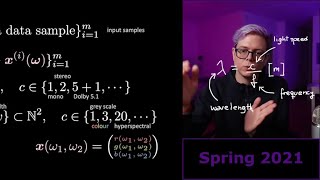
Natural Signals Properties and the Convolution
Explore natural signal properties, convolutional neural networks, and their applications in image processing. Learn about stationarity, locality, sparsity, and parameter sharing in neural network architectures.

Neural Nets - Rotation and Squashing
Explore neural network fundamentals, including affine transformations, non-linearities, and PyTorch implementation. Learn about ReLU, tanh, and deep network architectures through intuitive explanations and coding examples.
Tools, Classification with Neural Nets, PyTorch Implementation
Explore neural network classification, PyTorch implementation, and advanced concepts like space-fabric stretching and regression uncertainty estimation in this comprehensive tutorial.

The Hamiltonian Monte Carlo Revolution Is Open Source - Probabilistic Programming with PyMC3
Explore Bayesian statistical computation and Hamiltonian Monte Carlo algorithms using PyMC3, an open-source probabilistic programming package. Learn to apply these advanced techniques to complex models in Python.
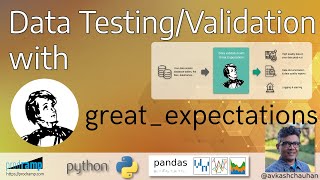
Always Know What to Expect From Your Data With Great Expectations
Learn to validate, test, and document data quality using great_expectations. Covers installation, initialization, context, demos with various datasets, and practical applications for data teams.
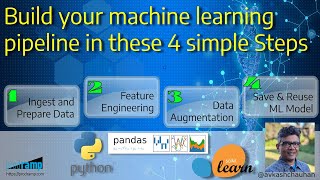
Build Your Machine Learning Pipeline in These 4 Simple Steps - Loan Prediction Scikit-Learn Example
Aprenda a construir um pipeline completo de machine learning usando scikit-learn para previsão de empréstimos, desde a ingestão de dados até o uso do modelo salvo para previsões.

TensorFlow 2.0 GPU, Keras, and Python 3.7 Installation Guide for Windows 10 - 2020 Update
Comprehensive guide for setting up TensorFlow 2.0 with GPU support on Windows 10, covering installation of necessary drivers, CUDA, cuDNN, and Anaconda environment configuration.
Efficient Scheduling of High Performance Batch Computing for Analytics Workloads with Volcano
Explore how ING uses Volcano scheduler for efficient, multi-tenant large-scale processing in advanced analytics, enabling dynamic allocation and resource fairness for over 300 internal projects.
Truly Open Lineage - Building Trust in AI Models Through Data Provenance
Explore open-source ecosystem for data lineage, combining Egeria, OpenLineage, and Marquez to enhance trust in AI models through transparent data origin and processing tracking.
Brewing Coffee Beyond the Edge - A Hardware Engineer's Guide to Kubernetes
Explore Kubernetes for hardware engineers, focusing on IoT applications like coffee brewing. Learn about MQTT, Mosquito, and Jupyter CLI integration for innovative edge computing solutions.
Building Dynamic Machine Learning Pipelines with KubeDirector
Learn to build dynamic ML pipelines using KubeDirector on Kubernetes. Explore a taxi ride prediction example, from model training to deployment, and discover how KubeDirector's "Connections" feature enables always up-to-date ML models.
Training AI to Code Using Project CodeNet - Largest Code Dataset
Explore Project CodeNet's vast code dataset and learn to leverage it for AI-driven code classification, complexity analysis, and language translation using MLX and Kubernetes.
Securing a Managed Jupyter Notebook Platform Using Istio and OPA
Learn how to secure a managed Jupyter notebook platform using Istio and OPA. Discover techniques for user isolation, traffic segmentation, and access authorization in multi-tenant ML environments.
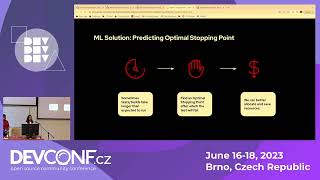
Optimize Long Test Runtimes Using Open AIOps
Optimize CI/CD workflows with AI4CI: Predict test failure times, determine optimal stopping points, and efficiently manage development resources using open AIOps tools and ML models.
Langchain: Interacting with APIs Using OpenAI
Explore API interaction using Langchain and OpenAI models for data science and machine learning applications. Learn practical implementation techniques.
Langchain Document Tagging with OpenAI
Create a tool for tagging documents using Langchain and OpenAI, enhancing document organization and retrieval in data science and machine learning projects.