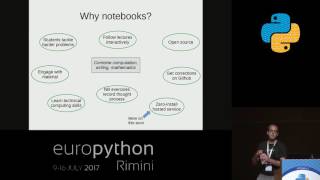
Jupyter Notebooks for Teaching and Learning
Explore Jupyter notebooks' potential in education, from self-learning to taught courses. Discover strengths, limitations, and tools enhancing their effectiveness for diverse learning scenarios.
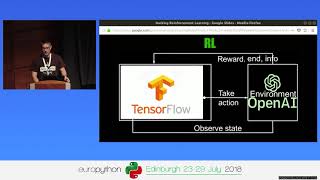
Hacking Reinforcement Learning
Explore innovative algorithms for generating high-quality samples in reinforcement learning environments, achieving superhuman performance with linear time complexity and good scalability.
A Jupyter Enhancement Proposal Story
Explore the journey of submitting a Jupyter Enhancement Proposal, from conception to implementation, and learn about programmatic notebook conversions using custom metadata and templates.
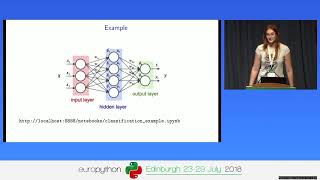
Data Is Not Flat
Explore feature engineering techniques for low-dimensional data to enhance model performance, with a focus on neural network classification and practical examples.

Introduction to Sentiment Analysis with SpaCy
Learn to extract opinions from text using spaCy, covering sentiment analysis basics, topic extraction, and rating consolidation. Includes practical examples in German with English translations.
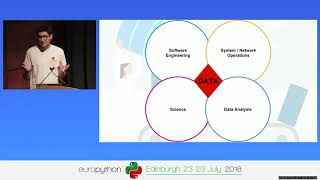
The Rise of Python in the Data Communities
Explore Python's growing influence in data-driven industries, its impact on the ecosystem, and future challenges in scaling for massive data processing.
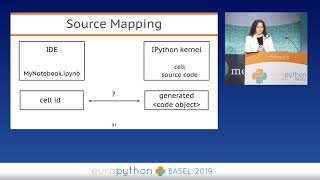
Visual Debugger for Jupyter Notebooks - Myth or Reality?
Explore the challenges and possibilities of implementing a visual debugger for Jupyter Notebooks, including architecture insights and current limitations in existing tools.
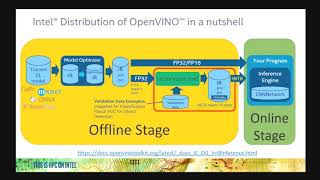
Accelerate Your Deep Learning Inferencing with the Intel DL Boost Technology
Explore Intel® DL Boost technology for efficient deep learning inference acceleration using low-precision INT8 and VNNI instructions on 2nd gen Intel Xeon Scalable processors.
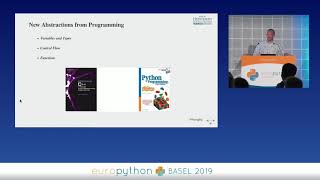
Using Python to Teach Computational Finance
Explore computational finance using Python and Probo package. Learn derivative pricing, Monte Carlo simulation, and dynamic hedging through hands-on demos and Jupyter notebooks.
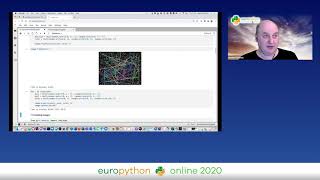
PyRT - Computer Graphics in Jupyter Notebooks for Fun and Teaching
Explore pyRT for raytracing in Jupyter notebooks, creating 2D animations, visualizing algorithms, rendering geodata, and generating 3D graphics with Python.
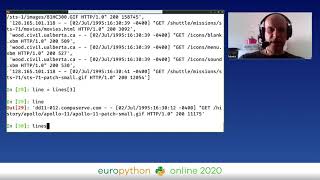
IPython - The Productivity Booster
Discover IPython's power for rapid development, including magic commands, external processes, and integration with existing tools. Learn popular extensions and configuration hacks applicable to Jupyter.
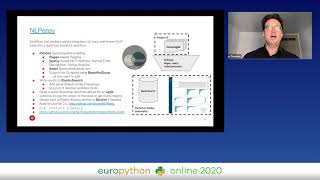
NLPeasy - A Workflow to Analyse, Enrich, and Explore Textual Data
Discover NLPeasy: a streamlined workflow for analyzing, enriching, and exploring textual data using pre-trained models, Docker, and Jupyter Notebooks. Simplify your NLP projects with this powerful Python package.
Top 15 Python Tips for Data Cleaning - Understanding
Discover 15 essential Python tips for effective data cleaning and understanding, focusing on Pandas and NumPy libraries to enhance your data analysis skills.
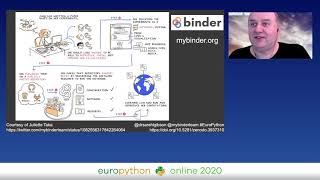
Sharing Reproducible Python Environments with Binder
Learn to share reproducible Python environments using Binder, integrating Jupyter Notebooks and Docker for easy packaging and cloud-based sharing of data science projects without complex setup.
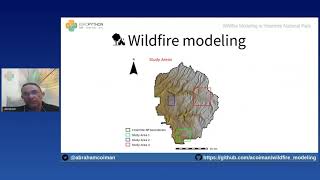
Wildfire Modeling in Yosemite National Park
Explore wildfire simulation in Yosemite using GRASS GIS and Python libraries. Learn to obtain geospatial data, model fire behavior, and create interactive maps with Google Earth Engine and Jupyter Notebook.
Analyzing COVID Vaccine Popularity in Europe Using FastAPI, Postgres & Azure
Explore COVID vaccine data analysis using FastAPI, Postgres, and Azure. Learn to process, store, and visualize European vaccine popularity data with Python tools and cloud services.
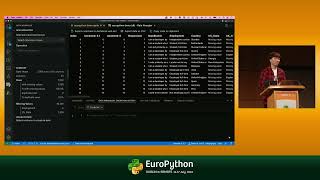
Python & Visual Studio Code - Revolutionizing the Way You Do Data Science
Discover how Visual Studio Code, GitHub, Codespaces, and Azure ML enhance Python data science productivity. Learn about VS Code Notebooks, Data Wrangler, collaboration features, and deployment options.
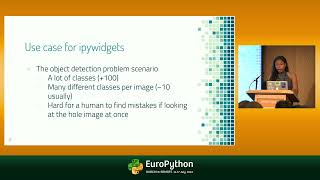
Creating Great User Interfaces on Jupyter Notebooks with Ipywidgets
Learn to create user-friendly interfaces in Jupyter Notebooks using ipywidgets, enabling data scientists to build interactive tools without extensive front-end skills or deployment concerns.
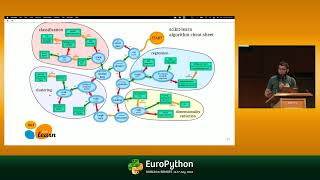
Python for Arts, Humanities and Social Sciences
Discover how Python and data science tools can revolutionize research in arts, humanities, and social sciences. Learn practical tips for overcoming programming fears and applying data-driven methods to real-world problems.
Jupyter - Under the Hood
Explore Jupyter's architecture: from notebook server to IPython kernel. Dive into REST APIs, ZMQ sockets, and internal workings of Jupyter Notebook, JupyterLab, and JupyterHub.
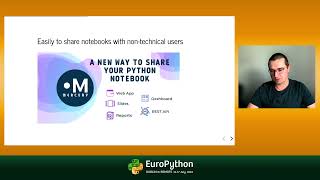
Mercury - Build & Share Data Apps from Jupyter Notebook
Learn to transform Jupyter Notebooks into interactive web apps using Mercury framework. Explore features, architecture, and deployment options for sharing data applications effortlessly.