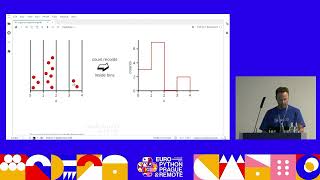
Scipp - Multi-Dimensional Arrays with Labeled Dimensions and Physical Units
Explore Scipp's powerful features for handling multi-dimensional data arrays with named dimensions, physical units, and non-destructive binning. Learn about its intuitive visualization tools for Jupyter notebooks.

Python, Visual Studio Code, Copilot - Revolutionizing the Way You Do Data Science
Explore how Visual Studio Code, GitHub, Codespaces, and Copilot enhance data science workflows, boosting productivity through advanced tools like VS Code Notebooks, Data Wrangler, and AI-assisted coding.
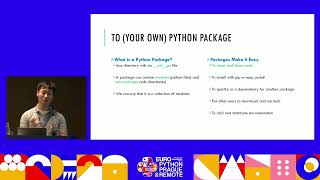
From Jupyter Notebooks to a Python Package - The Best of Both Worlds
Learn to transform Jupyter notebooks into a Python package, enhancing code sharing, refactoring, and version control while retaining notebook benefits. Gain practical skills for improved data science workflows.
Visualization Best Practices for Explainable AI
Explore machine learning visualization techniques for explainable AI across industries, covering model understanding, data analysis, and performance evaluation using Jupyter, Python, and Power BI.
Stepping into Data Science - Predictive Analytics
Explore data science processes, feature engineering, and predictive analytics using Python. Learn to create training and predictive experiments with practical examples and machine learning techniques.
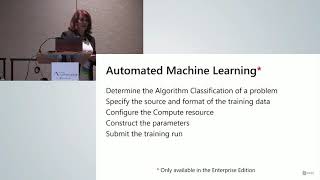
Hidden Differences Between Azure ML Products Revealed
Explore Azure ML products, their differences, and use cases. Learn to create end-to-end ML workflows, integrate with SQL Server, and manage models in production using various Azure tools.
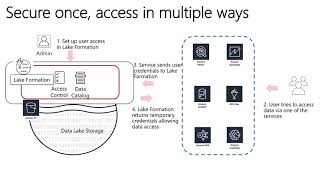
Navigate Your Big Data Journey with AWS Big Data Services
Comprehensive guide to AWS big data services, covering data ingestion, warehousing, analysis, and visualization using tools like Jupyter notebooks and Amazon Redshift for effective data lifecycle management.
Notebooks, PowerShell, and Excel Automation
Automate Excel tasks using PowerShell and Jupyter Notebooks. Learn to create self-service solutions for users to generate custom Excel workbooks efficiently and effectively.
What's New in the SQL Server Tools?
Explore upcoming SQL Server tools and user experiences, featuring demos on Jupyter notebooks and SQL database projects, presented by the SQL Server product team.
Dr. DMV with Jupyter Notebooks
Comprehensive guide to using Dynamic Management Views for SQL Server diagnostics, leveraging Jupyter Notebooks to detect and resolve performance issues with detailed result interpretation.
SQL Notebooks in Azure Data Studio for the DBA
Explore SQL Notebooks in Azure Data Studio for DBAs: simplify workflows, run diagnostic queries, and leverage powerful features for daily database management tasks.

Kotlin for Machine Learning
Explore Kotlin's potential in machine learning projects, from data cleaning to model deployment. Learn about Kotlin tools for data science, including Jupyter notebooks, visualizations, and dataframes.
From Notebook to Kubeflow Pipelines with HP Tuning - A Data Science Journey
Explore Kubeflow for effortless ML pipeline creation, scaling, and hyperparameter tuning. Convert Jupyter notebooks to deployable workflows and leverage Kubeflow components for efficient data science journeys.
Cartography - Using Graphs to Improve and Scale Security Decision-Making
Explore Cartography, an open-source tool for visualizing and securing cloud-native assets. Learn how to improve decision-making, track changes, and understand security risks across platforms.

Understanding Isolation Levels in the Kubernetes Landscape
Explore isolation and security levels in Kubernetes, from clusters to containers. Learn tradeoffs, impacts, and how to optimize isolation at different layers, with a focus on Jupyter Notebooks as a case study.
AIOps for CI with Kubeflow Pipelines
Explore AI4CI, an AIOps tool leveraging Kubeflow Pipelines to monitor builds, predict failures, and create interactive dashboards for improved CI/CD visibility and root cause analysis.
Interactive Computing with Jupyter and Almond
Explore interactive computing using Jupyter and Almond for Scala development. Learn to create dynamic, shareable notebooks for data analysis, visualization, and machine learning projects.
The Secret Weapon for Developers - Notebooks
Discover how electronic notebooks like Jupyter can enhance developer productivity, accelerate learning, and facilitate prototyping. Explore their versatility and potential applications in software development.
Creating a Q&A Tool with Langchain and OpenAI
Create a Q&A tool using Langchain and OpenAI for machine learning and data science applications. Learn to implement this powerful combination for efficient question-answering systems.
The Game Changing Evolution of Synthetic Data Generation - Magpie
Explore Magpie's revolutionary synthetic data generation for AI, automating high-quality training data creation without manual input, enhancing model performance and efficiency.

ME3255 - Python Code Examples from Discussion
Learn Python coding techniques for mechanical engineering applications through practical examples and discussions.