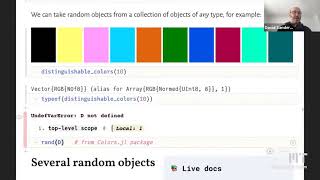
Sampling and Random Variables in Julia - Lecture 9
Explore random sampling, probability distributions, and data visualization techniques using Julia, covering topics from basic coin tosses to complex probability densities and histogram normalization.
Transformations - Composability and Linearity in Computational Thinking - Lecture 4
Explore composability and linearity in transformations, focusing on image processing applications and advanced Julia programming techniques for vector-valued functions and linear/nonlinear transformations.
Transformations and Automatic Differentiation in Computational Thinking - Lecture 3
Explore transformations and automatic differentiation in Julia, covering linear and non-linear transformations, function types, and applications in machine learning, with practical examples and visualizations.
Transforming Images and Image Processing Techniques - Lecture 2
Explore image transformation techniques using Julia, including downsampling, linear combinations, convolutions, and filters. Learn about complexity, GPUs, and data structures in computational thinking.
Introduction to Arrays and Images in Computational Thinking - Lecture 1
Explore computational thinking through image manipulation and array operations in Julia, with hands-on examples and an introduction to abstraction concepts.
Data Wrangling Techniques in Julia - Part 2 - Tom Kwong
Explore advanced data wrangling techniques in Julia, covering reading, cleaning, tidying, analyzing, and visualizing data using two sample datasets for practical application.
Data Wrangling Techniques in Julia - Part 1 - Tom Kwong
Comprehensive overview of data wrangling in Julia, covering ecosystem, workflow stages (read, clean, tidy, analyze, visualize), and DataFrames.jl resources for effective data science practices.
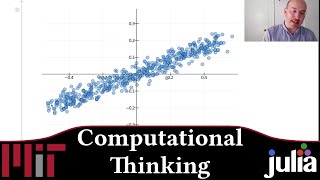
Understanding Structure in Data - Week 3
Explore data structure analysis using Julia, covering matrix rank, data visualization, PCA, and building a simple recommendation engine. Gain practical insights into advanced data science concepts.
Structure and Matrices in Julia Programming - Lecture 3
Explore matrices, sparse structures, and SVD for image compression and computational thinking in Julia, with practical applications in machine learning and linear algebra.

Adventures in Computing - From Punch Cards to Differential Equations
Prof Linda Petzold explores her journey in computational science, from punch cards to modern differential equations, highlighting key developments in numerical methods, stochastic simulations, and their applications in various fields.
State of Julia - JuliaCon 2020
Comprehensive overview of Julia's progress, highlighting key developments in multithreading, infrastructure, ecosystem, and future plans, with insights on challenges and upcoming features.
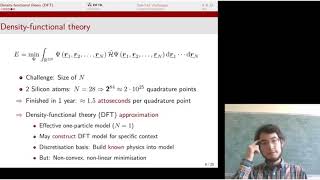
DFTK - A Julian Approach for Simulating Electrons in Solids
Introducing DFTK: A Julia package for density-functional theory simulations, offering flexibility for practical calculations and mathematical development in electronic structure research.
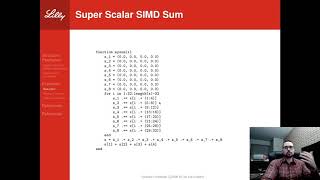
Loop Analysis and Vectorization in Julia - JuliaCon 2020
Explore LoopVectorization.jl for efficient loop representation, cost modeling, and vectorization strategies in Julia, enhancing performance through intra-core parallelism and SIMD operations.
BinaryBuilder.jl - The Subtle Art of Binaries That Just Work
Explore BinaryBuilder.jl for compiling binary libraries across Julia platforms. Learn to create build recipes, use the wizard, and contribute to Yggdrasil. Hands-on experience included.
Developing Julia Packages
Comprehensive guide to creating, testing, and contributing Julia packages. Covers development environments, continuous integration, version control, and open-source collaboration.
Interval Methods for Scientific Computing in Julia
Explore interval methods for scientific computing in Julia, focusing on constraint propagation, global optimization, and root finding using IntervalConstraintProgramming.jl and IntervalArithmetic.jl packages.
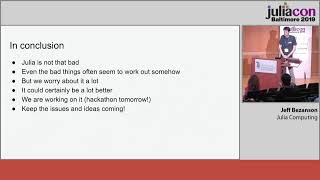
What's Bad About Julia - Addressing Fundamental Issues
Julia co-creator Jeff Bezanson discusses fundamental issues in the language, focusing on modularity, types, and method specificity rules, offering insights into potential solutions for a better programming experience.
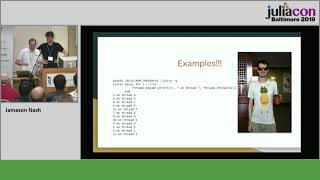
Multi-threading in Julia with PARTR - JuliaCon 2019
Explore multi-threading in Julia with PARTR, covering old and new features, future developments, and practical examples. Includes performance comparisons and Q&A on threading models and implementation details.
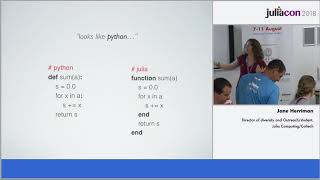
An Introduction to Julia for Beginners
Comprehensive introduction to Julia programming, covering basics to advanced topics. Ideal for beginners with technical computing needs and experience in other languages.
Flux - The Elegant Machine Learning Library for Julia
Explore Flux, an intuitive machine learning library for Julia, featuring state-of-the-art performance, automatic differentiation, and innovative compiler technology for efficient and flexible ML development.
Shared Memory Parallelism in Julia with Multi-Threading - Parallel Depth-First Scheduling
Explore efficient shared memory parallelism in Julia using multi-threading, focusing on nested parallelism and the parallel depth-first scheduling approach for improved performance.