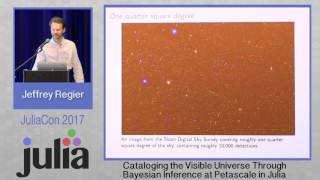
Celeste.jl - Petascale Computing in Julia
Explore Celeste.jl, a Julia-based project for petascale astronomical image analysis using Bayesian inference, showcasing Julia's power in high-performance computing and data science on supercomputers.

What's New in Trustworthy AI in Julia (Taija) - JuliaCon 2024
Discover the latest developments in Julia's Trustworthy AI ecosystem, exploring advancements in model explainability, algorithmic recourse, uncertainty quantification, and Bayesian deep learning through the Taija framework.
Improving the Life-Cycle of Tensor Algorithm Development with ITensors
Explore advanced tensor algorithm development in Julia, focusing on generic programming strategies for efficient computation across CPU, GPU, and QPU architectures using the ITensors framework.
Seamless Transition from Single-core Python to Julia Multi-GPU
Discover how to transform single-core Python code into scalable Julia applications for GPU supercomputers, with focus on automatic verification and parallel computing optimization.
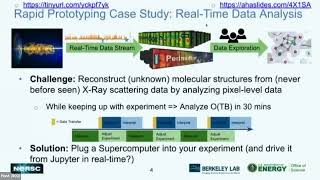
Data Science with Julia - Hands-on Tutorial
Hands-on tutorial exploring Julia for data science, covering interactive analysis, visualization, and machine learning algorithms. Equips participants to apply Julia in their own projects.
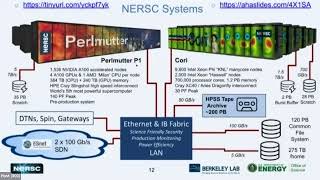
Julia for Python Programmers
Hands-on introduction to Julia for scientific computing and data science, focusing on its efficiency and interactive capabilities for technical applications and scalable computing.

Investigating Crimes Using Julia
Explore forensic science using Julia, applying math and science concepts to solve crime puzzles. Learn to utilize Julia packages for data analysis, visualization, and complex problem-solving in criminal investigations.
New Developments in BifurcationKit.jl - JuliaCon 2024
Explore advancements in BifurcationKit.jl for analyzing periodic and homoclinic orbits, including new methods for bifurcation analysis and integration with other Julia packages.
A Fast and Flexible CFD Solver with Heterogeneous Execution - JuliaCon 2024
Explore WaterLily.jl: a fast, flexible CFD solver for CPUs and GPUs. Learn about its meta-programming approach, performance, and potential for ML integration and differentiability.

Creating an Inspiration Gallery with Adobe Capture and CC Libraries - Part 2
Discover techniques for building and organizing a design inspiration library using Adobe tools, enhancing your creative process for future projects.

Creating an Inspiration Gallery with Adobe Capture and CC Libraries - Part 1
Discover techniques for building an inspiration library using Adobe Capture and CC Libraries. Learn to collect, organize, and utilize design inspiration for future projects with expert guidance.

Learn Julia - Full Course for Absolute Beginners
Comprehensive introduction to Julia programming, covering basics to advanced topics. Ideal for beginners, includes hands-on practice with VS Code and Pluto notebooks.
Productive Parallel Programming with Dagger.jl - JuliaCon 2024 Workshop
Learn to write fast, parallel Julia code using Dagger.jl. Explore various programming interfaces, build example programs, and gain insights into parallelism through logging and profiling capabilities.
Hierarchical Component-Based Modeling with ModelingToolkit.jl
Explore hierarchical component-based modeling using ModelingToolkit.jl for efficient simulation of complex systems. Learn to build, simplify, and analyze large-scale models with Julia's SciML ecosystem.
A Tour of Julia
Explore Julia's high-performance capabilities, JIT compilation, and unique features like meta-programming and multiple dispatch. Learn how it combines Python-like productivity with C/C++-level performance.
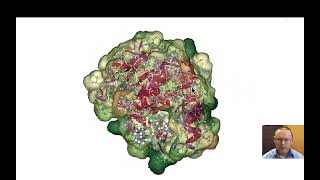
Edit Live Jupyter Notebook Cells with Emacs
Edit live Jupyter notebook cells with Emacs using GhostText and Atomic Chrome. Learn setup, supported browsers, and precautions. Includes demos for Python and Julia code editing.
Getting More Out of Matplotlib with GR
Enhancing Matplotlib performance with GR framework for high-speed data visualization, real-time applications, and improved 3D rendering. Explore interoperability with GUI toolkits and OpenGL.
What's New in GenieFramework? - JuliaCon 2024
Explore GenieFramework's latest features: enhanced GenieBuilder, comprehensive documentation, custom components, and improved styling options for streamlined web app development.
Subzero.jl: Fast and Flexible Sea Ice Physics
Explore efficient sea ice modeling with Subzero.jl, leveraging Julia's speed for advanced climate simulations. Learn about discrete-element modeling and performance improvements in sea ice dynamics research.
Python.jl - Seamlessly Blend Python and Julia
Explore seamless Python-Julia integration, featuring demos, capabilities, challenges, and insights into extreme DSL embedding in Julia.
PyramidScheme.jl Overviews for Larger Than Memory Arrays
Explore efficient computation and interactive plotting of Pyramids for large arrays using PyramidScheme.jl, DiskArrays.jl, and Makie.jl ecosystem in Julia programming language.