Feeding ML Models with Real-Time Database Data
Explore real-time data ingestion from databases to ML models using Change Data Capture. Learn about Debezium, challenges, and future improvements with a live TensorFlow demo.
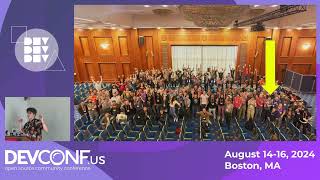
Gotta Go Fast: How We Started the Ubuntu High-Performance Computing Team
Explore the formation of Ubuntu's HPC community team, their collaborative efforts in developing Charmed HPC, and strategies for addressing challenges in open-source HPC ecosystem engagement.
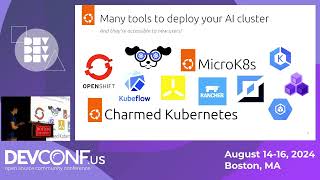
Charmed HPC: Your Own Personal Supercomputer Within 15 Minutes
Deploy a personal supercomputer in 15 minutes using Charmed HPC, an open-source infrastructure stack for cloud and on-premises. Explore integrated services, automated lifecycle events, and multi-cloud deployment options.
UKELELE: Optimizing Event Handling for Modern Server Applications
Explore UKELELE, a high-performance event handling system for modern server applications. Learn about its optimizations, improved throughput, and reduced tail latency compared to current Linux solutions.
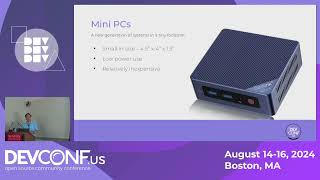
Learn About Linux, Containers, and Networking Through Self-Hosting
Explore self-hosting to gain hands-on experience with Linux, containers, and server operations. Set up personal cloud services for photo, music, and video sharing while maintaining data control.
Transitioning from Debezium ElasticSearch to Postgres for Streamlined Resilience
Explore backend optimization by transitioning from Debezium ElasticSearch to Postgres. Learn about foreign data wrapper, logical replication, and database consolidation for enhanced resilience and simplified infrastructure.
Confidential Computing - The Minimum Developers Should Know
Explore Confidential Computing essentials: technologies, importance, and ecosystem. Learn about FHE, SMPC, TEEs, and more. Gain insights into industry collaborations and community engagement.
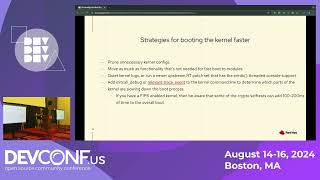
Accelerating Linux Boot Time: Techniques and Strategies for Optimal Performance - Lecture
Explore strategies to accelerate Linux boot time, from measuring performance to optimizing systemd, kernel, and filesystem configurations. Gain comprehensive understanding of achieving faster boot times.
Automating Lifecycle of Virtual Machines in Kubernetes Using Ansible and KubeVirt
Explore Ansible's role in automating KubeVirt VM lifecycle within Kubernetes. Learn about collections, plugins, migration methods, and common use cases for efficient virtual machine management.
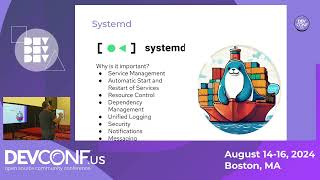
Container Life Cycle Management in Automotive and Edge Deployments
Explore Podman Quadlet's systemd integration for efficient container management in automotive projects, enhancing resource utilization.
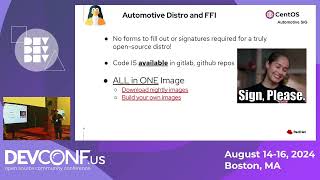
Paving the Way for Uninterrupted Car Operations
Explore Freedom of Interference in containers and its impact on next-gen vehicles and embedded devices. Witness the future of mobility with enhanced efficiency, safety, and performance.

Shared Libraries in Windows and Linux - Linking and Loading Deep Dive
Dive deep into linking and loading operations, exploring binary structures, static vs dynamic linkage, and Linux vs Windows differences. Gain clarity on opaque linker error messages.

The Hidden Performance Price of C++ Virtual Functions
Dissect virtual functions in C++, understand their performance impact, and learn optimization techniques to enhance program speed while utilizing this core concept.
Sockets - Applying the Unix Readiness Model for Concurrent Operations in C++ - CppCon 2022
Explore Unix readiness model for concurrent operations in C++. Learn to compose and await multiple futures or coroutines efficiently, drawing insights from socket programming techniques.
Observability Tools in C++: Beyond GDB and printf
Explore advanced observability tools for C++ beyond GDB and printf to gain deeper insights into program behavior and performance on Linux systems.

A Fast, Compliant JSON Pull Parser for Writing Robust Applications - CppCon 2023
Explore a fast, compliant JSON pull parser for robust C++ applications. Learn API design, semantic constraints, and error handling techniques to enhance JSON parsing efficiency and reliability.
Extending Redis with Rust
Learn to extend Redis with custom data structures and commands using Rust. Discover how to bring data and computation together by creating new modules for this in-memory database.
Shifting Go Left with CUE - Configuration and Type Safety
Explore how CUE language integrates with Go, enhancing configuration management and reducing deployment risks while improving type safety and developer experience.
Running High Channel Count Audio Applications on Linux RT
Explore Linux kernel features for real-time audio processing, focusing on performance control and glitch-free output in high channel count applications. Learn from commercial product examples.
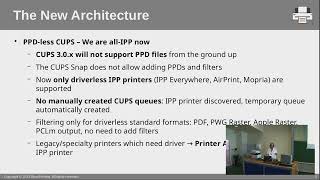
New Printing GUIs: GNOME Control Center and Common Print Dialog Backends - Linux App Summit 2023
Explore advancements in Linux printing GUIs, including GNOME Control Center updates and Common Print Dialog Backends. Learn about the shift to all-IPP printing architecture and its impact on printer setup and printing interfaces.
The Open Source Symbiosis
Explore the mutualistic relationship between open source contributors and users, driving innovation and high-quality software development through interdependence and collaboration.