D-Flow: Differentiating through Flows for Controlled Generation
Explore D-Flow framework for controlled generation in AI models, optimizing source points through flow differentiation. Learn applications in inverse problems and conditional generation.

Generalization in Diffusion Models from Geometry-Adaptive Harmonic Representation
Explore generalization in diffusion models through geometry-adaptive harmonic representation. Analyze denoising DNNs, score functions, and inductive biases to understand high-dimensional density learning and optimal basis adaptation.

Face Anonymization with Python - Blurring and Pixelating Techniques
Anonymize faces in images using Python: detect, blur, and pixelate for privacy. Learn CPU and GPU techniques, compare results, and ensure data protection in your projects.

Computer Vision Workshop on OpenShift: AI/ML Platform for Model Development and Deployment
Explore computer vision use cases on OpenShift, from data collection and annotation to model training and deployment, with practical demonstrations on cars and trains detection.

Learning Energy-Based Models of High-Dimensional Data - 2002
Explore energy-based models for high-dimensional data analysis. Learn about deterministic networks, perceptual inference, and efficient learning techniques for large-scale models.

Pursuit of Low-dimensional Structures in High-dimensional Data - 2013
Explore techniques for extracting low-dimensional structures from high-dimensional data, with applications in computer vision, image processing, and pattern recognition. Learn about convex optimization and regularization methods.
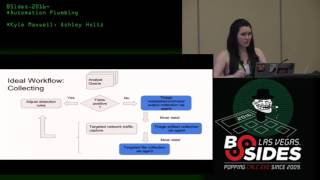
Automation Plumbing
Explore efficient automation workflows for cybersecurity, covering detection, aggregation, processing, and plumbing solutions using tools like Python, Elastic Search, Splunk, and Log Stash.

Easterhegg 2019 - Generative Adversarial Networks für Anfänger
Einführung in Generative Adversarial Networks: Überblick, Geschichte und praktische Anwendungen für Entwickler. Erklärt Konzepte, Techniken und Herausforderungen anhand von Beispielen wie Pokémon-Generator und Gesichtsalterung.

How to Build an Effective Malware Protection Architecture for File Uploads in Modern Web Apps
Explore a novel approach to automated malware analysis for file uploads in web apps, focusing on scalability, performance, and effective detection of malicious content.

Challenges of Using V4L2 to Capture and Process Video Sensor Images
Explore challenges in capturing and processing video sensor images using V4L2, covering BAYER arrays, white balance, and color adjustment techniques.

Image Representations Learned With Unsupervised Pre-Training Contain Human-like Biases
Explore how unsupervised pre-training in image representations can lead to human-like biases, examining methods, results, and implications for AI fairness and ethics.

Complex Cameras on Linux
Explore Linux camera support, from traditional V4L2 to media-controller devices. Learn about image processing, APIs, and efforts to standardize complex camera applications.
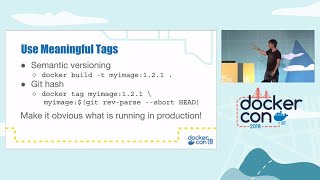
Tips and Tricks of the Docker Captains
Learn essential Docker tips and tricks from experts, covering configuration, Kubernetes, build optimization, security, and advanced usage scenarios for improved containerization workflows.

Java in a World of Containers
Explore containerization for Java applications, covering custom runtimes, image optimization, and performance enhancements like class data sharing and code caching.

Super Powering Technical Artists Using Deep Learning
Explore generative models in game development, focusing on style transfer, neural doodling, and image translation. Learn how deep learning enhances technical artistry and animation in Unity.
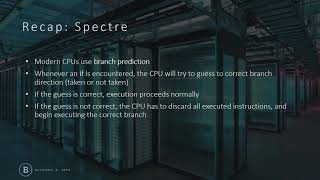
Bypassing KPTI Using the Speculative Behavior of the SWAPGS Instruction
Unveiling a new speculative execution attack exploiting SWAPGS instruction, bypassing existing CPU and kernel protections. Explores side-channel vulnerabilities and their implications for system security.
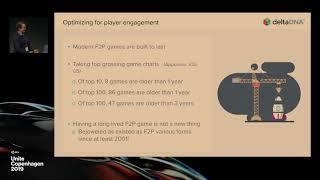
Player Engagement - The Right KPIs for Your Game
Discover how to leverage the right KPIs and game design practices to maximize your game's potential and distinguish it from the competition.

Tips and Tricks for Increasing LTV in Your Games
Discover strategies to boost player lifetime value in games, covering data analysis, user experience, segmentation, and monetization techniques for different player types.
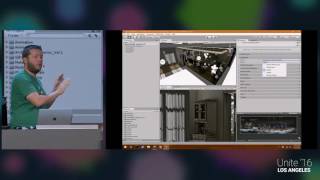
What's New with Unity's Image Effects and Post Processing Stack
Explore Unity's new Post Processing stack, featuring improved workflows and enhanced image effects for creating visually stunning games with greater efficiency.
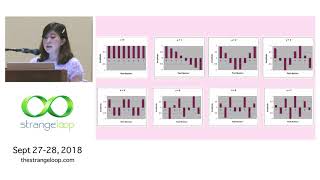
The Glitching Hour
Explore image formats, compression techniques, and data corruption to create artistic glitch effects. Learn how to manipulate digital imagery for unique visual aesthetics.
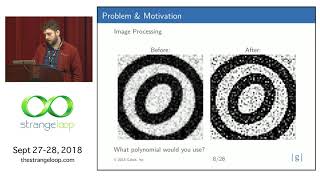
Your Secrets Are Safe with Julia - A Compiler for Secure Computation
Explore Ramparts, a compiler translating Julia code for homomorphic encryption, enabling secure computation on encrypted data without cryptography expertise.