
Asynchronous Network Requests in a Web Application
Explore techniques for implementing asynchronous network requests in web applications, including Twisted event loops, coroutines, and asyncio, and their compatibility with WSGI server parallelization models.

High Performance Python on Intel Many-Core Architecture
Explore high-performance Python acceleration on Intel processors for scientific computing, data analytics, and machine learning, focusing on the latest Intel architectures and software tools.

Implementing Parallel Programming Design Patterns Using EFL for Python
Explore parallel programming in Python using EFL, a deterministic tool for multi-core CPUs. Learn design patterns, compare code translations, and discover efficient parallelization techniques.

Deep Learning with Python & TensorFlow
Explore deep learning with TensorFlow: compare Python ML libraries, create data flow graphs, and learn deployment strategies for production systems.
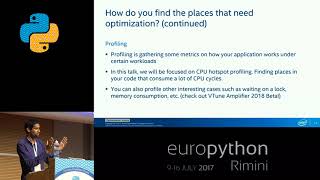
Python Profiling with Intel VTune Amplifier
Explore Python performance analysis using Intel® VTune™ Amplifier, a GUI tool for identifying bottlenecks, analyzing call stacks, and optimizing code efficiency in high-performance computing and machine learning applications.
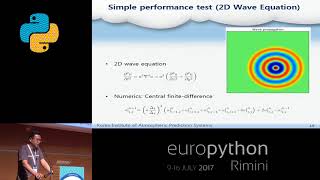
GPU Acceleration of a Global Atmospheric Model Using Python Based Multi-Platform
Explore GPU acceleration for global atmospheric models using PyMIP, a Python module integrating C, Fortran, CUDA, and OpenCL. Learn about performance improvements and multi-platform compatibility for weather forecasting and climate prediction.
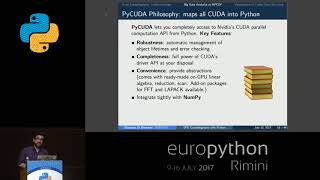
Big Data Analytics at the MPCDF - GPU Crystallography with Python
Explore GPU-accelerated Python for big data analytics in atom probe crystallography, focusing on Fourier spectral analysis, scalability across multiple GPUs, and interactive visualization techniques.
Scripting Across Hosts with Chopsticks
Explore Chopsticks, a Python tool for remote code execution over SSH, enabling parallel processing across hosts without deployment. Learn its API, clever tricks, and versatile applications.
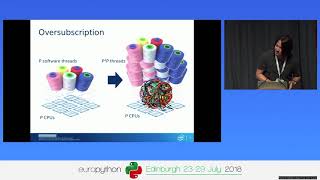
Addressing Multithreading and Multiprocessing in Transparent and Pythonic Ways
Explore advanced Python techniques for efficient multithreading and multiprocessing, including GIL management, static multiprocessing, and thread pool control for optimal performance on multi-core systems.
Dissecting tf.function to Discover AutoGraph Strengths and Subtleties
Explore AutoGraph in TensorFlow 2.0: Learn to write efficient, graph-convertible code, understand tf.function intricacies, and optimize performance in this in-depth tutorial.
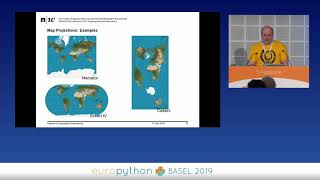
Geospatial Analysis Using Python and JupyterHub
Explore geospatial data processing and visualization using Python, covering vector and raster analysis, deep learning applications, and high-performance computing techniques for efficient spatial data handling.
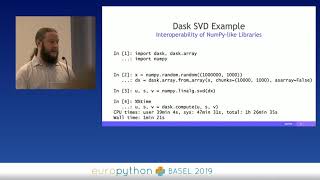
Distributed Multi-GPU Computing with Dask, CuPy and RAPIDS
Explore distributed multi-GPU computing using Dask, CuPy, and RAPIDS. Learn to leverage GPU acceleration and distributed systems for faster, more efficient data processing and analysis.
Dissecting tf.function to Discover AutoGraph Strengths and Subtleties
Explore AutoGraph and tf.function in TensorFlow 2.0, learning key concepts for efficient graph-convertible code and improved performance in deep learning applications.
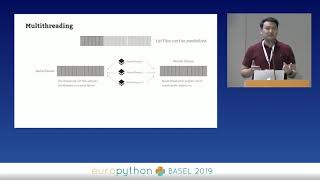
Downloading a Billion Files in Python
Explore efficient techniques for downloading massive file sets using Python, comparing multithreading, multiprocessing, and asyncio approaches with best practices and performance insights.
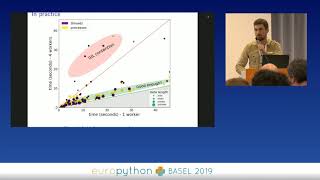
Parallel Computing in Python - Current State and Recent Advances
Explore Python's parallel computing landscape, from low-level interfaces to high-level libraries, and learn about recent advances in shared memory management and object serialization.
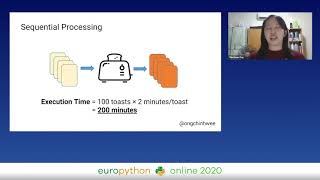
Speed Up Your Data Processing
Explore parallel and asynchronous programming techniques to optimize data processing pipelines, enhancing efficiency in data science workflows and overcoming common bottlenecks.
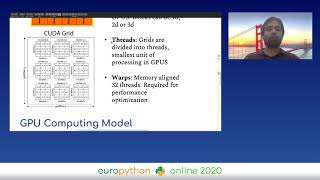
Writing Extensions and Bindings for GPU Made Easy
Learn to optimize deep learning computations by writing custom C and CUDA extensions for GPU, with a focus on image search across billions of items and seamless integration with Python codebases.
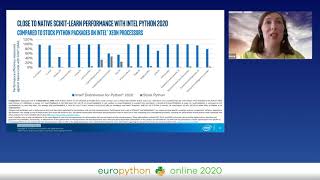
The Painless Route in Python to Fast and Scalable Machine Learning
Learn to optimize Python for high-performance machine learning, from Intel-enhanced packages to scalable data processing and analytics pipelines that rival C++/MPI performance on large datasets and clusters.
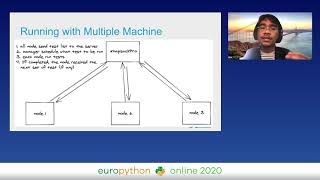
Running Unit Test on Top of Serverless Service
Explore serverless architecture for unit testing, including parallelization approaches, implementation insights, and cost-benefit analysis for improved developer productivity.

Optimizing Your CI Pipelines
Discover techniques to enhance CI pipelines: parallelization, caching, early failure detection, and conditional runs for faster, more efficient builds and improved development workflows.
Rust for Python Data Engineers
Explore how Rust can enhance data engineering workflows, offering improved performance and safety. Learn about Rust's ecosystem for data processing, databases, and scientific computing to build scalable systems.