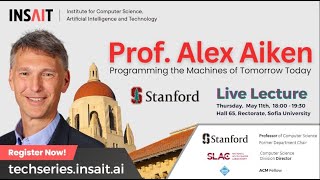
Programming the Machines of Tomorrow Today - Legion Programming Model
Explore Legion, a programming model for hierarchical data and computation organization, and its applications in high-productivity libraries for complex machines.
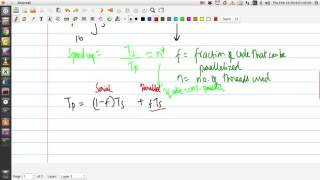
Fortran with OpenMP
Learn parallel programming in Fortran using OpenMP. Master threads, clauses, work sharing, and optimization techniques for high-performance computing applications.

CUDA
Comprehensive introduction to CUDA programming, covering architecture, memory, terminologies, and practical implementations for vector and matrix operations on GPUs.
CUDA Tutorials
Learn to program NVIDIA GPUs with CUDA, covering basics, kernels, memory, parallel algorithms, shared memory, and the Thrust library for efficient GPU computing.
Multiprocessing
Learn Python multiprocessing concepts including locks, logging, pools, and process communication for efficient parallel programming.
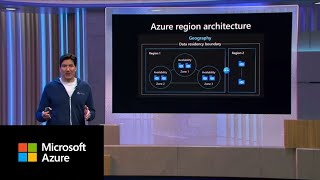
Azure Datacenter Architecture - Latest Innovations and Technologies
Dive into Azure's cutting-edge datacenter architecture with CTO Mark Russinovich, exploring innovations in cooling, supercomputing, and infrastructure that power cloud, on-premises, and edge applications.

Computer Vision and OpenCV Tutorial in C++
Learn computer vision and OpenCV in C++, covering installation, image processing, object detection, depth estimation, and GPU acceleration. Gain practical skills for real-world applications.
OpenCV DNN
Learn to deploy neural networks for object detection, depth estimation, and point cloud creation using OpenCV DNN module with Python and C++. Explore GPU acceleration and custom YOLOv5 models.

Pytorch Tutorial
Learn PyTorch fundamentals, from installation to advanced applications. Master tensors, backpropagation, and deep learning techniques for real-world data science projects.
Julia for High-Performance Computing - JuliaCon 2022
Explore Julia's capabilities for high-performance computing through expert talks on scalability, GPU support, MPI integration, and real-world applications in scientific and engineering domains.
Julia in Astronomy and Astrophysics Research - JuliaCon 2022
Explore how Julia enhances astronomical research through talks on instrument simulation, stellar modeling, exoplanet characterization, cosmology, and more. Discover Julia's impact on productivity and scientific advancement in astronomy.
Easy and Featureful Parallelism with Dagger.jl - JuliaCon 2021
Explore advanced parallelism in Julia with Dagger.jl, offering GPU execution, fault tolerance, and efficient resource utilization. Learn through practical examples and discover its powerful features.
Interplay of Linear Algebra, Machine Learning, and HPC - JuliaCon 2021 Keynote
Explore the interplay of linear algebra, machine learning, and HPC with Dr. Li. Learn about fast solvers, low-rank compression, and how ML can optimize linear algebra computations for big data problems.
Julia: Great Language or the Greatest Language - Keynote by Jan Vitek
Keynote explores Julia's design, implementation, and performance, covering subtyping algorithms, type stability, and JIT compilation. Insights into language evolution and scientific programming revolution.
GPU Programming in Julia - Workshop
Comprehensive workshop on GPU programming in Julia, covering CUDA, AMDGPU, and oneAPI packages. Explores array operations, kernel programming, profiling, and real-world applications across different GPU architectures.
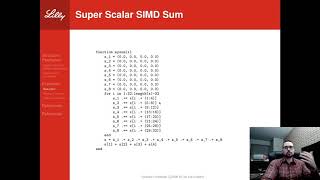
Loop Analysis and Vectorization in Julia - JuliaCon 2020
Explore LoopVectorization.jl for efficient loop representation, cost modeling, and vectorization strategies in Julia, enhancing performance through intra-core parallelism and SIMD operations.
Multi-threading in Julia with PARTR - JuliaCon 2019
Explore multi-threading in Julia with PARTR, covering old and new features, future developments, and practical examples. Includes performance comparisons and Q&A on threading models and implementation details.
Shared Memory Parallelism in Julia with Multi-Threading - Parallel Depth-First Scheduling
Explore efficient shared memory parallelism in Julia using multi-threading, focusing on nested parallelism and the parallel depth-first scheduling approach for improved performance.
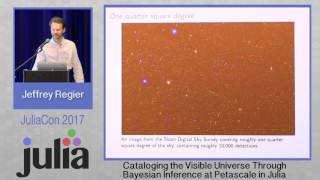
Celeste.jl - Petascale Computing in Julia
Explore Celeste.jl, a Julia-based project for petascale astronomical image analysis using Bayesian inference, showcasing Julia's power in high-performance computing and data science on supercomputers.
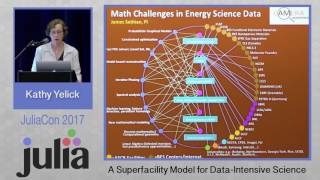
A Superfacility Model for Data-Intensive Science
Explore data-intensive science challenges, high-performance computing, and the role of programming languages like Julia in addressing big data and computational demands in scientific research.
How Does Enterprise Accelerate Test and Release Velocity - LambdaTest Webinar
Discover strategies to accelerate test execution and release velocity in enterprise environments. Learn about automation testing best practices, DevOps tools, and actionable techniques to improve software delivery speed.