
Machine-Learning Enabled Imaging: From Microscopy to Medical Imaging to Astronomy - Kirk Lecture
Explore machine learning's impact on imaging across microscopy, medical imaging, and astronomy. Learn how neural networks leverage training data and physical models for improved image quality and resolution.
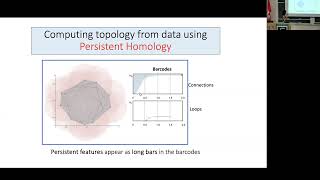
Applications of Topological Data Analysis in Cancer - Lecture 2
Explore applications of topological data analysis in cancer research, focusing on mathematical modeling of treatments, resistance, and optimization.
Knowledge-Adapted Fine-Tuning for Medical Vision Language Models
Explore how Knowledge-Adapted Fine-Tuning (KnowAda) improves vision-language models in medical AI, reducing hallucinations while maintaining accurate image descriptions and diagnostic capabilities.

Building a Privacy-Focused Pregnancy App with AI and Decentralized Web Nodes
Discover how to leverage AI and decentralized web nodes to build a privacy-focused pregnancy tracking application, with practical demonstrations and implementation insights.
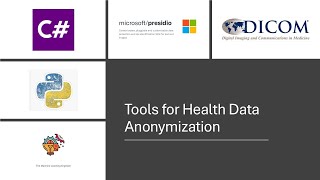
MLOps: Herramientas para Detectar y Proteger Datos Médicos
Descubre cómo anonimizar y proteger datos médicos sensibles usando Microsoft Presidio, con enfoque en imágenes DICOM y estándares FHIR, cumpliendo normativas GDPR, PII y HIPAA.
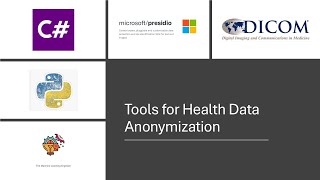
MLOps Tools for Health Data Anonymization in Healthcare and Medical Environments
Master healthcare data anonymization techniques using Microsoft Presidio and specialized tools for DICOM images and FHIR formatting, ensuring compliance with privacy regulations like GDPR and HIPAA.
Leveraging Machine Learning and Clinico-Genomic Data for Cancer Care and Drug Discovery
Discover how machine learning and genomic data from 500,000 cancer cases drive innovations in cancer treatment and pharmaceutical development through advanced computational approaches.
Generative AI for Multimodal Biomedicine
Explore groundbreaking developments in multimodal biomedicine AI, including GigaPath, OCTCube, and BiomedParse foundation models, and their potential impact on advancing medical applications through multi-agent frameworks.

Fine-tuning Llama 3.2 for Mental Health Sentiment Analysis Using TorchTune
Master fine-tuning techniques for Llama 3.2 using torchtune, focusing on sentiment analysis for mental health data with practical implementation steps on a single GPU.
AI and Pervasive Sensing in ICU Patient Monitoring - The Future of Critical Care
Discover how AI and pervasive sensing technologies transform ICU patient monitoring, offering real-time assessment and automated data collection to revolutionize critical care delivery and improve patient outcomes.

Gastric Cancer - Achieving Health Equity Among Asian Americans
Explore the critical health disparity of gastric cancer in Asian American communities, examining risk factors, treatment outcomes, and innovative approaches to achieve equitable healthcare delivery.
Extra History: Medicine
Explore humanity's medical history, from ancient beliefs to modern breakthroughs. Learn about epidemics, discoveries, and medical mysteries that shaped our understanding of health and disease.

The Future of Higher Education - Research Universities' Response to COVID-19
Leaders of major universities discuss COVID-19's impact on higher education, research efforts, medical centers, and future educational landscapes, addressing challenges and potential solutions.
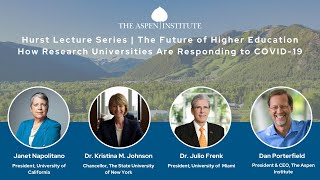
The Future of Higher Education - Research Universities' Response to COVID-19
Explore how research universities are adapting to COVID-19, discussing solutions, medical center roles, and the pandemic's impact on higher education's future.
Tipping Points in Cancer - Mathematical Oncology and Computational Biology
Explore the mathematical dynamics of cancer progression through computational analysis of fluid mechanics, biology, and critical transition points in tumor development.
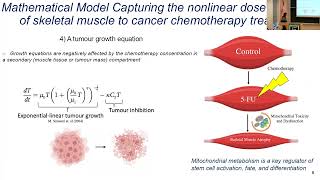
Chemotherapy-Induced Cachexia and Model-Informed Dosing to Preserve Lean Mass in Cancer Treatment
Explore mathematical modeling approaches for optimizing chemotherapy dosing to minimize muscle loss while maintaining effective cancer treatment strategies.
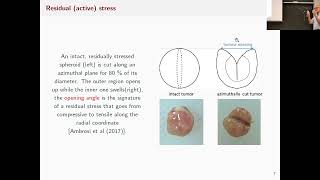
Stress and Growth in Tumor Spheroids
Explore the mathematical modeling of tumor growth dynamics, focusing on stress factors and spheroid development in oncological research and computational biology.
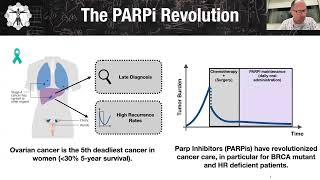
De-escalating PARP Inhibitor Maintenance Therapy in Ovarian Cancer Using Adaptive Therapy
Explore innovative approaches to PARP inhibitor maintenance therapy in ovarian cancer, focusing on adaptive treatment strategies and de-escalation methods for optimal patient outcomes.
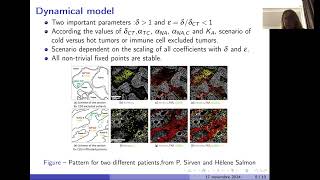
How Cancer-Associated Fibroblasts Promote T-Cell Exclusion in Human Lung Tumors: A Physical Perspective
Explore the physical mechanisms behind cancer-associated fibroblasts and their role in T-cell exclusion within lung tumors through mathematical and biological perspectives.
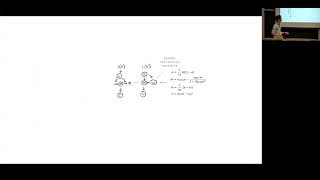
Balancing Interpretability and Predictive Accuracy in Mathematical Models of T Cell Activation
Explore mathematical modeling approaches for T cell activation, examining the trade-offs between model interpretability and accuracy in immunological systems.
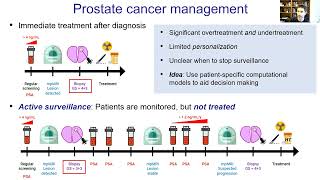
Prostate: Small Organ, Big Problems - Informing Clinical Decisions with Computational Models
Explore how computational models enhance clinical decision-making for prostate-related conditions through advanced mathematical and biological approaches.