Rigorous Uncertainty: Science During COVID-19 with David Krakauer
Exploring COVID-19's impact through complexity science, discussing citizen-based medicine, data challenges, group size recommendations, and out-of-equilibrium thinking to reveal hidden interconnections in modern life.
COVID-19 and Complex Time in Biology and Economics with David Krakauer
Explore complex systems insights on COVID-19, including timing's role in biology and economics, network dynamics, and societal adaptation to rapid change.
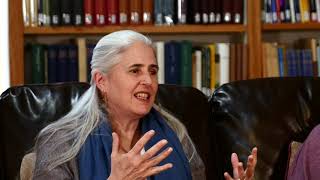
Complex Time- Aging & Adaptation in Infectious Diseases II
Explore aging and adaptation in infectious diseases with SFI experts Carlson and Pascual, discussing key areas and insights from their research on complex time and disease dynamics.
Multiscale Crisis Response - Melanie Moses & Kathy Powers, Part 2
Exploring multiscale crisis response to COVID-19, examining societal polarization, scientific challenges, and institutional responses through a complexity science lens.
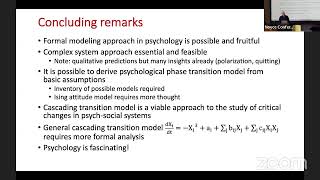
Cascading Transitions in the Behavioral and Social Sciences
Explore cascading transitions in psycho-social systems, focusing on opinion change, learning, and addiction. Discover how these multilevel processes work and their potential impacts on society.

Environment X Everything Interactions - From Evolution to Epidemics and Beyond
Explore environment-actor interactions across various fields, from evolution to epidemics, using mathematical frameworks and simulations to understand complex systems and their impacts.
The Science of Pandemics - C4 Public Lecture
Explore global pandemics, influenza threats, and the role of mathematical modeling in disease surveillance and control through advanced computing techniques.
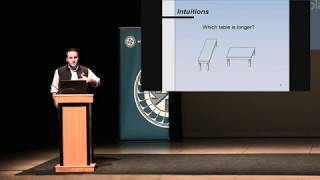
How Behavior Spreads - The Science of Complex Contagions
Exploring the science of complex contagions, this lecture delves into how behaviors and innovations spread through social networks, challenging conventional wisdom and offering insights for effective social change.
Fluid Mechanics of the Cardiovascular System - Interesting, Impossible Problems in Bio, Phys, & Math
Explore cardiovascular fluid mechanics, its impact on health, and challenges in modeling complex systems. Discover research on cell responses, oxygen transport, and nanoparticle dynamics in blood vessels.
Complex Time - Hallmarks of Biological Failure
Explore biological failure through interdisciplinary perspectives, examining hallmarks, causes, and potential interventions in aging and disease processes across species and systems.
Preventing the Next Pandemic
Exploring influenza forecasting challenges, from predicting seasonal epidemics to anticipating pandemics, using network models and diverse data sources to improve public health preparedness and vaccine development.
Preventing the Next Pandemic
Network epidemiology: using complex systems science to uncover contagion drivers, identify transmission hotspots, detect emerging threats early, and optimize strategies for vaccines, antivirals, and social distancing interventions.
Social Dilemma of Disease Control
Explore disease control's social dilemma through integrating top-down and bottom-up perspectives, examining contagions, immunity, social distancing, and vaccination behaviors.
A Brief History of Balance - Carlos Gershenson SFI Seminar
Explore the concept of balance across various domains, from physics to philosophy, and its implications for evolution, sustainability, and complex systems.
Frontiers of Computational Social Science - Agent-Based Modeling and Artificial Societies
Explore agent-based modeling in computational social science, from playground simulations to global epidemic models, with insights on future developments in neuro-cognitive agents and their applications.
The Physics of Brain Network Architecture, Function, and Control
Explore brain network architecture and dynamics using advanced imaging and computational tools. Discover control points, activity trajectories, and network evolution from childhood to adulthood.
The Swine Flu and You: Predicting and Controlling the H1N1 Pandemic
Explore the H1N1 pandemic: its impact, control strategies, and mathematical modeling for prediction and prevention. Learn about public health responses and the science behind epidemic management.
Why We Kill - Violence as Socialization
Explores the "violentization" model of criminologist Lonnie Athens, examining how individuals can be socialized into committing violent acts through a four-stage process, challenging common assumptions about violence.
Pathogen Diversity from an Ecological Perspective
Explore pathogen diversity through an ecological lens, examining the complex interactions between microorganisms and their environments in disease dynamics and evolution.
The Challenge of Obesity and a Systems Approach to Solutions
Explore the complex obesity epidemic, its global impact, and innovative systems approaches for prevention and policy solutions. Learn about multifaceted factors and cutting-edge research in this field.
Zoobiquity - What Dolphin Diabetes Can Teach Us About Human Health
Explore how animal diseases can inform human health, bridging veterinary and medical sciences for innovative approaches to physical and behavioral well-being across species.