Epidemic Spread Through Segregated Spaces - Racial Disparities in COVID-19
Explore racial disparities in COVID-19 impact, examining structural factors and spatial segregation. Learn how to improve epidemic models by incorporating multi-scale spatial interactions and socio-economic factors.
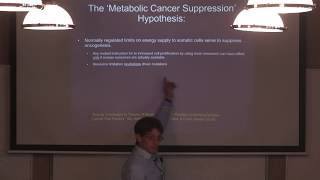
Does the Ecology of Somatic Tissue Normally Constrain Cancer Evolution?
Exploring how energy supply to tissues affects cancer evolution, proposing that normal physiological limits on cellular energy may suppress oncogenesis, with implications for cancer risk factors and prevention.
Networks, Complexity, and Disease Dynamics
Explore the intricate relationship between network structures, complex systems, and the spread of diseases in this insightful seminar by Dirk Brockmann from Humboldt University.

On Coronavirus, Crisis, and Creative Opportunity
Exploring how crises reshape opportunities, this talk examines evolutionary strategies for navigating disruptions and the potential for innovation amidst catastrophe in a post-coronavirus world.

Halting the Spread of COVID-19 - Network Epidemiology and Containment Measures
Network epidemiology insights on COVID-19 spread, discussing contagion across scales, co-infections' impact, and evidence supporting containment measures. Explores complexities of pandemic modeling and intervention strategies.
Improving COVID-19 Surveillance and Response
Explore challenges in monitoring and preventing COVID-19 spread, from ethical concerns to academic research limitations, with Harvard epidemiologist Caroline Buckee.
Modeling Disease Transmission and Interventions - Sam Scarpino Interview
Explore epidemiological modeling, interventions, and complex interactions of biological and behavioral contagions in the context of the Covid-19 pandemic with expert Sam Scarpino.

After the First Wave - Strategies for Public Health and Economic Recovery Post-COVID-19
Experts discuss strategies for public health and economic recovery post-COVID-19, exploring testing, modeling, interventions, and balancing epidemiological and economic concerns for future pandemic waves.
Taking Multiple Perspectives on The Brain - Part 1
Exploring diverse approaches to understanding the brain's complexity, emphasizing the importance of multidisciplinary perspectives and collaborative discourse in advancing neuroscience research.
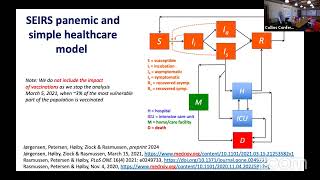
SARS-CoV-2 Infection Tracing Efficiency in Denmark Before Vaccine Impacts
Explore Denmark's pre-vaccine SARS-CoV-2 infection tracing strategies, analyzing their effectiveness and impact on pandemic control measures.

Effective Resistance Against Pandemics - Mobility Network Sparsification
Explore strategies for pandemic resistance through mobility network analysis, focusing on identifying crucial links for effective intervention and control measures.
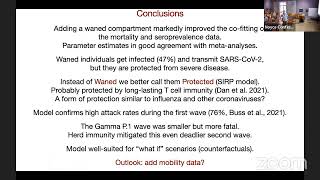
How Herd Immunity Mitigated a Deadly Second Wave of COVID-19 in Manaus
Explore how herd immunity impacted the COVID-19 second wave in Manaus, examining its effects and implications for public health strategies.

Why There Are No Three-Headed Monsters
Explore developmental constraints, brain tumors, and marriage dynamics through mathematical biology, offering insights into morphogenesis, medical interventions, and relationship predictions.

How Do Mathematicians Model Infectious Disease Outbreaks?
Explore mathematical modeling of infectious diseases, including outbreak shapes, compartmental modeling, and using models to inform control strategies and vaccination efforts.

Mathematical Modelling in Biology - Infectious Disease Modelling - Lecture 3
Explore infectious disease spread using the Kermack McKendrick model, deriving the 'R' number and its significance in epidemiology. Gain insights into mathematical biology applications.
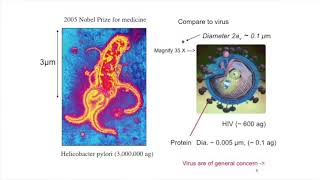
NYU Tandon's Ultra-sensitive Whispering Gallery Mode Biosensor - Part One: Motivation and History
Explore ultra-sensitive biosensors for pathogen detection, focusing on whispering gallery mode technology and its applications in virus detection and molecular spectroscopy.

Improving Value and Reducing the Environmental Footprint of Healthcare - Clinical Sustainability Overview
Explore strategies to reduce healthcare's environmental impact while maintaining quality care, covering topics like surgery waste, life cycle assessment, and sustainable practices in various medical settings.
Perform Your Best Under Stress - Strategies for Managing Performance Anxiety
Discover strategies to perform optimally under stress, exploring mind-body connections and their impact on success, happiness, and safety. Insights from brain science reveal techniques to overcome performance anxiety.
Impedance of the Esophagus - Jeffrey L. Conklin, MD - UCLA
Explore esophageal impedance measurement principles, applications in bolus movement and biomechanics, and its role in assessing motor function and various esophageal conditions.
Nonalcoholic Fatty Liver Disease - UCLA Digestive Diseases
Comprehensive overview of nonalcoholic fatty liver disease, covering diagnosis, prevalence, testing methods, and treatment options, including lifestyle modifications and emerging pharmacotherapies.
Microbiome and Gut Health - Emeran A. Mayer, MD - UCLA Digestive Diseases
Explore the intricate relationship between gut microbiome and overall health, covering topics from metabolites to immune effects and their impact on chronic diseases and the pandemic.