
AI's Role in Improving Health Care Services in Our Communities
Stanford experts discuss AI initiatives in healthcare, focusing on early disease detection, preventive care, and reducing provider burnout, while addressing privacy and equity concerns.
Towards Robust Radiogenomic Models for Brain Tumor Characterization - MedAI #123
Exploring stability of radiomics features in brain tumor segmentation and impact on predictive models. Investigates how stable, discriminatory features lead to generalizable radiogenomics for tumor characterization.
Integrating Pathology Images and Genomics Data for Cancer Grading
Innovative AI methods for integrating pathology images and genomics data to enhance cancer grading accuracy, addressing modality challenges and improving performance when genomics data is missing.

HECTOR - Multimodal Deep Learning Model for Predicting Recurrence Risk in Endometrial Cancer
Multimodal deep learning model HECTOR predicts endometrial cancer recurrence risk using histopathology images and tumor stage, outperforming current standards for personalized treatment decisions.
Holistic OR Domain Modeling with Large Vision Language Models - MedAI #120
Innovative approach to automated OR modeling using Large Vision Language Models, leveraging semantic scene graphs for comprehensive surgical environment understanding and enhanced decision-making.
AI-Driven Advancements in Mammogram Analysis - MedAI #119
Exploring AI applications in mammogram analysis for cancer screening and cardiovascular risk assessment, addressing challenges in healthcare AI adaptation and extracting actionable clinical insights.

Lung Cancer in Asian Americans: Screening, Treatment, and Advancements
Explore lung cancer's impact on Asian Americans, screening guidelines, and treatment advancements. Learn about rising rates among non-smokers and cutting-edge surgical techniques for improved outcomes.

Navigating Medication Management for Diabetes - Stanford Wellness Webinar
Gain expert insights on diabetes medication management, including adherence strategies, cost reduction, and supplement considerations. Enhance your healthcare provider discussions and treatment plan.

Knee Osteoarthritis: Non-Operative Approaches to Treatment
Explore non-operative treatments for knee osteoarthritis, including supplements, diet, braces, and injections. Learn from a Stanford expert about managing this common condition effectively.
Knee Osteoarthritis: A Non-Operative Approach to Treatment
Explore non-operative treatments for knee osteoarthritis, including supplements, diet, braces, and injections. Learn from a Stanford expert about managing this common condition without surgery.

Liver Disease in Asian Americans: Unique Risk Factors and Treatment Advancements
Uncover the unique risks and patterns of liver disease in Asian Americans, exploring early signs, screening importance, and latest treatments with Dr. Mindie Nguyen.

William Butler Yeats's Late Poetry - Analysis and Interpretation - Lecture 6
Explore Yeats's late poetry, examining themes of aging, knowledge, and art. Analyze works like "Sailing to Byzantium" and "Lapis Lazuli" to understand his evolving perspectives on life and creativity.

Pandemic Influenza: Historical Patterns and the 1918-1920 Spanish Flu
Explore the history of influenza pandemics, focusing on the devastating 1918-1920 Spanish flu, its unique characteristics, and lessons for modern public health responses.

Syphilis: From the "Great Pox" to the Modern Version - Epidemics in Western Society
Explore syphilis' history, origins, symptoms, and societal impact from the 16th century to modern times. Delve into debates surrounding its emergence and spread across Europe.

The Sanitary Movement and the 'Filth Theory of Disease' - Epidemics in Western Society Since 1600
Explore the 19th-century sanitary movement's impact on public health, urban planning, and social reform, focusing on key figures and cities that shaped modern approaches to disease prevention.

Asiatic Cholera: Five Pandemics and Their Impact on 19th Century Society - Lecture 2
Explore the impact of Asiatic cholera in 19th-century Europe, its symptoms, societal effects, and community responses. Understand how this disease shaped social perceptions and political anxieties of the era.

Smallpox - From Endemic Disease to Eradication - Lecture 2
Explore smallpox's impact on Europe and the New World, public health responses, and the development of inoculation and vaccination techniques in this historical analysis.

Smallpox - The Speckled Monster and Its Impact on Western Society - Lecture 6
Explore the history, transmission, symptoms, and treatments of smallpox in 18th century Western society, from its rise as a feared disease to early attempts at prevention and cure.

Plague Responses and Public Health Measures in Western Society - Lecture 4
Explores community responses to bubonic plague, from panic and persecution to religious revivals and the emergence of public health programs, examining their effectiveness in combating the pandemic.
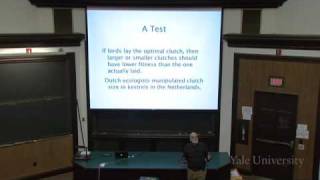
Life History Evolution - Principles of Evolution, Ecology and Behavior
Explore evolutionary tradeoffs in organism traits: maturity, offspring, and lifespan. Understand how genes and environment shape life history strategies for survival and reproduction.
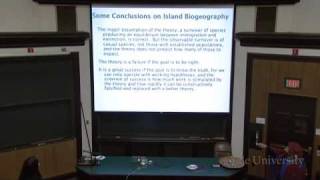
Island Biogeography and Invasive Species - Principles of Evolution, Ecology and Behavior
Explore island biogeography, metapopulations, and their ecological significance. Learn how these concepts apply to species distribution, extinction risks, and even epidemiology in this insightful lecture.