Mapping Fetal Brain Development In-Utero
Explore cutting-edge techniques for mapping fetal brain development in-utero, presented by Harvard Medical School expert Dr. Ali Gholipour.
Causal Mapping of Symptoms onto Human Brain Circuits
Explore causal mapping of neuropsychiatric symptoms onto brain circuits. Learn lesion network mapping, depression localization, and therapeutic applications in addiction and epilepsy.
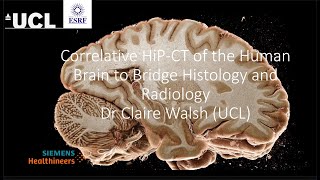
Correlative HiP-CT of the Human Brain to Bridge Histology and Radiology
Explore correlative HiP-CT techniques bridging histology and radiology in human brain imaging, presented by Claire Walsh from University College London.
Advancing Physiological MRI in Brain Tumour Imaging Diagnostics
Explore advanced physiological MRI techniques for improved brain tumor diagnostics, focusing on innovative imaging methods and their clinical applications.
Probing Fundamental Physics with Multiwavelength Observations - Lecture 3
Explore multiwavelength observations in fundamental physics, focusing on advanced techniques and their applications in probing cosmic phenomena and particle interactions.
Host-pathogen Co-evolution
Explore host-pathogen interactions, evolutionary dynamics, and their impact on disease ecology. Gain insights into co-evolutionary processes shaping infectious diseases and their ecological consequences.
Understanding Pathogen Evolution Using Genomics
Explore genomic techniques to analyze pathogen evolution, enhancing understanding of disease dynamics and outbreak management in changing ecosystems.
Investigating Pathogens in Bird Communities
Explore disease ecology in bird communities, focusing on pathogen dynamics, sequencing techniques, and data analysis to understand and manage outbreaks in changing ecosystems.
Understanding Host Communities
Explore factors shaping disease dynamics in animal populations, integrating ecology, evolution, and mathematics to address real-world challenges in disease ecology and emerging infectious diseases.
Ecological Sampling and Analyses to Understand Communities - Part 1
Explore ecological sampling techniques and analytical methods for understanding community structures, focusing on practical approaches to study biodiversity and ecosystem dynamics.
Approaches to Study Pathogens in Ecological Communities
Explore methods for studying pathogens in ecosystems, integrating ecology, evolution, and data analysis to understand disease dynamics and address real-world challenges in disease ecology.
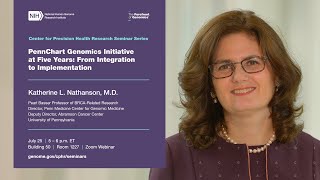
PennChart Genomics Initiative at Five Years: From Integration to Implementation
Explore the PennChart Genomics Initiative's progress in integrating and implementing genomics in healthcare, presented by renowned cancer genetics expert Dr. Katherine Nathanson.

Volume Disorders in Clinical Medicine
Comprehensive exploration of volume disorders, covering pathophysiology, complications, diagnosis, and treatment for hypovolemia and hypervolemia. Ideal for medical students and healthcare professionals seeking in-depth understanding.

Happy Healthy Children: Implementing What We Know - Part 2
Explore strategies for improving child health through primary care, focusing on Professor Saxena's research and insights from the Imperial Child Health Unit.

The Role of Genetic Diagnosis in Inherited Cardiac Conditions - Part 1
Explore genetic diagnosis in inherited cardiac conditions, focusing on its importance, challenges, and advancements in cardiovascular genomic medicine.
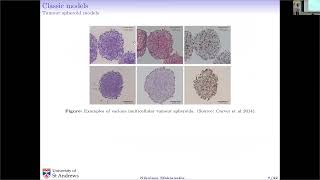
The Mathematical Hallmarks of Cancer - Yesterday, Today, and Tomorrow
Explore the mathematical modeling of cancer's key characteristics, examining past approaches, current methodologies, and future directions in oncology research.
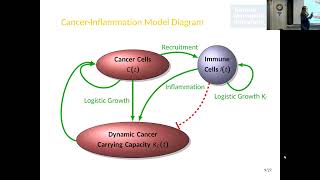
Modelling Inflammation in Cancer
Explore mathematical models of inflammation's role in cancer progression, examining key mechanisms and potential therapeutic targets.
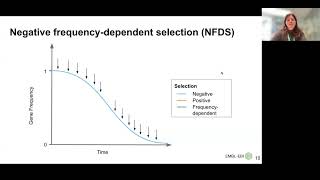
Mechanistic Modelling of Streptococcus Pneumoniae Population Dynamics After Vaccine Introduction
Explore mathematical modeling of bacterial population dynamics post-vaccination, focusing on Streptococcus pneumoniae and its implications for public health strategies.
Quasistatic Process and W=PdV Derivation - Introduction to Thermodynamics
Explore quasistatic processes and derive the work equation W=PdV in this concise introduction for first-year engineering students, covering fundamental thermodynamic concepts.
Evolution of Variants - Mutation Limited or Selection Limited
Explore the dynamics of variant evolution in infectious diseases, examining mutation and selection limitations to understand pathogen adaptation and spread.
Individuals' Unique Genetic Makeup Can Greatly Influence Their Susceptibility Towards Disease
Explore how genetic variations impact individual susceptibility to diseases, offering insights into personalized medicine and disease prevention strategies.