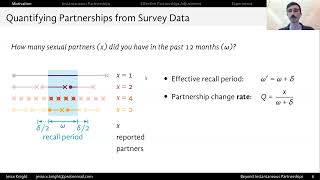
Re-examining the Force of Infection Equation in Compartmental HIV Transmission Models
Explore innovative approaches to HIV transmission modeling, focusing on the force of infection equation and its implications for public health strategies and interventions.
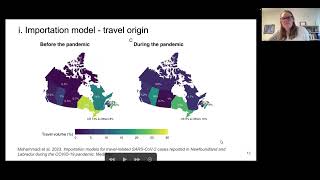
Modelling to Support Regions Implementing an Elimination Strategy
Explore mathematical modeling techniques for regional disease elimination strategies, focusing on public health applications and policy support.

Logarithms: Applications in Mobile Technology, Pandemic Modeling, and Social Networks
Explore logarithms' relevance in modern life, from pandemic modeling to information theory and social networks. Discover their history and applications in this insightful lecture by Professor Oliver Johnson.
Vectors and How Climate May Impact Them
Explore how climate change affects disease vectors, their ecology, and transmission dynamics. Gain insights into vector-borne diseases and their potential future impacts on ecosystems and public health.
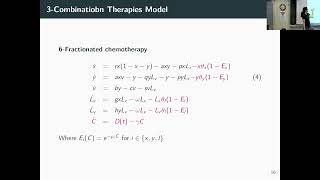
Comparing Combination Therapies with Oncolytic Viruses in a Simple Mathematical Framework
Explore mathematical models for comparing combination cancer therapies using oncolytic viruses, examining their effectiveness and potential outcomes in treatment strategies.
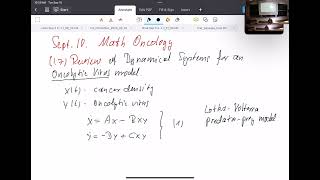
Nondimensionalization and Biochemical Reaction Networks in Mathematical Oncology
Explore nondimensionalization and biochemical reaction networks in mathematical oncology, enhancing your understanding of complex biological systems and their analysis.
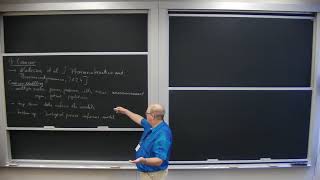
The Hallmarks of Cancer - A Mathematical Perspective
Explore mathematical perspectives on cancer hallmarks, including proliferation, growth suppression, cell death, and metastasis, through differential equations and modeling techniques.
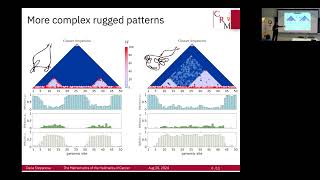
Modelling the Erosion of Epigenetic Landscapes in Cancer and Ageing
Explore mathematical models of epigenetic landscapes in cancer and aging, focusing on erosion processes and their implications for disease progression and cellular behavior.
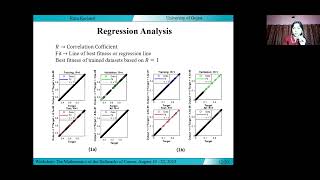
Numerical Analysis for Cervical Cancer Using Stochastic Levenberg-Marquardt Backpropagated Technique
Explore advanced neural network techniques for cervical cancer analysis, focusing on the Stochastic Levenberg-Marquardt Backpropagated method and its applications in oncology research.
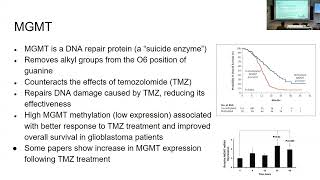
Mathematical Modelling of MGMT Dynamics in Glioblastoma - Influence of Methylation Status and Phenotypic Selection in Cell Death Resistance
Explore MGMT dynamics in glioblastoma through mathematical modeling, examining methylation status and phenotypic selection in cell death resistance.
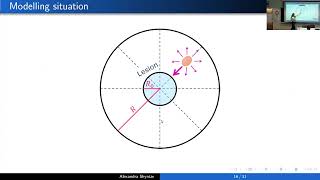
Mathematical Modelling of Microtube-Driven Regrowth of Glioma After Local Resection
Explore mathematical modeling of glioma regrowth post-resection, focusing on microtube-driven mechanisms and their impact on tumor recurrence and treatment strategies.
Cause and Effect - Understanding Causation in Scientific Research
Exploring causal inference methods in epidemiology and their impact on scientific understanding, challenging traditional views on correlation vs. causation in data analysis.
Graphs in the Modern World: Analyzing Infectious Disease Dynamics
Explore graph-based models for analyzing infectious diseases, from deterministic compartmental models to agent-based simulations in modern epidemiology.
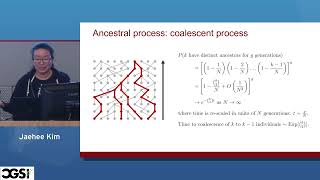
Bayesian Inference of Dependent Population Dynamics in Coalescent Models
Explore Bayesian inference techniques for analyzing dependent population dynamics in coalescent models, focusing on applications in genomics and evolutionary biology.

On the Spread of an Infection in a Host Population Distributed on Z - Lecture
Explore mathematical models of infection spread in host populations distributed on Z, focusing on stochastic processes in evolutionary biology.

The Miracle of Tomography - Rothschild Lecture
Explore the diverse applications and mathematical techniques of tomography, from medical imaging to geophysics, with Professor Peter Kuchment's comprehensive overview of this fascinating field.
A Mathematical Toolkit for Pandemics
Explore mathematical tools for understanding and managing pandemics with Prof. Julia Gog. Gain insights into modeling, data analysis, and decision-making strategies for infectious disease outbreaks.
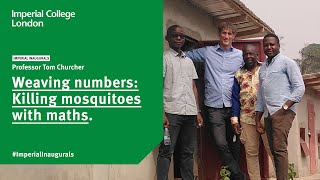
Weaving Numbers: Killing Mosquitoes with Mathematics
Explore how mathematical modeling aids in combating mosquito-borne diseases and informs effective intervention strategies for global health impact.
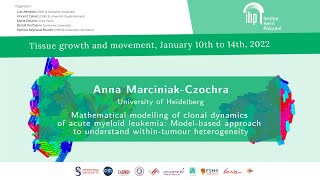
Mathematical Modelling of Clonal Dynamics of Acute Myeloid Leukemia: Model-Based Approach to Understand Within-Tumour Heterogeneity
Explore mathematical models of acute myeloid leukemia's clonal dynamics to understand tumor heterogeneity using a model-based approach.
Mathematical Models and Tools for Personalized Medicine
Explore mathematical models for personalized medicine, focusing on glioblastoma and immunotherapy. Learn how these tools aid in optimizing individual cancer treatments and predicting tumor evolution.
Quantitative Modeling of Metastasis: Cancer at the Organism Scale
Explore mathematical models for metastasis development, including spontaneous spread, tumor interactions, and therapy effects. Gain insights into predictive tools for personalized oncology.