
The Epidemic of Poverty - The Government Imperative
Abdul El-Sayed discusses rebuilding Detroit's Health Department, addressing urban health challenges, and his journey from physician to political candidate, emphasizing the importance of systemic solutions to public health issues.
Contagion - Exploring Modern Epidemics: Big Data in Epidemiology - Part 3
Experts discuss using big data to understand and predict modern epidemics, exploring innovative approaches in medical intelligence, evolutionary biology, and genetics for improved disease management and public health.
Contagion: Exploring Modern Epidemics - Part 2 of 5
Exploring modern epidemics and innovative solutions like gene drives to combat diseases. Discusses ethical considerations and community involvement in biotechnology applications.
Contagion - Exploring Modern Epidemics: Infectious Disease - Part 1
Explore modern epidemics with leading experts discussing infectious diseases, genomics, and public health challenges. Gain insights into global health threats and cutting-edge research in epidemiology.

Epidemiology Counts: On Causes, Consequences, and Healthy Populations
Explore the impact of epidemiological thinking on population health with Dean Sandro Galea. Learn how our approach to health causes affects our success in promoting well-being and creating healthier societies.
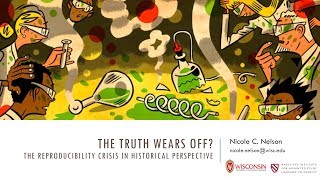
The Reproducibility Crisis in Historical Perspective
Explore the historical context of the reproducibility crisis in science, examining its roots, implications, and potential solutions through a critical lens of scientific practice and reform.

Rare Cancers: Charting a Faster Route to Treatment
Exploring innovative approaches to accelerate rare cancer treatments through immunotherapy, data sharing, and novel trial designs. Experts discuss challenges and promising advancements in the field.
Genetic Prediction of Traits and Diseases Across Diverse Populations - Next in Evolution
Exploring genetic prediction of traits and diseases across diverse populations, focusing on innovative research in evolution, genetic adaptations, and cross-disciplinary approaches to understanding human genetics.

The Fruit Fly as a Research Tool for Human Disease
Explore how fruit fly genetics contribute to human disease research, including cancer and neurodegenerative disorders, and their potential for developing new treatments.

Clinical Trial Lightning Round: HIV Cure Research Studies at Harvard
Explore cutting-edge HIV cure research through rapid-fire presentations by Harvard faculty, covering diverse topics from mucosal studies to treatment interruption.
Rethinking Architecture Design for Data Heterogeneity in FL - Liangqiong Qu
Explores innovative architecture designs for federated learning in medical AI, focusing on Transformers to address data heterogeneity challenges and improve model performance across diverse healthcare institutions.
Frontiers of Medical AI - Therapeutics and Workflows
Explore cutting-edge AI applications in medicine, focusing on therapeutics and workflow optimization. Learn about AI-driven cancer treatment decisions, protein engineering, and specialized medical search engines.
Style Transfer Augmentations for Computational Pathology - Rikiya Yamashita
Innovative style transfer augmentation technique for improving machine learning model generalization in computational pathology, enhancing robustness to domain shifts and achieving state-of-the-art performance in classification tasks.

Learning the Structure of EHR with Graph Convolutional Transformer - Edward Choi
Explore graph convolutional transformers for learning EHR structure, combining graph convolution and self-attention for supervised prediction tasks in healthcare analytics and representation learning.
Patient-Specific COVID-19 Resource Utilization Prediction Using Fusion AI Model - Amara Tariq
Explore AI-driven prediction of COVID-19 resource utilization using fusion modeling, combining patient history and current indicators for efficient healthcare planning and allocation.
Self-Supervision & Contrastive Frameworks - A Vision-Based Review
Comprehensive review of self-supervised and contrastive learning frameworks in computer vision, exploring methodologies, performance, and potential applications in medical imaging.

Segmentation and Quantification of Breast Arterial Calcifications - Xiaoyuan Guo
Explore innovative techniques for segmenting and quantifying breast arterial calcifications in mammograms, aiming to improve cardiovascular risk assessment for women through non-invasive methods.
Few-Shot Chest X-Ray Diagnosis Using Clinical and Literature Images
Explore innovative few-shot learning methods for chest X-ray diagnosis using clinical and literature images, enhancing radiology image analysis with advanced machine learning techniques.
Understanding Scanner Utilization with Metadata Extraction - Pradeeban Kathiravelu
Real-time DICOM metadata extraction for analyzing scanner utilization in radiology. Niffler framework enables accurate performance metrics, supports ML pipelines, and improves resource management in healthcare networks.
Opioid Use Disorder Prediction Using AI and Existing Risk Models
Comparative study on AI models for predicting opioid use disorder, showcasing superior performance of transformer-based AI over existing clinical tools and other machine learning approaches.

Denoising Diffusion Models for Denoising Diffusion MRI - Tiange Xiang
Explore innovative self-supervised denoising techniques for diffusion MRI using denoising diffusion models. Learn about a three-stage framework integrating statistic-based theory for improved medical imaging quality.