Fault-Injection Detection Circuits - Design, Calibration, Validation and Tuning
Explores Intel's tunable replica circuit for detecting fault-injection attacks in processors, focusing on design, implementation, and effectiveness in preventing timing failures and unauthorized code execution.

Advanced IC Reverse Engineering Techniques - In Depth Analysis Of A Modern Smart Card
Explore advanced IC reverse engineering techniques through in-depth analysis of a modern smart card, focusing on hardware attacks, proprietary algorithms, and efficient analysis methods.
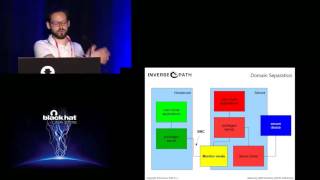
Forging the USB Armory - An Open Source Secure Flash-Drive-Sized Computer
Explore the creation of a secure, open-source computer the size of a flash drive. Learn about innovative hardware design and advanced security features for portable computing.
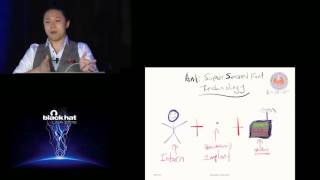
Emanate Like A Boss - Generalized Covert Data Exfiltration With Funtenna
Explore Funtenna, a software technique for covert data exfiltration through electromagnetic emanations in various computing devices, including its mechanisms, implementations, and implications for network security.
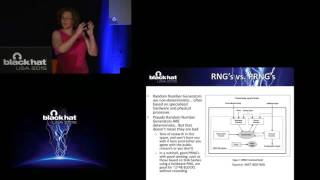
Understanding and Managing Entropy Usage
Explore cryptographic entropy usage, sources, and management across systems. Learn to analyze and improve random number generation for enhanced security in modern IT infrastructures.
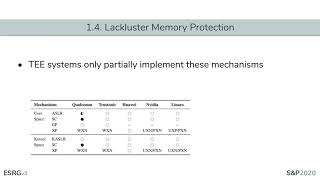
Understanding the Prevailing Security Vulnerabilities in TrustZone-Assisted TEE Systems
Comprehensive analysis of security vulnerabilities in TrustZone-assisted Trusted Execution Environments, exploring architecture issues, implementation bugs, and hardware flaws across popular TEE systems. Offers insights for improving TEE security.
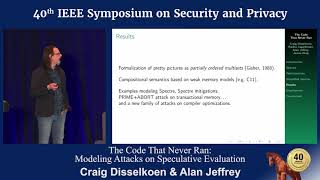
The Code That Never Ran - Modeling Attacks on Speculative Evaluation
Modeling speculative evaluation attacks like Spectre using pomsets. Proposes abstract model to express known attacks, verify countermeasures, and predict new compiler optimization-based vulnerabilities.
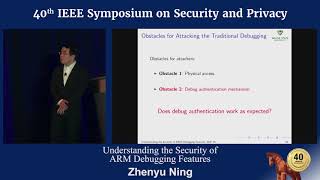
Understanding the Security of ARM Debugging Features
Comprehensive analysis of ARM debugging features' security implications across various platforms, exposing vulnerabilities and demonstrating the Nailgun attack to highlight potential risks.
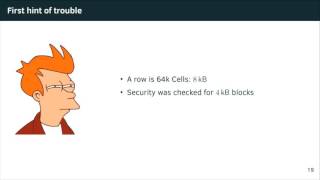
How Your DRAM Becomes a Security Problem
Explore DRAM security vulnerabilities and side-channel attacks targeting row buffers, with implications for various devices and systems regardless of software or OS.

The Tao of Hardware - The Te of Implants
Explore cheap hardware attacks on embedded devices and industrial control systems, including privilege escalation, kernel patching, and wireless control of PLCs. Learn about design decisions to reduce vulnerabilities.
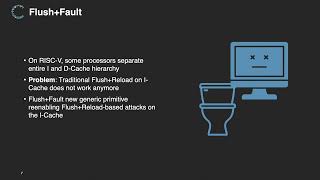
A Security RISC - Microarchitectural Attacks on Hardware RISC-V CPUs
Explore microarchitectural vulnerabilities in RISC-V CPUs, examining potential security risks and attack vectors in this emerging processor architecture.
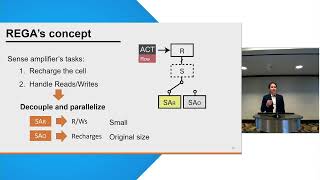
REGA - Scalable Rowhammer Mitigation with Refresh-Generating Activations
Explore a scalable solution for Rowhammer attacks in DRAM, focusing on Refresh-Generating Activations to enhance memory security and system reliability.
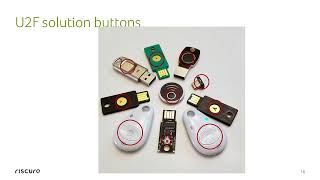
Attacking an Open Source U2F Device in 30 Minutes or Less
Explore vulnerabilities in FIDO U2F tokens, focusing on an open-source implementation. Learn about security features, design flaws, and potential attacks on hardware token security.
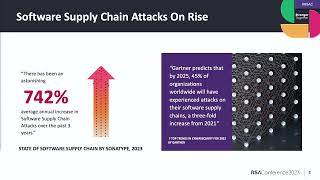
Scaling Software Supply Chain Source Security in Large Enterprises
Explore strategies for securing diverse software supply chains in large enterprises, including open-source, vendor, SaaS, and hardware. Learn to operationalize SBOMs for enhanced security and risk management.
Hardware Security Following CHIPS Act Enactment - New Era for Supply Chain
Explore the impact of the CHIPS Act on hardware security and supply chain innovation with experts from government and industry, discussing policy developments and global implications.
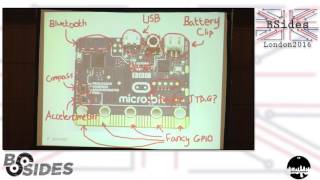
Pwning the Micro-Bit
Explore the Micro:Bit's origins, components, and vulnerabilities to extract user and device information through hardware exploitation techniques.

Should You Be Afraid of Hands-On Payment Devices?
Unveiling vulnerabilities in Point of Sale terminals: from anti-tampering mechanisms to cloning. Explore the lifecycle of popular devices and the hacking techniques used to compromise payment security.
God Mode Unlocked - Hardware Backdoors in x86 CPUs
Unveiling a critical hardware backdoor in x86 CPUs allowing unprivileged users to bypass security checks and escalate to kernel-level access. Explores detection, prevention, and broader implications for processor security.
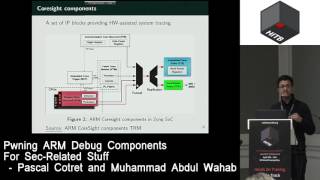
Pwning ARM Debug Components
Exploring ARM debug components for security primitives and information flow tracking. Demonstrates a portable approach to enhance runtime security monitoring in ARM-based systems.
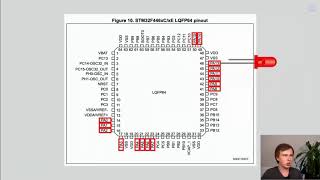
Firmware Hacking With Ghidra
Hands-on firmware hacking workshop using Ghidra for reverse engineering ARM Cortex-M architecture, followed by live demonstration of hardware glitching attacks on microcontrollers.
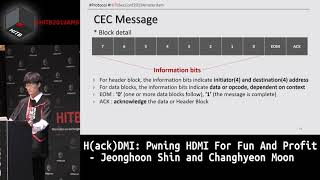
HDMI - Pwning HDMI For Fun And Profit
Explore HDMI vulnerabilities through protocol analysis, fuzzing techniques, and real-world exploitation, showcasing potential security risks in AV devices and demonstrating practical attack vectors.